 EN
EN

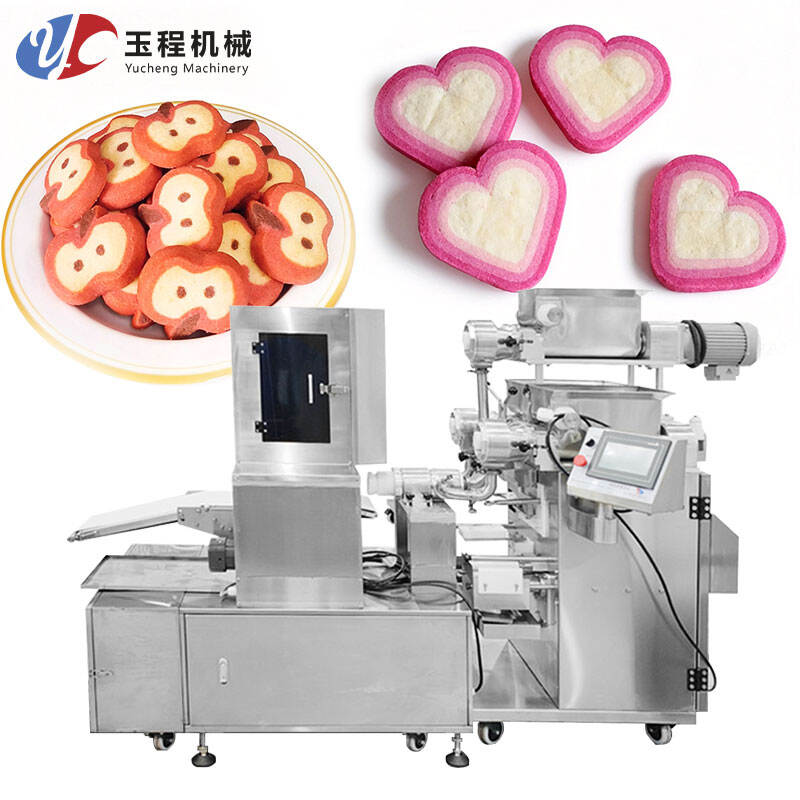
Modern confectionery production demands precision, consistency, and scalability that manual processes simply cannot deliver efficiently. As consumer preferences shift toward healthier snack options like date-based energy balls, manufacturers face mounting pressure to produce uniform products at industrial volumes while maintaining quality standards. The date ball machine has emerged as a transformative solution, addressing critical production bottlenecks that previously limited profitability and market reach for confectionery businesses. Understanding why this equipment has become indispensable requires examining the fundamental challenges of traditional production methods and the competitive advantages automated forming technology delivers in today's fast-paced food manufacturing landscape.
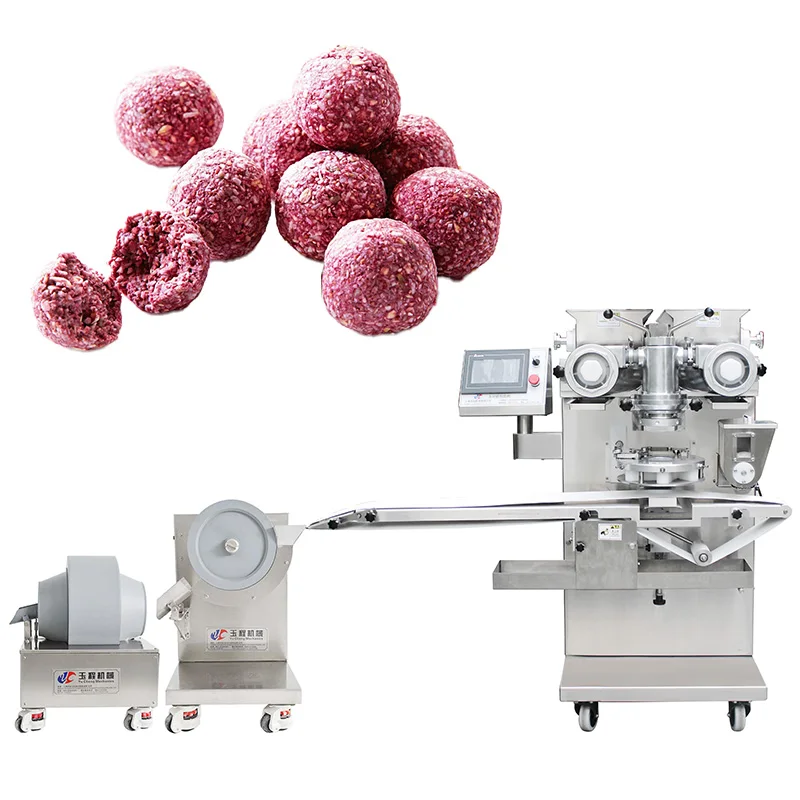
The confectionery industry has witnessed dramatic transformation over the past decade, with health-conscious consumers driving demand for natural ingredient products that combine nutrition with convenience. Date balls, energy bites, and protein spheres represent a rapidly growing market segment where production efficiency directly impacts business viability. Manufacturers investing in specialized forming equipment position themselves to capture market share, reduce labor costs, and achieve the product consistency that retail chains and distributors increasingly require. The strategic importance of a date ball machine extends beyond simple automation, fundamentally reshaping how confectionery businesses approach production planning, quality control, and operational scalability in an increasingly competitive marketplace.
Production Efficiency Challenges Without Specialized Equipment
Manual Forming Limitations in High-Volume Operations
Traditional hand-rolling methods for date balls create severe production capacity constraints that prevent confectionery businesses from scaling effectively. Skilled workers can typically form between 200 to 400 pieces per hour depending on product size and complexity, a throughput rate that becomes economically unsustainable when fulfilling commercial orders requiring thousands of units daily. The physical repetition inherent in manual forming leads to worker fatigue, increasing error rates and inconsistency as production shifts progress. Labor costs associated with maintaining adequate staffing levels for manual operations consume profit margins, particularly in markets with rising minimum wage requirements and competitive employment conditions.
Beyond raw throughput limitations, manual processes introduce significant variability in product weight, diameter, and shape characteristics that modern retail distribution channels find increasingly unacceptable. Consistency matters profoundly in confectionery manufacturing, where package labeling requires accurate nutritional information calculated from standardized portion sizes. When date balls vary by more than 10-15% in weight within a single batch, manufacturers face compliance challenges with food labeling regulations and customer satisfaction issues stemming from perceived value inconsistencies. This variability also complicates downstream processes including coating, packaging, and inventory management systems that rely on predictable product specifications.
Quality Control Difficulties in Manual Production Systems
Maintaining consistent texture and structural integrity across manually formed date balls presents persistent quality control challenges that directly impact product shelf life and consumer experience. Human handling introduces temperature variations from body heat, causing sticky date-based formulations to behave unpredictably during forming. Some pieces become over-compressed while others remain loosely formed, creating durability differences that affect how products withstand transportation and storage conditions. These inconsistencies translate to variable customer experiences, with some consumers receiving perfectly formed products while others encounter crumbling or overly dense pieces from the same production batch.
Hygiene standards in modern food manufacturing demand minimal direct human contact with ready-to-eat products, a requirement that manual forming inherently violates. Despite glove usage and sanitation protocols, hand-rolling operations increase contamination risks compared to enclosed automated systems. Regulatory audits increasingly scrutinize production methods, with manual handling triggering additional inspection requirements and documentation burdens. Food safety certifications such as HACCP, BRC, and SQF favor production environments that minimize human contact points, making manual date ball forming a potential liability during certification processes that unlock access to major retail and export markets.
Economic Impact of Labor-Intensive Production Models
The economics of manual confectionery production become increasingly unfavorable as businesses attempt to scale beyond artisanal or farmers market volumes. Labor typically represents 40-60% of production costs in hand-rolled operations, leaving minimal margin for ingredient quality improvements, marketing investments, or competitive pricing strategies. This cost structure forces manufacturers into a difficult position where raising prices risks losing price-sensitive customers while maintaining current pricing prevents business growth and equipment investment. The date ball machine fundamentally alters this economic equation by shifting cost structures from variable labor expenses to fixed equipment depreciation, creating predictable unit economics that support strategic planning and growth financing.
Training and retention challenges compound labor cost pressures in manual production environments. The repetitive nature of hand-rolling work leads to high employee turnover, with typical retention periods ranging from 3 to 8 months in many facilities. Each turnover cycle incurs recruitment costs, training time investments, and productivity losses during the learning curve period when new workers achieve lower throughput and higher error rates. Seasonal demand fluctuations characteristic of confectionery markets create additional staffing challenges, requiring businesses to rapidly scale labor forces for peak periods then manage underutilization during slower months. These dynamics make manual production particularly unsuitable for businesses pursuing stable, year-round operations or planning expansion into new distribution channels.
Technical Advantages of Automated Date Ball Forming
Precision Forming and Weight Consistency
A date ball machine delivers unprecedented forming precision through mechanical systems that portion and shape products with tolerances typically within 2-3% of target specifications. This consistency level transforms production quality control from a challenging inspection task to a straightforward verification process where occasional spot checks replace exhaustive individual product examination. Automated portioning mechanisms ensure each ball contains precisely measured ingredient quantities, enabling accurate nutritional labeling and portion control that meets consumer expectations and regulatory requirements. This precision extends to dimensional characteristics including diameter, height, and density, creating visually uniform products that present professionally on retail shelves and in consumer packaging.
The technical mechanism behind this consistency typically involves volumetric or weight-based dosing systems that meter exact quantities of date mixture before forming. Advanced models incorporate servo-driven controls that adjust forming pressure based on ingredient characteristics, compensating for natural variations in date moisture content, ambient temperature, or formulation density. These adaptive systems maintain consistency across extended production runs without requiring manual adjustment or operator intervention, a capability particularly valuable when producing multiple product lines with different recipes throughout a production day. The reliability of automated forming enables manufacturers to offer tighter product specifications to customers, supporting premium positioning and building brand reputation for quality.
Production Speed and Throughput Capacity
Modern date ball machines typically operate at speeds ranging from 60 to 180 pieces per minute depending on product size and equipment configuration, representing throughput increases of 10 to 40 times compared to manual forming operations. This dramatic capacity expansion enables businesses to fulfill large commercial orders that would be impractical or impossible with manual methods, opening access to wholesale distributors, retail chains, and institutional food service channels. The equipment operates continuously during production shifts without fatigue-related slowdowns, maintaining consistent output rates that support predictable production scheduling and reliable delivery commitments to customers.
This throughput advantage translates directly into floor space efficiency and facility utilization improvements. A single date ball machine occupying 3 to 5 square meters can replace 8 to 15 manual forming stations with their associated workspace requirements. This spatial efficiency becomes particularly valuable in urban manufacturing facilities where real estate costs significantly impact operational economics. The compact footprint combined with high output enables businesses to maximize production capacity within existing facilities before requiring expansion investments, supporting growth strategies that defer major capital expenditures while building market presence and revenue streams that justify future facility investments.
Operational Consistency Across Shifts and Seasons
Automated equipment eliminates the performance variability inherent in human labor, delivering identical production quality regardless of time of day, day of week, or operator experience level. A date ball machine performs identically during the first hour of a Monday morning shift and the final hour of a Friday evening production run, maintaining the consistency that manual operations struggle to achieve as workers experience fatigue, distraction, or varying motivation levels. This reliability extends across seasonal periods, with equipment maintaining performance through holiday rushes, summer heat, or winter cold that might affect worker comfort and productivity in facilities with varying environmental conditions.
The consistency advantage proves particularly valuable for businesses operating multiple shifts or employing temporary workers during peak demand periods. Training requirements for equipment operation are significantly simpler than developing manual forming skills, with new operators typically becoming proficient within hours rather than the days or weeks required for hand-rolling competency. This simplified training reduces onboarding costs and enables flexible staffing strategies that adapt to order volumes without compromising product quality. The technical documentation and standardized operating procedures associated with automated equipment also support quality management systems and certification requirements more effectively than subjective manual process descriptions.
Strategic Business Benefits in Competitive Markets
Market Access and Distribution Channel Expansion
Major retail chains and food distributors increasingly require suppliers to demonstrate automated production capabilities before establishing supply relationships. These commercial buyers prioritize vendors who can guarantee consistent product specifications, maintain reliable delivery schedules, and scale production to meet growing demand without quality degradation. A date ball machine provides the credibility and operational capacity that opens these distribution channels, transforming small-scale confectionery operations into viable wholesale suppliers. The professional production capabilities that automated equipment represents often prove as important as product quality itself when buyers evaluate potential suppliers during qualification processes.
Export markets present particularly stringent requirements regarding production methods, documentation, and facility certifications that manual operations struggle to satisfy. International food safety standards favor enclosed, automated production systems that minimize contamination risks and provide traceable, documented production parameters. Investing in a date ball machine positions manufacturers to pursue export opportunities where premium pricing and volume potential justify the additional regulatory compliance efforts. The equipment also supports co-packing and private label opportunities where confectionery producers manufacture products for other brands, a business model requiring the production flexibility and capacity that automated systems deliver.
Product Innovation and Recipe Flexibility
Modern date ball machines accommodate diverse ingredient formulations beyond traditional date-only recipes, enabling manufacturers to develop differentiated products that command premium pricing and attract health-conscious consumers. Equipment designed for date processing typically handles nut butters, protein powders, dried fruits, seeds, and binding ingredients, supporting recipe innovation that creates competitive advantages in crowded marketplace segments. The ability to efficiently produce specialty formulations including allergen-free, organic, keto-friendly, or functional ingredient products expands addressable market segments without requiring separate production lines or major equipment modifications.
This formulation flexibility extends to size variations and coating applications that enhance product appeal and market positioning. A date ball machine can typically be adjusted to produce multiple size options from petit one-bite pieces to substantial snack-meal replacements, enabling manufacturers to serve different consumption occasions and price points with minimal changeover requirements. The consistent spherical shapes that automated forming produces are ideally suited for coating applications including chocolate, yogurt, or nutritional glazes, opening opportunities for premium decorated products that command higher retail prices. This innovation capability transforms the date ball machine from a simple efficiency tool into a strategic product development platform.
Cost Structure Optimization and Profit Margin Improvement
The economic transformation that a date ball machine delivers extends beyond simple labor cost reduction to fundamental improvements in unit economics and profit margin potential. As production costs shift from variable labor expenses to fixed equipment depreciation, manufacturers gain pricing flexibility and margin protection against wage inflation and labor market fluctuations. This cost structure predictability supports more aggressive market penetration pricing strategies, volume-based customer incentives, and promotional activities that would erode profitability under labor-intensive production models. The improved margins also fund ingredient quality upgrades, packaging enhancements, and marketing investments that strengthen brand positioning and customer loyalty.
Material yield improvements represent another often-overlooked economic benefit of automated forming equipment. Manual operations typically generate 5-12% waste from misshapen products, dropped pieces, and inconsistent sizing that prevents packaging. A date ball machine reduces this waste to under 2% through precise portioning and consistent forming, directly improving ingredient utilization and reducing disposal costs. For manufacturers processing premium ingredients including organic dates, specialty nut butters, or imported superfoods, these yield improvements deliver significant cost savings that accumulate substantially across annual production volumes. The combination of labor savings, yield improvements, and throughput increases typically generates return on investment periods ranging from 12 to 24 months for businesses operating at commercial production scales.
Integration with Modern Manufacturing Systems
Upstream and Downstream Process Compatibility
A date ball machine functions optimally within integrated production lines where upstream mixing and downstream packaging equipment operate in synchronized workflow. Modern installations typically include continuous mixing systems that prepare ingredient blends to consistent specifications, feeding the forming equipment at matched throughput rates that eliminate bottlenecks and minimize work-in-process inventory. This integration requires careful production planning and equipment selection, but delivers dramatic efficiency improvements compared to batch-based manual operations with disconnected process stages. The continuous flow reduces handling requirements, minimizes contamination risks, and enables lean manufacturing principles that optimize working capital and facility utilization.
Downstream integration with automated packaging equipment multiplies the efficiency gains that forming automation delivers. When date balls exit the forming equipment at consistent sizes and intervals, automated counting, weighing, and packaging systems can operate at designed speeds without operator intervention or adjustment. This end-to-end automation reduces labor requirements to equipment monitoring and material handling roles, enabling single operators to oversee production lines generating thousands of packaged units per shift. The synchronization also improves traceability through production tracking systems that link specific product batches to ingredient lots, equipment parameters, and quality control data points required for food safety compliance and recall management capabilities.
Data Collection and Quality Management Integration
Advanced date ball machines incorporate sensors and control systems that generate valuable production data supporting quality management and continuous improvement initiatives. Real-time monitoring of parameters including forming pressure, cycle times, weight measurements, and rejection rates enables operators to identify process drift before significant quality issues develop. This data integration supports statistical process control methodologies where production teams analyze trends, establish control limits, and implement preventive adjustments that maintain optimal performance. The documented production parameters also satisfy food safety certification requirements for process monitoring and verification, reducing audit preparation burdens and supporting compliance demonstrations.
The production data generated by automated equipment enables sophisticated business intelligence applications that inform strategic decisions beyond immediate quality control. Manufacturers can analyze throughput patterns to optimize production scheduling, identify equipment maintenance needs before failures occur, and evaluate recipe formulations based on processing efficiency metrics. This analytical capability transforms production from a purely operational function into a strategic information source that guides product development, capacity planning, and capital investment decisions. The integration of production data with enterprise resource planning and customer relationship management systems creates comprehensive business intelligence ecosystems that enhance decision quality across organizational functions.
Sanitation and Maintenance Protocol Efficiency
Modern date ball machines feature sanitary design principles including tool-free disassembly, washdown-rated components, and smooth surfaces that minimize cleaning time and ensure thorough sanitation. These design characteristics prove essential in confectionery manufacturing where product changeovers and daily cleaning cycles significantly impact operational efficiency. Equipment designed for easy cleaning typically reduces sanitation labor by 60-75% compared to complex manual production areas with numerous contact surfaces, tools, and workstations requiring individual attention. The time savings translate directly to increased production availability, with facilities shifting hours previously dedicated to cleaning toward revenue-generating production activities.
Preventive maintenance requirements for quality date ball machines remain manageable with routine lubrication, adjustment verification, and wear component replacement typically requiring 2 to 4 hours monthly. This maintenance burden compares favorably to the ongoing management challenges of manual labor forces including scheduling, training, performance management, and human resources administration. The predictable maintenance schedules support planned downtime during naturally slower production periods, minimizing impact on order fulfillment and customer service. Manufacturers investing in equipment with strong technical support and readily available spare parts further optimize uptime, with experienced suppliers offering remote diagnostic assistance and rapid parts delivery that minimize production interruptions when unexpected issues occur.
FAQ
What production volume justifies investing in a date ball machine?
The investment threshold typically occurs when businesses consistently produce more than 500 to 1000 kilograms of date balls weekly, though the specific breakeven point depends on local labor costs, product pricing, and growth trajectory. Manufacturers experiencing capacity constraints with existing manual methods or those pursuing retail distribution partnerships often find immediate justification regardless of current volume. The equipment delivers value through improved consistency and reduced labor costs, with return on investment periods ranging from 12 to 24 months for businesses operating at commercial scales. Companies planning significant growth should consider automated forming equipment earlier in their development to avoid building operational infrastructure around manual methods that later require disruptive transitions.
Can a date ball machine handle different recipes and product sizes?
Quality forming equipment accommodates diverse formulations including varying moisture levels, ingredient particle sizes, and binding characteristics through adjustable forming parameters and interchangeable tooling. Most machines support size ranges from 10 to 50 grams per piece with tooling changes requiring 15 to 45 minutes depending on equipment design. Recipe flexibility extends to nut-based, fruit-based, and protein-enhanced formulations provided ingredients achieve appropriate binding consistency. Manufacturers should discuss specific formulation requirements with equipment suppliers during selection processes, as extreme recipes with unusual characteristics may require specialized configurations or custom modifications to achieve optimal performance.
What technical expertise is required to operate automated forming equipment?
Operating a date ball machine requires basic mechanical aptitude and attention to operational parameters rather than specialized technical training. Most operators become proficient within 4 to 8 hours of supervised training, learning startup procedures, adjustment methods, basic troubleshooting, and shutdown protocols. Maintenance activities require slightly more technical knowledge, though routine tasks remain within the capabilities of general maintenance personnel with mechanical experience. Equipment suppliers typically provide comprehensive training during installation and offer ongoing technical support for operational questions and troubleshooting assistance. Manufacturers benefit from designating primary and backup operators who develop deeper equipment familiarity, supporting consistent performance and reducing dependence on external technical support for routine operational situations.
How does automated equipment impact product quality compared to handcrafted methods?
Automated forming delivers superior consistency in weight, size, shape, and density characteristics that manual methods cannot match, though some artisanal producers initially resist this transition based on craftsmanship concerns. Modern consumers and commercial buyers increasingly prioritize consistency over handcrafted variability, particularly in products purchased for nutritional value and portion control rather than artisanal authenticity. The date ball machine enables manufacturers to deliver reliably excellent products rather than variable results ranging from excellent to mediocre depending on operator skill and fatigue levels. Businesses can maintain premium positioning through superior ingredients, innovative recipes, and attractive packaging while leveraging automated consistency as a quality advantage rather than compromise. The equipment essentially industrializes best practices, replicating optimal forming technique with perfect consistency across millions of units.


