 EN
EN


In today's competitive manufacturing landscape, businesses constantly seek methods to enhance productivity while reducing operational costs. The integration of automatic machinery into production lines has emerged as a transformative solution that addresses these critical challenges. By replacing manual processes with automated systems, manufacturers can achieve unprecedented levels of speed, consistency, and output quality. This technological shift represents more than simple equipment upgrades—it fundamentally changes how production workflows operate, enabling companies to meet growing market demands while maintaining competitive pricing and superior product standards.
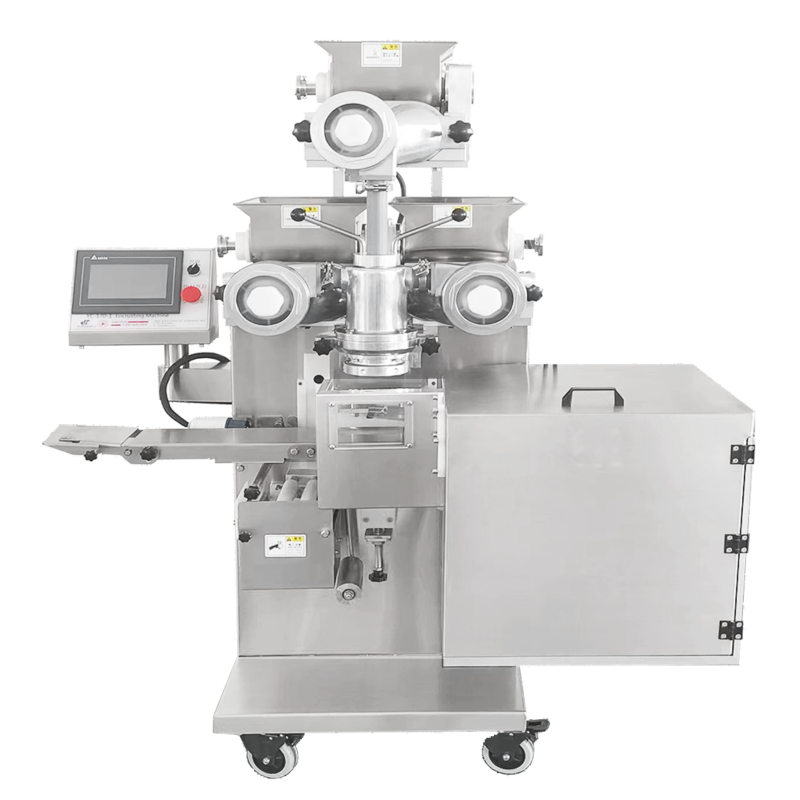
Understanding how automatic machinery improves production efficiency requires examining the specific mechanisms through which automation transforms manufacturing operations. From reducing cycle times and minimizing human error to enabling continuous operation and optimizing resource utilization, automated systems deliver measurable improvements across multiple performance dimensions. This comprehensive exploration reveals the practical pathways through which automatic machinery elevates production capabilities, providing manufacturers with actionable insights for implementing automation strategies that generate substantial returns on investment while positioning their operations for long-term competitive advantage in increasingly demanding markets.
Acceleration of Production Cycle Times Through Automation
Elimination of Manual Task Bottlenecks
Manual production processes inherently contain bottlenecks where human operators perform repetitive tasks at limited speeds. Automatic machinery eliminates these constraints by executing operations at mechanically optimized velocities that far exceed human capabilities. Automated systems can perform cutting, shaping, filling, packaging, and assembly tasks in fractions of the time required for manual completion. This acceleration directly translates to higher throughput, allowing manufacturers to produce significantly more units within the same operational timeframe. The elimination of manual bottlenecks creates smoother production flow, reducing work-in-progress inventory accumulation and enabling faster order fulfillment cycles that improve customer satisfaction and market responsiveness.
Consistent High-Speed Operation Without Fatigue
Human workers experience fatigue that gradually reduces their operational speed and accuracy throughout shifts, particularly during repetitive tasks. Automatic machinery maintains consistent performance levels regardless of operational duration, executing tasks at peak efficiency continuously. This fatigue-free operation ensures that production rates remain stable from the first unit to the last unit of every shift. The consistency eliminates the productivity variations common in manual operations, where output typically decreases during afternoon hours or at shift ends. By maintaining uniform high-speed performance, automated systems maximize the productive capacity of every operational hour, substantially increasing total daily output without requiring extended work hours or additional labor shifts.
Rapid Changeover Capabilities for Product Variations
Modern automatic machinery incorporates programmable controls that enable rapid transitions between different product specifications or models. Unlike manual processes that require extensive setup time and operator retraining for product changes, automated systems can switch production parameters through digital programming interfaces. This rapid changeover capability reduces downtime between production runs, allowing manufacturers to produce smaller batch sizes economically while maintaining high overall equipment utilization. The flexibility supports diverse product portfolios and customization demands without sacrificing production efficiency. Advanced automatic machinery with recipe management systems can store multiple production configurations, enabling operators to initiate changeovers with minimal manual intervention, further compressing transition times and maximizing productive operational periods.
Enhancement of Production Quality and Consistency
Precision Control Beyond Human Capabilities
Automatic machinery operates with precision levels that exceed human manual dexterity, utilizing servo motors, sensors, and control systems that achieve micron-level accuracy. This precision ensures that every product unit meets exact specifications regarding dimensions, weight, composition, and appearance. In applications such as food production, pharmaceutical manufacturing, and electronics assembly, this consistency is critical for product quality and regulatory compliance. Automated systems eliminate the variations inherent in manual operations where individual operator techniques, physical conditions, and attention levels create product inconsistencies. The precision of automatic machinery reduces defect rates dramatically, minimizing waste from rejected units and rework requirements while ensuring that finished products consistently meet quality standards that strengthen brand reputation and customer loyalty.
Real-Time Quality Monitoring and Adjustment
Advanced automatic machinery integrates quality monitoring systems that continuously measure production parameters and product characteristics during operation. Vision systems, weight sensors, temperature monitors, and other inspection technologies detect deviations from specifications in real time, enabling immediate corrective adjustments. This proactive quality management prevents the production of defective batches that would waste materials and operational time. Unlike periodic manual inspections that can miss defects produced between inspection intervals, automated monitoring provides comprehensive coverage of every produced unit. The automatic machinery can automatically adjust operational parameters to compensate for material variations, environmental changes, or equipment drift, maintaining optimal production conditions without requiring operator intervention and ensuring consistent output quality throughout extended production runs.
Reduction of Human Error Variables
Manual production processes are susceptible to human errors resulting from distraction, miscommunication, training gaps, or simple mistakes. Automatic machinery eliminates these error sources by executing programmed sequences with mechanical reliability. The systems perform tasks in precisely defined sequences without omissions or incorrect steps, ensuring that every product receives identical processing. This elimination of human error variables is particularly valuable in operations requiring strict procedural compliance, such as sterile filling, precise dosing, or multi-step assembly processes. The reliability of automated systems reduces quality control requirements, as the consistent execution of correct procedures minimizes the likelihood of defects. This reliability translates to lower inspection costs, reduced customer complaints, and decreased warranty claims, all of which contribute to improved overall production efficiency and profitability.
Optimization of Labor Utilization and Cost Structure
Redeployment of Workforce to Higher-Value Activities
Implementation of automatic machinery allows manufacturers to redeploy human workers from repetitive manual tasks to higher-value activities that require judgment, problem-solving, and specialized skills. Operators can focus on equipment monitoring, quality assurance, process optimization, and maintenance planning rather than performing monotonous production tasks. This workforce reallocation improves job satisfaction while simultaneously increasing the intellectual contribution of employees to business operations. The transition creates opportunities for skill development and career advancement, supporting employee retention and reducing recruitment costs. By automating routine tasks, companies maximize the return on their labor investment, directing human capabilities toward activities that generate greater competitive differentiation and operational improvement rather than basic production execution.
Reduction in Direct Labor Requirements
Automatic machinery significantly reduces the number of workers required to achieve a given production output, directly lowering labor costs per unit produced. A single automated system can replace multiple manual workers while producing higher output volumes. This labor efficiency is particularly valuable in regions with high wage rates or tight labor markets where recruiting and retaining production workers is challenging. The reduced labor requirements also decrease associated costs including benefits, training, supervision, and workplace safety management. While initial equipment investment is substantial, the ongoing labor cost savings typically provide attractive payback periods. The labor efficiency advantage becomes more pronounced as production volumes increase, making automatic machinery particularly beneficial for high-volume manufacturing operations where labor costs represent significant portions of total production expenses.
Mitigation of Labor Availability Risks
Manufacturing operations relying heavily on manual labor face constant risks related to workforce availability, including absenteeism, turnover, seasonal labor shortages, and recruitment difficulties. Automatic machinery reduces dependence on labor availability, ensuring production continuity regardless of workforce fluctuations. Automated systems operate reliably without the scheduling complexities, shift coverage challenges, and productivity variations associated with managing large manual workforces. This operational stability is especially valuable during peak demand periods when temporary labor may be unavailable or requires extensive training before reaching productivity levels. By reducing labor dependency, automatic machinery provides manufacturers with greater operational predictability and flexibility, enabling more reliable production planning and customer commitment fulfillment without the constant concern of whether sufficient qualified workers will be available to meet production schedules.
Extension of Operational Capacity and Flexibility
Enabling Continuous Multi-Shift Operations
Automatic machinery facilitates extended operational hours including multi-shift and lights-out manufacturing, where production continues with minimal or no human supervision. Automated systems can operate continuously across multiple shifts without the productivity degradation associated with night shifts in manual operations. This extended operational capacity dramatically increases total production output from the same facility footprint, effectively multiplying manufacturing capacity without requiring facility expansion. Continuous operation is particularly valuable for capital-intensive industries where maximizing equipment utilization directly impacts return on investment. The ability to run automatic machinery during traditionally unproductive hours converts idle time into productive capacity, substantially improving asset efficiency and enabling manufacturers to meet demand increases without proportional capital investment in additional equipment or facility space.
Scalable Production Without Proportional Resource Increases
Automated production systems offer superior scalability compared to manual operations, allowing output increases without proportional increases in labor, supervision, or facility resources. When production volumes need to expand, manufacturers can extend operating hours, add shifts, or install additional automated units that integrate seamlessly with existing systems. This scalability provides flexibility to respond to market growth or seasonal demand variations without the lengthy recruitment, training, and organizational restructuring required when scaling manual operations. The modular nature of many automatic machinery systems allows incremental capacity additions that match demand growth patterns, avoiding the excessive capital commitment and underutilization risks associated with large-scale capacity expansions. This scalability advantage enables manufacturers to pursue growth opportunities aggressively while maintaining operational efficiency and cost competitiveness across varying production volume levels.
Adaptation to Diverse Production Requirements
Modern automatic machinery incorporates programmable flexibility that enables adaptation to diverse production requirements without extensive reconfiguration. Multi-functional automated systems can handle various product types, sizes, and specifications through parameter adjustments rather than mechanical changes. This adaptability supports product portfolio diversification and customization strategies that would be economically prohibitive with dedicated manual processes. Manufacturers can respond to changing market preferences and customer-specific requirements without maintaining separate production lines for each product variant. The programming-based flexibility of automatic machinery reduces the economic barriers to offering customized products, enabling mass customization strategies that combine the efficiency of automated production with the market differentiation of tailored offerings. This capability is increasingly valuable in markets where customer expectations for product variety and personalization continue to expand while price sensitivity remains high.
Improvement of Resource Efficiency and Sustainability
Reduction of Material Waste Through Precision
The precision control inherent in automatic machinery significantly reduces material waste compared to manual processes. Automated cutting, portioning, and dispensing systems achieve exact specifications with minimal variation, eliminating the over-application or excess trimming common in manual operations. In industries such as food production, textile manufacturing, and metal fabrication, material costs represent substantial portions of total production expenses, making waste reduction directly impactful to profitability. Automatic machinery optimizes material utilization through precise process control, reducing both the direct cost of wasted materials and the indirect costs of waste disposal. The waste reduction also contributes to sustainability objectives, decreasing environmental impact while improving resource efficiency. For manufacturers facing rising raw material costs or operating under environmental regulations, the material efficiency advantages of automatic machinery provide compelling economic and regulatory compliance benefits.
Energy Efficiency Through Optimized Operations
Modern automatic machinery incorporates energy-efficient technologies including variable frequency drives, optimized motion profiles, and intelligent power management systems that reduce energy consumption per unit produced. Automated systems operate at optimal performance parameters continuously, avoiding the inefficiencies associated with inconsistent manual operation speeds and techniques. The precise control of process parameters such as temperature, pressure, and cycle timing eliminates energy waste from overshooting setpoints or maintaining unnecessarily high operational levels. Many automated systems include energy monitoring capabilities that identify optimization opportunities and support continuous efficiency improvement. The energy efficiency of automatic machinery becomes increasingly valuable as energy costs rise and carbon footprint reduction becomes a business priority. Lower energy consumption per unit produced directly reduces operational costs while supporting corporate sustainability commitments and potentially qualifying for energy efficiency incentives or favorable regulatory treatment in jurisdictions with environmental performance requirements.
Preventive Maintenance and Extended Equipment Lifespan
Automatic machinery typically includes predictive maintenance capabilities that monitor equipment condition and alert operators to developing issues before failures occur. Sensors track vibration, temperature, cycle counts, and other parameters that indicate wear or degradation, enabling scheduled maintenance during planned downtime rather than reactive repairs during unplanned breakdowns. This predictive approach minimizes production disruptions while extending equipment lifespan through timely intervention that prevents minor issues from causing major component damage. The systematic maintenance supported by automatic machinery contrasts sharply with manual equipment where maintenance often occurs reactively or on arbitrary schedules disconnected from actual equipment condition. Extended equipment lifespan reduces the total cost of ownership for production assets, improving return on capital investment while maintaining consistent production capability over longer periods. The operational reliability resulting from predictive maintenance also improves production planning accuracy and customer delivery reliability.
FAQ
What types of manufacturing operations benefit most from automatic machinery implementation?
Operations involving repetitive tasks, high production volumes, strict quality requirements, or labor-intensive processes gain the most significant efficiency improvements from automatic machinery. Industries such as food production, pharmaceutical manufacturing, electronics assembly, packaging operations, and automotive component fabrication typically achieve substantial productivity gains and quality improvements through automation. The benefits are particularly pronounced in processes requiring consistent precision, continuous operation, or handling of hazardous materials where automation enhances both efficiency and safety. Small-batch custom manufacturing can also benefit from flexible automatic machinery with rapid changeover capabilities, though the return on investment calculation differs from high-volume applications.
How long does it typically take to realize return on investment after implementing automatic machinery?
Return on investment timelines for automatic machinery vary based on factors including equipment cost, production volume, labor rates, quality improvement value, and operational hours. Many manufacturers experience payback periods ranging from one to three years for high-volume applications with significant labor cost savings. Factors accelerating ROI include multi-shift operation, high labor costs, substantial quality improvement reducing waste and rework, and energy savings from efficient automated systems. Lower-volume applications or facilities with low labor costs may experience longer payback periods but still achieve positive returns through quality consistency, production flexibility, and competitive positioning advantages. Comprehensive ROI analysis should include direct labor savings, indirect cost reductions, quality improvement value, capacity increase benefits, and strategic advantages beyond immediate cost savings.
Does automatic machinery require specialized workforce skills for operation and maintenance?
Modern automatic machinery does require operators and maintenance personnel with technical skills differing from those needed for manual production processes. Operators must understand machine interfaces, programming basics, and troubleshooting procedures rather than manual production techniques. Maintenance personnel need electrical, electronic, and mechanical skills to service automated systems effectively. However, equipment manufacturers typically provide comprehensive training programs, and the skills required are generally acquirable through technical education programs and on-the-job training. The skill transition represents an investment in workforce development that yields long-term benefits through improved operational capability. Many manufacturers find that existing employees successfully transition to automated system roles with appropriate training, maintaining workforce continuity while elevating technical capabilities throughout the organization.
Can automatic machinery integrate with existing production systems and workflows?
Most modern automatic machinery is designed with integration capabilities that allow connection to existing production systems, enterprise resource planning software, and quality management systems. Equipment manufacturers provide interfaces supporting common industrial communication protocols, enabling data exchange and coordinated operation with other production equipment. Integration planning should occur during equipment selection to ensure compatibility with existing infrastructure and operational requirements. Phased implementation approaches allow gradual automation while maintaining production continuity, with automated systems initially operating alongside existing manual processes before full integration. Successful integration requires careful planning of material flow, information systems connectivity, and workflow coordination, but the flexibility of contemporary automatic machinery generally accommodates diverse manufacturing environments and existing system architectures without requiring complete production system replacement.
Table of Contents
- Acceleration of Production Cycle Times Through Automation
- Enhancement of Production Quality and Consistency
- Optimization of Labor Utilization and Cost Structure
- Extension of Operational Capacity and Flexibility
- Improvement of Resource Efficiency and Sustainability
-
FAQ
- What types of manufacturing operations benefit most from automatic machinery implementation?
- How long does it typically take to realize return on investment after implementing automatic machinery?
- Does automatic machinery require specialized workforce skills for operation and maintenance?
- Can automatic machinery integrate with existing production systems and workflows?


