 EN
EN

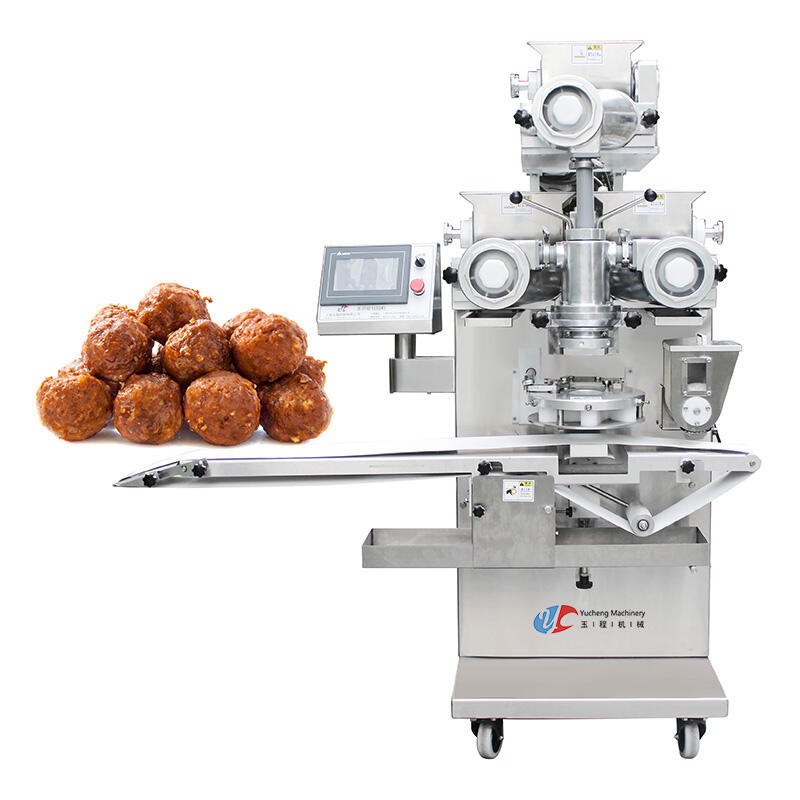
Selecting the right date ball machine for your business is a critical decision that can significantly impact your production efficiency, product quality, and overall profitability. Whether you're a startup entrepreneur entering the healthy snack market or an established food manufacturer looking to expand your product line, understanding the key factors that influence this investment will help you make an informed choice. A date ball machine automates the process of forming uniform, consistent spheres from date paste and other ingredients, eliminating manual labor while ensuring scalability and hygiene standards that modern food businesses require.
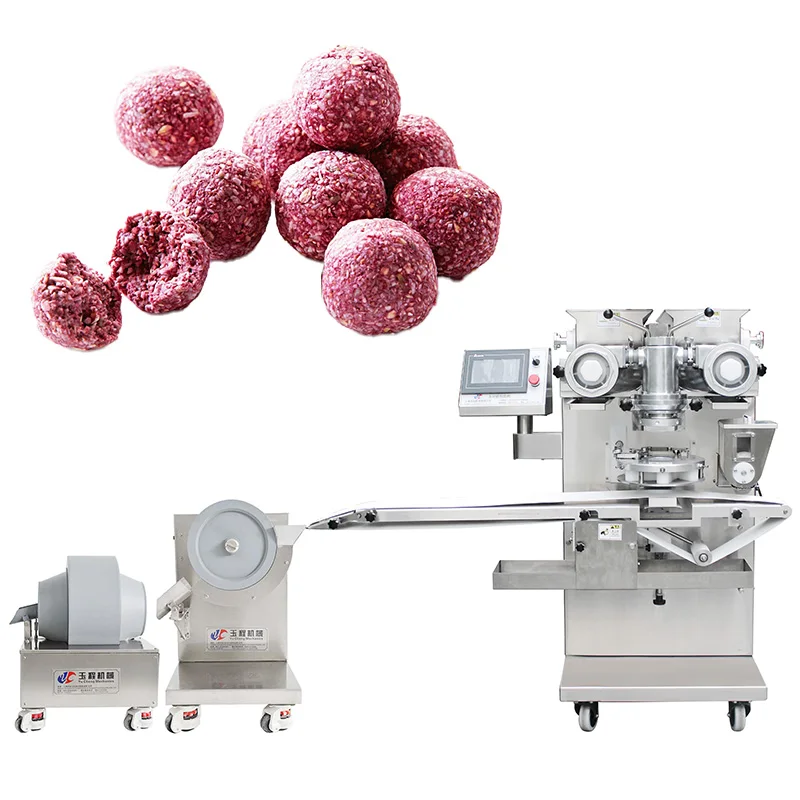
The decision to invest in automated equipment goes beyond simply purchasing machinery—it requires careful evaluation of your business model, production goals, budget constraints, and future growth plans. This comprehensive guide explores the essential considerations every business owner should assess when choosing a date ball machine, from production capacity and technical specifications to maintenance requirements and regulatory compliance. By understanding these factors thoroughly, you can select equipment that aligns perfectly with your operational needs and positions your business for sustainable growth in the competitive healthy snack industry.
Production Capacity and Business Scale Alignment
Assessing Your Current and Future Production Needs
When evaluating a date ball machine, the first critical factor to consider is production capacity measured in units per hour or per minute. Your current production requirements should serve as the baseline, but forward-thinking businesses must also account for anticipated growth over the next three to five years. A machine that perfectly matches today's needs may become a bottleneck within months if your business experiences rapid expansion. Manufacturers typically offer date ball machines in various capacity ranges, from small-scale units producing 30-50 balls per minute suitable for artisanal operations, to industrial-grade systems capable of forming 200-300 balls per minute for large-scale production facilities.
Understanding your business scale helps determine the appropriate investment level and prevents costly mistakes. Startup businesses often benefit from mid-range capacity machines that offer room for growth without excessive upfront capital investment. Established manufacturers with proven market demand should prioritize higher-capacity systems that maximize throughput and reduce per-unit production costs. Consider seasonal demand fluctuations, contract manufacturing opportunities, and potential product line extensions when calculating your capacity requirements. A date ball machine with adjustable speed settings provides flexibility to match production rates with demand variations, making it a valuable feature for businesses experiencing seasonal sales patterns or testing new market segments.
Matching Machine Output to Distribution Channels
Your distribution strategy directly influences the ideal production capacity for your date ball machine. Businesses selling primarily through farmers' markets, local retail outlets, or direct-to-consumer channels typically require lower daily production volumes compared to companies supplying regional grocery chains or wholesale distributors. Calculate your weekly and monthly order fulfillment needs, factoring in shelf life, inventory turnover rates, and lead times for customer deliveries. A properly sized machine prevents overproduction that leads to waste and underproduction that results in missed sales opportunities or damaged customer relationships.
Food service operations, corporate catering businesses, and health food cafes have unique production patterns that require careful consideration. These businesses often need batch production capabilities rather than continuous operation, making machines with quick changeover features and easy cleaning protocols particularly valuable. The date ball machine you select should accommodate your peak demand periods without requiring excessive overtime labor or multi-shift operations unless your business model specifically supports continuous production. Evaluate whether your distribution model benefits more from producing large batches less frequently or smaller batches with greater frequency, as this fundamental operational decision significantly impacts your equipment selection criteria.
Technical Specifications and Material Compatibility
Understanding Size Consistency and Customization Options
Product consistency represents a fundamental quality standard in food manufacturing, and your date ball machine must deliver uniform size, weight, and shape across every production run. Most commercial machines offer adjustable mold sizes, allowing you to produce balls ranging from small 10-gram energy bites to larger 50-gram snack balls depending on your product specifications and market positioning. The ability to change ball sizes quickly without extensive machine reconfiguration provides valuable production flexibility, especially for businesses manufacturing multiple product variants or testing different portion sizes for market research purposes.
Precision engineering determines whether your date ball machine consistently produces perfectly spherical products or irregular shapes that reduce visual appeal and complicate packaging. High-quality machines incorporate calibrated forming mechanisms that maintain tight tolerances, typically within 2-3% weight variation across hundreds of balls. This consistency directly impacts packaging efficiency, reduces material waste, and ensures that nutritional labeling accurately reflects actual product weights. When evaluating potential machines, request sample production runs or demonstration videos showing actual output to verify size consistency meets your quality standards and brand positioning requirements.
Material Handling Capabilities and Recipe Flexibility
Different date ball recipes present varying challenges for automated equipment, from sticky date pastes to formulations containing nuts, seeds, coconut flakes, or protein powders. Your chosen date ball machine must handle the specific ingredient compositions and moisture levels your recipes require without jamming, producing waste, or requiring constant operator intervention. Machines designed for high-moisture date pastes may struggle with drier protein ball formulations, while equipment optimized for nut-heavy recipes might not perform well with pure date paste applications. Verify that the manufacturer has experience with ingredient profiles similar to your recipes and can demonstrate successful processing of comparable formulations.
Recipe flexibility becomes increasingly important as your product line expands and market trends evolve. A versatile date ball machine accommodates ingredient variations without requiring major adjustments or component replacements, allowing you to quickly respond to customer preferences, seasonal ingredients availability, or emerging superfood trends. Consider whether your business plans include layered balls, filled centers, or coated products, as these advanced applications require specialized capabilities beyond basic sphere formation. Some manufacturers offer modular equipment designs where additional stations for coating, dusting, or filling can be integrated into your production line as your product portfolio grows, providing a cost-effective upgrade path that protects your initial investment.
Construction Quality and Hygiene Standards
Food-Grade Materials and Sanitary Design Principles
Food safety regulations mandate that all product-contact surfaces on your date ball machine must be constructed from food-grade materials that resist corrosion, withstand regular cleaning with approved sanitizers, and prevent bacterial growth. Stainless steel construction, particularly 304 or 316 grade, represents the industry standard for commercial food processing equipment due to its durability, cleanability, and resistance to acidic ingredients. Machines incorporating plastic components for product contact should use FDA-approved food-grade polymers that maintain integrity under repeated cleaning cycles and don't leach chemicals into your products.
Sanitary design principles extend beyond material selection to include equipment geometry that eliminates dead spaces, crevices, and hidden areas where ingredient residue can accumulate and harbor bacteria. Your date ball machine should feature smooth, continuous surfaces with minimal joints, proper drainage to prevent water pooling, and accessible design that allows thorough cleaning of all product zones. Equipment meeting 3-A Sanitary Standards or European Hygienic Engineering and Design Group guidelines provides assurance that the manufacturer has prioritized food safety in their design process. These internationally recognized standards address critical factors including surface finish requirements, cleanability verification, and microbiological testing protocols that protect your brand reputation and ensure regulatory compliance.
Ease of Cleaning and Maintenance Accessibility
Daily cleaning requirements significantly impact labor costs, production downtime, and overall equipment effectiveness, making ease of cleaning a crucial selection criterion for any date ball machine. Equipment featuring tool-free disassembly allows operators to quickly remove forming components, hoppers, and product-contact surfaces for thorough washing between production runs or when changing recipes. Machines requiring specialized tools, extensive disassembly procedures, or technical expertise for routine cleaning increase labor costs and create bottlenecks that reduce production capacity, particularly for businesses running multiple shifts or producing various product types throughout the day.
Consider the total time required for complete teardown, washing, sanitizing, and reassembly when evaluating different machines, as this directly affects your operational efficiency. Some advanced systems incorporate clean-in-place capabilities or automated cleaning cycles that reduce manual labor, though these features typically command premium pricing. Maintenance accessibility represents another critical factor, as routine lubrication, adjustment, and component replacement should not require specialized technicians or extensive production shutdowns. A well-designed date ball machine provides clear access to wear components like bearings, drive belts, and forming mechanisms, with maintenance procedures documented in comprehensive manuals that your team can follow without external support for routine service tasks.
Operational Efficiency and Energy Considerations
Power Requirements and Utility Infrastructure
Understanding the electrical requirements of your prospective date ball machine ensures compatibility with your facility's existing infrastructure and prevents unexpected installation costs. Commercial machines typically operate on either single-phase or three-phase power, with voltage requirements varying by region and equipment size. Small-capacity machines may function on standard 220V single-phase power, while industrial-grade systems often require 380V or 415V three-phase connections. Verify that your facility can supply the necessary power without electrical upgrades, or budget for infrastructure modifications if upgrading electrical service is required to accommodate your equipment selection.
Energy consumption directly impacts operational costs, particularly for businesses running extended production shifts or operating in regions with high electricity rates. Modern date ball machines incorporate energy-efficient motors and drive systems that minimize power consumption while maintaining consistent performance. Request detailed specifications on rated power consumption and conduct calculations based on your anticipated production hours to estimate monthly energy costs. Some manufacturers provide energy consumption data at various production speeds, allowing you to optimize operational settings that balance throughput requirements with energy efficiency goals. For environmentally conscious businesses or those seeking sustainability certifications, selecting equipment with demonstrated energy efficiency supports broader corporate responsibility initiatives while reducing operational expenses.
Labor Requirements and Operator Skill Levels
Automation levels vary significantly among date ball machines, from semi-automatic systems requiring constant operator attention to fully automated units that run continuously with minimal supervision. Your labor availability, wage rates, and workforce skill levels should influence your equipment selection to ensure seamless integration into your operational model. Semi-automatic machines typically require one dedicated operator to feed materials, monitor output quality, and perform manual interventions when issues arise. These systems suit smaller operations where labor costs are manageable and production flexibility outweighs the efficiency gains of full automation.
Fully automated date ball machines incorporate advanced controls, material feeding systems, and quality monitoring capabilities that reduce labor requirements to periodic oversight and material replenishment. While commanding higher initial investment, automated systems deliver substantial labor savings over their operational lifetime, particularly in markets with high minimum wages or labor shortages. Evaluate whether potential operators possess the technical competency to manage computerized controls, troubleshoot operational issues, and perform routine maintenance, or whether additional training investments will be necessary. User-friendly interfaces with intuitive controls reduce training time and minimize operational errors, making them valuable features for businesses experiencing high employee turnover or those operating in regions where technical expertise is limited.
Financial Considerations and Long-Term Value
Initial Investment Versus Total Cost of Ownership
While purchase price represents an obvious consideration when selecting a date ball machine, sophisticated buyers recognize that total cost of ownership provides a more accurate financial picture. This comprehensive analysis includes initial equipment cost, installation expenses, operator training, ongoing maintenance, replacement parts, energy consumption, and expected service life. A lower-priced machine with high maintenance requirements, frequent breakdowns, or poor energy efficiency may ultimately cost significantly more than a premium unit offering superior reliability and operational economy over its lifespan.
Calculate expected payback period by estimating the labor savings, increased production capacity, and quality improvements your date ball machine will deliver compared to manual production or your existing equipment. Most commercial food processing equipment should demonstrate positive return on investment within 18-36 months for the purchase to make sound business sense. Consider financing options, leasing arrangements, or used equipment markets if capital constraints limit your ability to purchase optimal equipment outright. However, exercise caution with used machinery, ensuring thorough inspection by qualified technicians and verification of remaining service life before committing to what might initially appear as an attractive bargain but could become a costly liability.
Warranty Coverage and Technical Support Availability
Comprehensive warranty coverage protects your investment and provides recourse if your date ball machine experiences premature failures or manufacturing defects. Standard warranties typically cover one to two years for parts and labor, though some manufacturers offer extended coverage or optional service contracts for additional fees. Carefully review warranty terms to understand what components are covered, exclusions that might void coverage, and whether the manufacturer provides on-site service or requires equipment return for repairs. International equipment purchases may complicate warranty service, as shipping costs, customs procedures, and extended downtime can offset initial price advantages.
Technical support availability represents a critical but often overlooked consideration that significantly impacts operational continuity. Manufacturers offering responsive customer service, readily available replacement parts, and comprehensive technical documentation enable rapid issue resolution that minimizes production disruptions. Evaluate whether the manufacturer provides phone support during your operating hours, offers remote diagnostics capabilities, or maintains service technicians within your geographic region for on-site assistance when necessary. A date ball machine from a manufacturer with poor support infrastructure becomes a liability during breakdowns, potentially idling your entire production operation while you wait for parts or technical guidance. Investing in equipment from established manufacturers with proven support networks provides peace of mind and protects your ability to meet customer commitments reliably.
Scalability and Future Expansion Compatibility
Forward-thinking equipment selection considers not only current needs but also how your chosen date ball machine integrates with future expansion plans. Modular equipment designs allow incremental capacity additions by incorporating parallel production lines or integrating upstream ingredient preparation and downstream packaging systems as production volumes grow. Purchasing equipment that accommodates automation upgrades, additional forming stations, or enhanced controls protects your initial investment by extending its useful life and delaying the need for complete equipment replacement as your business scales.
Compatibility with industry-standard production equipment ensures that your date ball machine can integrate seamlessly with mixers, coating systems, packaging equipment, and quality control instruments from various manufacturers. Proprietary systems that require single-source components or limit integration options may create vendor lock-in situations that increase long-term costs and reduce operational flexibility. Selecting equipment based on open standards and common interface protocols provides freedom to optimize your production line configuration as technology evolves and your operational requirements change over time.
Regulatory Compliance and Quality Certifications
Food Safety and Manufacturing Standards
Regulatory compliance represents a non-negotiable requirement for any food processing equipment, and your date ball machine must meet all applicable local, national, and international standards governing food manufacturing. In the United States, equipment must comply with FDA regulations and may require NSF certification depending on your production facility classification. European markets mandate CE marking and compliance with EU food hygiene regulations, while many countries require additional certifications specific to their jurisdictions. Verify that your prospective equipment carries appropriate certifications for your target markets, particularly if you plan to export products internationally or sell to major retailers who conduct rigorous supplier audits.
Quality management system certifications such as ISO 9001 indicate that the manufacturer follows structured processes for design, production, and quality assurance, reducing the likelihood of defects or performance issues. Manufacturers holding ISO 22000 or FSSC 22000 certifications demonstrate specific expertise in food safety management systems, providing additional confidence in their understanding of food industry requirements. While certifications don't guarantee perfect equipment performance, they offer valuable risk mitigation by confirming that recognized third parties have evaluated the manufacturer's capabilities and processes. When comparing similar machines at comparable price points, certifications can serve as differentiating factors that tip selection decisions toward manufacturers demonstrating documented commitment to quality and food safety.
Documentation and Traceability Requirements
Modern food safety protocols require comprehensive documentation of equipment specifications, maintenance records, cleaning logs, and production parameters that demonstrate due diligence in preventing contamination and ensuring product safety. Your date ball machine should come with complete technical documentation including detailed parts lists, maintenance schedules, cleaning procedures, and operational guidelines that support your food safety management system. Equipment lacking thorough documentation complicates regulatory compliance efforts and creates challenges during facility inspections or customer audits where you must demonstrate proper equipment management and maintenance.
Advanced machines incorporate data logging capabilities that automatically record production parameters including cycle counts, operating temperatures, speed settings, and maintenance alerts. This digital traceability supports lot tracking requirements, facilitates root cause analysis when quality issues arise, and provides objective evidence of proper equipment operation during regulatory inspections. While basic mechanical machines function adequately for simple production environments, businesses serving institutional customers, pursuing organic certification, or exporting internationally benefit significantly from equipment offering enhanced documentation and traceability features that simplify compliance with increasingly stringent food safety requirements.
FAQ
What is the typical lifespan of a commercial date ball machine?
A well-maintained commercial date ball machine typically delivers 10-15 years of productive service life when operated according to manufacturer guidelines and subjected to proper preventive maintenance. Equipment lifespan varies based on production intensity, maintenance practices, ingredient characteristics, and build quality, with premium machines often outlasting budget alternatives by several years. Regular component replacement, proper cleaning protocols, and timely repairs significantly extend operational life and maintain consistent performance throughout the equipment's service period.
Can a single date ball machine handle different product sizes and formulations?
Most commercial date ball machines offer adjustable forming mechanisms that accommodate multiple product sizes, typically ranging from 10-gram energy bites to 50-gram snack balls, though exact ranges vary by model. Changing between sizes usually requires simple mold or die adjustments that take 15-30 minutes depending on equipment design. Formulation flexibility depends on ingredient similarity, with most machines handling variations in nut content, dried fruit ratios, and binding agents within reasonable parameters, though dramatically different moisture levels or sticky properties may require recipe optimization to achieve consistent results.
How much space do I need to install and operate a date ball machine?
Space requirements vary significantly based on machine capacity and configuration, but typical commercial installations require 15-25 square meters of floor space including the machine footprint, operator work areas, ingredient staging zones, and finished product collection areas. Compact models suitable for small-scale production may operate effectively in 10-12 square meters, while high-capacity automated systems with integrated conveyors and auxiliary equipment can require 40-50 square meters. Additionally, ensure adequate ceiling height for proper ventilation and sufficient clearance around the equipment for maintenance access and thorough cleaning procedures.
What ongoing maintenance does a date ball machine require?
Routine maintenance for a date ball machine includes daily cleaning of all product-contact surfaces, weekly lubrication of moving components according to manufacturer specifications, monthly inspection of belts, chains, and drive systems for wear, and quarterly comprehensive examinations of electrical components, safety systems, and structural integrity. Most manufacturers recommend annual professional servicing by qualified technicians to perform detailed inspections, replace wear components before failure, and recalibrate forming mechanisms to maintain consistent output quality. Preventive maintenance schedules reduce unexpected breakdowns and extend equipment lifespan while ensuring consistent product quality and food safety compliance.


