 EN
EN

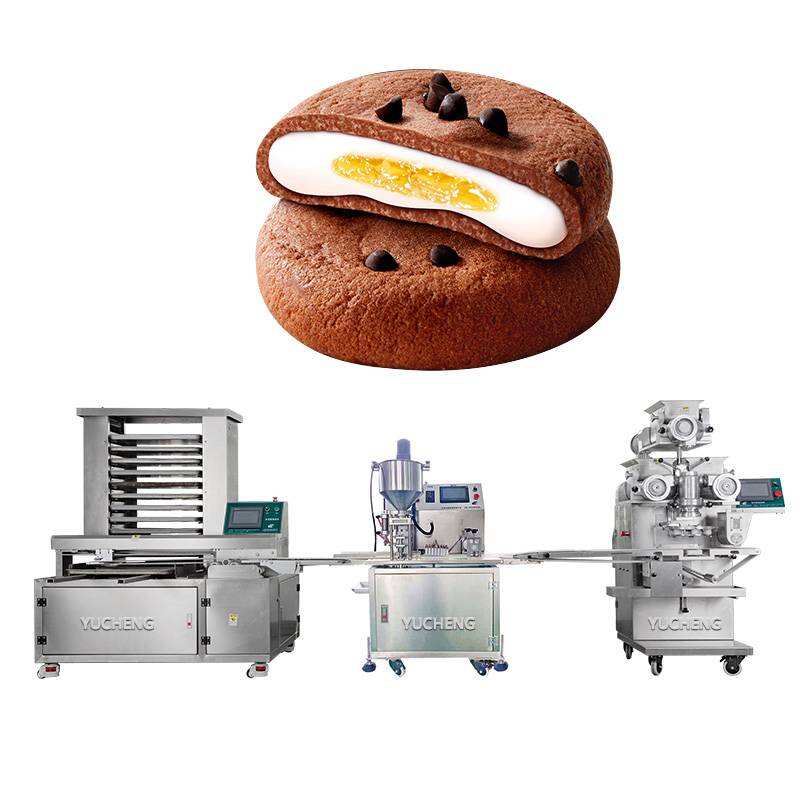
Energy-dense snacks such as date balls, protein balls, and nutrient-rich confections have surged in popularity across global markets, driven by consumer demand for convenient, healthy alternatives to traditional sweets. Manufacturing these products at scale presents unique challenges: maintaining consistent size and weight, preserving delicate ingredient integrity, achieving uniform texture, and meeting stringent food safety standards while optimizing production throughput. A date ball machine addresses these challenges directly by automating the most labor-intensive and precision-critical stages of production. This specialized equipment transforms batch processing into continuous, high-efficiency manufacturing, enabling producers to scale operations without compromising product quality or increasing labor costs proportionally.
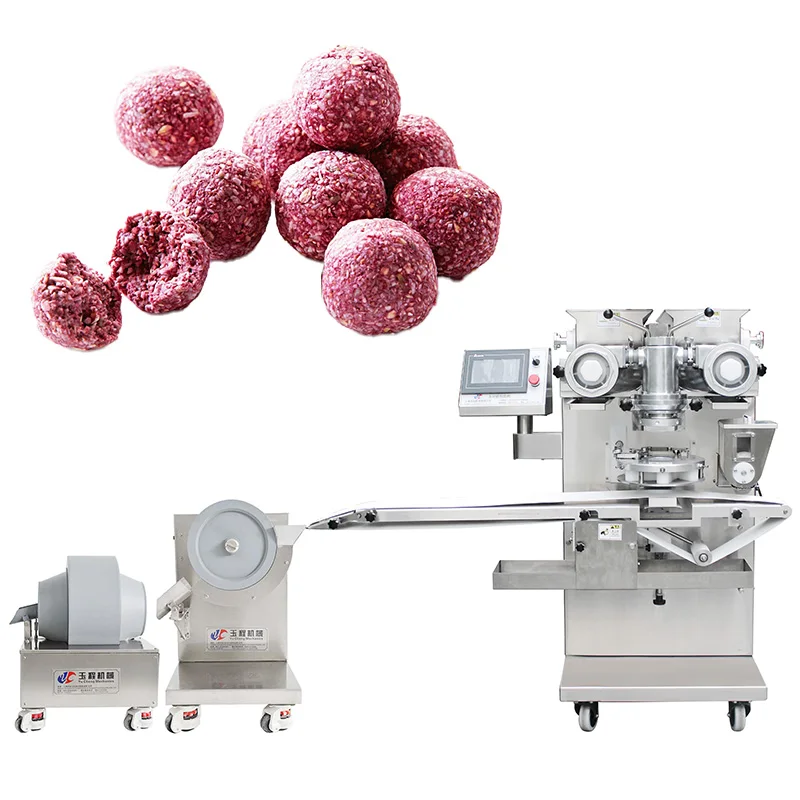
The mechanics of how a date ball machine streamlines energy-dense snack manufacturing involve coordinated automation across mixing, portioning, forming, and handling processes. Unlike manual methods that rely on skilled workers to hand-roll individual portions, automated systems employ precision-engineered components that execute these tasks with repeatable accuracy. This transition from artisanal to industrial production scales enables manufacturers to respond to market demands rapidly while maintaining the artisan quality consumers expect. Understanding the specific mechanisms through which these machines optimize production workflows reveals why they have become essential infrastructure in modern snack manufacturing facilities, particularly for operations targeting retail distribution channels where product consistency directly impacts brand reputation and shelf performance.
Automated Portioning and Consistency Control
Precision Weighing and Cutting Mechanisms
The date ball machine employs volumetric or gravimetric portioning systems that divide bulk snack mixture into precisely measured portions before forming. Advanced models integrate load cell technology that continuously monitors material flow, adjusting cutting intervals in real-time to compensate for density variations in the raw mixture. This dynamic feedback system ensures each portion falls within tight weight tolerances, typically achieving variance coefficients below two percent across production runs. Such precision eliminates the common problem in manual operations where worker fatigue or attention drift leads to progressive size inconsistency, particularly problematic in extended production shifts.
The portioning stage directly impacts downstream efficiency because uniform input portions enable predictable forming outcomes. When a date ball machine receives consistently sized portions, the rounding mechanism can apply optimal pressure and rotation parameters without constant adjustment. This consistency cascade effect means quality control focuses on process monitoring rather than piece-by-piece inspection, significantly reducing waste rates. Manufacturers report scrap reduction of fifteen to twenty-five percent when transitioning from manual portioning to automated systems, with the savings compounding over high-volume production cycles.
Material Handling Without Structural Degradation
Energy-dense snacks containing dates, nuts, seeds, and binding agents present unique handling challenges due to their sticky, cohesive nature and the fragile structure of inclusions like whole nuts or fruit pieces. A date ball machine incorporates non-stick surface treatments on all contact points, combined with precisely calibrated conveyor speeds that minimize shear forces during material transfer. The equipment design accounts for the rheological properties of date-based mixtures, which exhibit both plastic and elastic behaviors depending on temperature and moisture content.
Temperature management within the date ball machine proves critical for maintaining material flowability without compromising ingredient integrity. Many systems integrate cooling jackets or ambient air circulation around forming zones, preventing heat buildup from friction that could soften binding agents excessively. This thermal control preserves the distinct texture of individual ingredients within the matrix, ensuring the finished product delivers the sensory experience consumers expect rather than a homogenized paste. Manufacturers processing temperature-sensitive formulations particularly benefit from this controlled environment, as it extends the viable production window before requiring mixture adjustments.
High-Speed Forming and Shaping Operations
Rotary Forming Technology
The core mechanism that defines how a date ball machine achieves high throughput involves rotary forming technology, where portioned material passes through counter-rotating plates or rollers with hemispherical cavities. As the material enters the gap between these surfaces, centripetal force and controlled compression shape it into spherical forms. The rotational speed, cavity geometry, and gap distance work in concert to achieve complete sphericity without applying excessive pressure that would compact the mixture beyond desired density specifications. Advanced systems allow operators to adjust these parameters independently, accommodating formulation variations without requiring physical component changes.
Production rates achievable through rotary forming systems significantly exceed alternative methods such as manual rolling or single-cavity molding. A properly configured date ball machine can process sixty to one hundred twenty units per minute depending on size specifications, with some industrial models reaching even higher outputs for smaller diameter products. This throughput capacity enables small to mid-size manufacturers to compete with larger operations by maximizing equipment utilization during available production windows, effectively compressing lead times between order receipt and shipment.
Adaptive Pressure Control Systems
Modern date ball machine designs incorporate sensor-driven pressure control that adapts forming force based on real-time resistance feedback from the material. This adaptive approach proves essential when processing formulations with variable moisture content or inclusion particle size distributions that affect bulk density. The system detects increased resistance when encountering denser material clusters and momentarily reduces compression force to prevent over-compaction, then returns to standard parameters as material consistency normalizes. This intelligent responsiveness maintains product quality across entire production batches despite inevitable minor variations in input material characteristics.
The implications of adaptive pressure control extend beyond quality consistency to equipment longevity and maintenance requirements. By avoiding excessive force application, mechanical wear on forming components decreases substantially, extending service intervals between part replacements. Manufacturers report thirty to forty percent increases in component lifespan when utilizing pressure-adaptive systems compared to fixed-parameter machines. This reliability factor contributes significantly to total cost of ownership calculations, particularly for operations running multi-shift production schedules where unplanned downtime directly impacts revenue and customer commitment fulfillment.
Integration with Upstream and Downstream Processing
Continuous Feed Systems and Buffer Management
A date ball machine achieves maximum efficiency when integrated into continuous production lines where upstream mixing and downstream coating or packaging operations maintain synchronized flow rates. The equipment typically includes variable-speed feed conveyors with level sensors that maintain optimal material supply to the portioning stage without accumulation or starvation conditions. These buffer management systems absorb normal fluctuations in upstream output, ensuring the forming mechanism receives steady material flow that prevents cycling between idle and overload states which would compromise both throughput and quality.
The coordination between the date ball machine and downstream processes such as cooling tunnels, coating applicators, or packaging systems requires careful timing calibration. Most industrial installations employ programmable logic controllers that synchronize equipment speeds across the entire line, automatically adjusting feed rates if downstream equipment signals reduced capacity due to packaging material changeovers or quality inspection holds. This integrated automation prevents product accumulation at transfer points where material could degrade or require manual intervention, maintaining the continuous flow that defines streamlined manufacturing operations.
Sanitation Design and Changeover Efficiency
Energy-dense snack manufacturing often involves producing multiple product variants within single production days, requiring frequent changeovers between formulations with different ingredient profiles. A date ball machine designed for this operational reality incorporates sanitary construction principles including tool-free disassembly of product-contact surfaces, open frame architecture that eliminates difficult-to-clean crevices, and material specifications that withstand aggressive cleaning agents without degradation. These features enable complete sanitation cycles to be completed in thirty to forty-five minutes rather than the two to three hours required for equipment with complex geometries or fastener-intensive designs.
The economic impact of reduced changeover time becomes substantial when calculated across annual production schedules. A facility producing eight different product variants with two changeovers per production day saves approximately three hundred productive hours annually by reducing each changeover by ninety minutes. This recovered time translates directly to increased output capacity without capital investment in additional equipment, effectively improving return on existing assets. Additionally, faster changeovers reduce the psychological burden on production teams, making schedule flexibility more manageable and improving workforce satisfaction in demanding manufacturing environments.
Quality Enhancement Through Process Control
Dimensional Consistency and Weight Uniformity
The pharmaceutical-grade precision achievable with modern date ball machine technology delivers dimensional consistency that meets retail packaging requirements without secondary sorting operations. Automated optical inspection systems can be integrated directly after forming to verify that each unit falls within specified diameter tolerances, typically plus or minus one millimeter for products in the twenty to thirty millimeter size range. Units falling outside specifications are automatically rejected before entering coating or packaging stages, preventing defective products from progressing through value-adding processes that increase scrap costs.
Weight uniformity directly impacts both regulatory compliance and consumer satisfaction in energy-dense snack products where nutritional labeling declares specific serving sizes. A date ball machine that maintains weight consistency within three percent enables manufacturers to set conservative nutritional declaration values without significant product giveaway, optimizing material costs while ensuring every package meets labeled specifications. This precision becomes particularly valuable for products marketed based on protein content, caloric density, or other quantified nutritional attributes where consumer trust depends on label accuracy and consistency between purchases.
Texture Preservation and Structural Integrity
The controlled mechanical action within a date ball machine preserves the heterogeneous texture that distinguishes premium energy-dense snacks from extruded or compression-molded alternatives. By applying forming pressure through distributed surface contact rather than concentrated force, the equipment maintains the distinct identity of inclusions such as chopped nuts, seeds, or dried fruit pieces within the binding matrix. This structural preservation creates the sensory experience consumers associate with artisan products, despite the industrial production scale, bridging the quality expectations of specialty retail channels with the cost efficiency requirements of mass distribution.
Maintaining structural integrity through the forming process also impacts shelf stability and packaging efficiency. Products that retain their spherical shape without deformation under their own weight or during packaging operations stack efficiently in containers, maximizing package fill rates and minimizing void space that increases shipping costs. The consistent shape produced by a date ball machine enables automated counting and orientation during packaging, supporting high-speed cartoning operations that would be impractical with manually formed products exhibiting shape irregularities. This downstream efficiency multiplies the initial streamlining benefits achieved during forming, creating cumulative advantages throughout the manufacturing value chain.
Economic and Operational Benefits
Labor Cost Optimization
The transition from manual to automated forming through date ball machine implementation fundamentally restructures labor economics in energy-dense snack manufacturing. Manual operations typically require one worker to produce one hundred fifty to two hundred fifty units per hour depending on product size and worker experience, with quality consistency declining during extended shifts as fatigue accumulates. A single date ball machine operator can oversee equipment producing three thousand six hundred to seven thousand two hundred units per hour, representing a fifteen to thirty-fold productivity increase per labor hour invested. This productivity multiplication enables manufacturers to reallocate human resources to higher-value activities such as quality assurance, process optimization, and new product development rather than repetitive manual tasks.
The labor cost advantages extend beyond direct wage comparisons to encompass reduced training requirements, lower injury rates, and decreased turnover impacts. Operating a date ball machine requires technical skills rather than physical stamina or manual dexterity developed through extended practice, making the workforce more flexible and reducing the business disruption when individual employees separate. The reduced physical demands of equipment operation compared to manual forming also minimize repetitive stress injuries, lowering workers' compensation insurance costs and improving workplace safety metrics that increasingly influence customer audits and certification requirements.
Scalability and Market Responsiveness
Energy-dense snack markets exhibit both seasonal demand fluctuations and rapid trend-driven growth in specific product categories, requiring manufacturing operations that can scale production volumes efficiently. A date ball machine provides this scalability through extended operating hours rather than proportional workforce expansion, enabling manufacturers to respond to demand surges with minimal lead time. The equipment can operate continuously for sixteen to twenty hours daily with only brief sanitation intervals, compared to manual operations constrained by shift schedules and mandatory rest periods, effectively doubling or tripling facility capacity without physical expansion.
Market responsiveness also depends on the ability to introduce new product variations quickly as consumer preferences evolve. The parametric adjustability of date ball machine systems supports rapid formulation testing and production launch, with new products moving from concept to commercial production in weeks rather than months. This agility proves particularly valuable in the energy-dense snack category where ingredient trends such as adaptogens, functional mushrooms, or alternative protein sources create opportunities for brands that can deliver innovative products ahead of competitors. The reduced barrier to product line expansion encourages manufacturers to maintain broader portfolios, capturing multiple consumer segments and retail channels that diversify revenue streams and reduce dependence on single product success.
FAQ
What production capacity should manufacturers expect from a date ball machine?
Production capacity varies based on product size specifications and equipment configuration, with typical industrial models processing between sixty and one hundred twenty units per minute for standard twenty to thirty millimeter diameter balls. Smaller products can achieve higher piece counts per minute, while larger formats may reduce throughput to forty to sixty units per minute. Continuous operation capability means daily production can reach eighty-six thousand to one hundred seventy-three thousand units per twenty-four hour period assuming minimal downtime for sanitation and maintenance, though most facilities operate sixteen to eighteen hour production days yielding sixty thousand to one hundred thirty thousand units daily output.
How does a date ball machine handle formulations with varying moisture content?
Advanced date ball machine designs incorporate adaptive pressure control systems that adjust forming force based on material resistance feedback, accommodating moisture variations within reasonable ranges typically spanning four to eight percentage points. For formulations outside this adaptive range, operators can manually adjust gap settings, rotational speeds, and compression parameters through the control interface. Most manufacturers establish standardized formulation specifications that maintain consistent moisture targets through upstream process control, minimizing the need for constant equipment adjustment and ensuring predictable forming performance across production batches.
What maintenance requirements does a date ball machine impose on production operations?
Routine maintenance includes daily sanitation of product-contact surfaces following established cleaning protocols, weekly lubrication of drive components and bearing assemblies, and monthly inspection of wear components such as forming plates or rollers. Most manufacturers schedule quarterly preventive maintenance that includes detailed mechanical inspection, calibration verification, and replacement of consumable parts showing wear indicators. Annual comprehensive maintenance typically involves drive system overhaul, electrical component testing, and safety system verification. Total maintenance time averages four to six hours weekly including daily cleaning, representing approximately three to four percent of potential production time in continuous operation schedules.
Can existing facilities integrate a date ball machine without major infrastructure modifications?
Most date ball machine installations require only standard industrial electrical service, compressed air supply for pneumatic controls, and adequate floor space with appropriate load-bearing capacity, making integration feasible in typical food manufacturing facilities without structural modifications. The equipment footprint typically ranges from two to four meters in length and one to one point five meters in width depending on capacity and configuration options. Integration planning should address material flow from upstream mixing equipment and transfer to downstream processes, which may require conveyor additions or repositioning of existing equipment to optimize workflow, but rarely necessitates building expansion or utility infrastructure upgrades beyond standard food processing facility capabilities.
Table of Contents
- Automated Portioning and Consistency Control
- High-Speed Forming and Shaping Operations
- Integration with Upstream and Downstream Processing
- Quality Enhancement Through Process Control
- Economic and Operational Benefits
-
FAQ
- What production capacity should manufacturers expect from a date ball machine?
- How does a date ball machine handle formulations with varying moisture content?
- What maintenance requirements does a date ball machine impose on production operations?
- Can existing facilities integrate a date ball machine without major infrastructure modifications?


