 EN
EN


The modern food manufacturing industry faces unprecedented demands for efficiency, consistency, and quality control. As consumer preferences evolve toward more sophisticated food products, manufacturers must adapt their production processes to meet these expectations while maintaining competitive pricing and operational efficiency. Automatic encrusting equipment has emerged as a critical solution for food producers seeking to streamline their operations and deliver superior products to market.
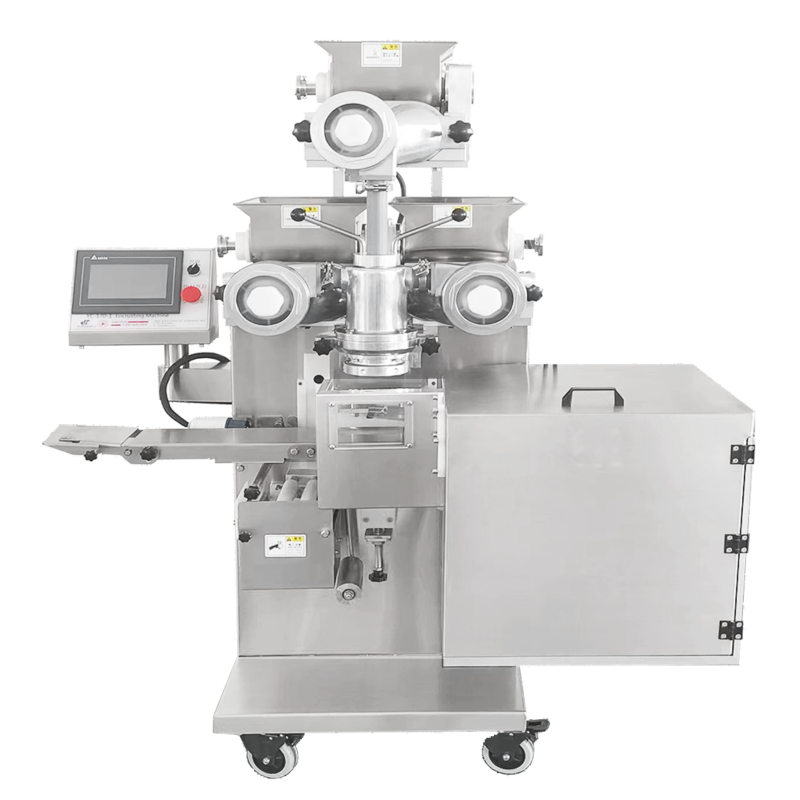
Food manufacturers increasingly recognize that manual production methods cannot match the precision and speed required for large-scale operations. The investment in automated solutions represents a strategic shift toward sustainable growth and market competitiveness. This transformation affects every aspect of production, from raw material utilization to final product presentation, making automation not just beneficial but essential for long-term success.
Understanding the Core Benefits of Production Automation
Enhanced Production Efficiency and Speed
Manufacturing facilities utilizing automatic encrusting equipment experience dramatic improvements in production throughput compared to traditional manual methods. These advanced systems can process hundreds of units per hour while maintaining consistent quality standards throughout extended production runs. The continuous operation capability eliminates bottlenecks that typically occur with manual labor, allowing manufacturers to meet tight delivery schedules and respond quickly to market demands.
Production speed increases translate directly into revenue growth opportunities for food manufacturers. Higher output volumes enable companies to accept larger orders, expand their customer base, and negotiate better pricing with distributors. The reliability of automated systems ensures that production schedules remain predictable, reducing the risk of delays that could damage customer relationships or result in financial penalties.
Consistent Product Quality and Standardization
Quality consistency represents one of the most significant advantages of implementing automatic encrusting equipment in food production facilities. Automated systems eliminate human variability factors that can lead to inconsistent product dimensions, filling ratios, and appearance characteristics. Every product manufactured maintains identical specifications, ensuring brand reliability and customer satisfaction across all distribution channels.
Standardization benefits extend beyond visual consistency to include nutritional content uniformity and shelf life predictability. Precise control over ingredient distribution and processing conditions ensures that each product meets established nutritional labeling requirements while maintaining optimal texture and flavor profiles. This consistency builds consumer trust and supports brand loyalty development over time.
Cost Reduction and Resource Optimization
Labor Cost Management
Food manufacturers implementing automatic encrusting equipment achieve substantial reductions in direct labor costs associated with production operations. Automated systems require minimal operator oversight, allowing companies to reallocate skilled workers to higher-value activities such as quality control, product development, and process optimization. This strategic workforce redeployment maximizes human resource utilization while reducing overall production expenses.
Beyond immediate labor cost savings, automation reduces training requirements and minimizes the impact of employee turnover on production continuity. Standardized operating procedures for automated equipment are easier to learn and implement, reducing onboarding time for new employees and ensuring consistent operational practices across different production shifts.
Raw Material Waste Minimization
Precision control capabilities inherent in modern automatic encrusting equipment significantly reduce raw material waste during production processes. Accurate portioning systems ensure optimal ingredient utilization, eliminating overfilling and underfilling issues common with manual operations. This precision translates into measurable cost savings, particularly when working with expensive ingredients or specialty components.
Waste reduction benefits compound over time, contributing to improved profit margins and environmental sustainability objectives. Lower material consumption reduces procurement costs and storage requirements while supporting corporate social responsibility initiatives. Manufacturers can leverage these sustainability improvements in their marketing strategies, appealing to environmentally conscious consumers and business partners.
Quality Control and Safety Enhancement
Hygiene and Sanitation Standards
Automatic encrusting equipment incorporates advanced sanitation features that exceed manual production hygiene standards. Stainless steel construction, smooth surface finishes, and integrated cleaning systems minimize bacterial contamination risks while simplifying maintenance procedures. These design elements support compliance with food safety regulations and industry certification requirements.
Reduced human contact with food products during processing minimizes contamination opportunities and supports allergen control protocols. Enclosed processing chambers and automated material handling systems create controlled environments that maintain product integrity throughout manufacturing cycles. This enhanced food safety profile reduces liability exposure and supports brand reputation protection efforts.
Traceability and Documentation
Modern automatic encrusting equipment integrates sophisticated monitoring systems that document production parameters and track product batches throughout manufacturing processes. Digital recording capabilities support comprehensive traceability requirements while providing valuable data for process optimization and quality improvement initiatives.
Detailed production records enable rapid response to quality issues or customer complaints, facilitating efficient recall procedures when necessary. This documentation capability supports regulatory compliance requirements and provides evidence of due diligence in food safety management. Manufacturers can use this data to identify trends, optimize processes, and demonstrate continuous improvement efforts to customers and regulatory agencies.
Scalability and Market Adaptability
Flexible Production Capabilities
Automatic encrusting equipment offers exceptional versatility in accommodating diverse product specifications and market requirements. Programmable controls enable rapid changeovers between different product lines, sizes, and formulations without extensive manual adjustments or tooling modifications. This flexibility supports product diversification strategies and seasonal demand fluctuations effectively.
Modular design features allow manufacturers to expand production capacity incrementally as business growth demands increase. Additional processing units can integrate seamlessly with existing automatic encrusting equipment, providing scalable solutions that match investment capabilities with market opportunities. This expandability reduces initial capital requirements while preserving future growth options.
Innovation and Product Development Support
Advanced automatic encrusting equipment facilitates innovation in product development by enabling precise control over ingredient combinations and processing parameters. Manufacturers can experiment with new formulations, textures, and presentations while maintaining production efficiency and quality standards. This capability accelerates time-to-market for new products and supports competitive differentiation strategies.
Prototyping capabilities built into modern systems allow for cost-effective testing of new concepts before full-scale production implementation. Small batch production options enable market testing and customer feedback collection without significant investment risks. This development support enhances innovation cycles and improves success rates for new product launches.
Technology Integration and Industry Standards
Digital Manufacturing Integration
Contemporary automatic encrusting equipment incorporates Industry 4.0 principles through advanced connectivity and data analytics capabilities. Integration with enterprise resource planning systems enables real-time production monitoring, inventory management, and quality control coordination. These digital connections streamline operations and provide comprehensive visibility into manufacturing performance metrics.
Predictive maintenance features utilize sensor data and machine learning algorithms to optimize equipment performance and prevent unexpected downdowns. This proactive approach reduces maintenance costs, extends equipment lifespan, and minimizes production disruptions. Manufacturers benefit from improved overall equipment effectiveness and reduced total cost of ownership over the equipment lifecycle.
Compliance and Certification Support
Automatic encrusting equipment designed for food manufacturing incorporates features that facilitate compliance with international food safety standards and certification requirements. Built-in documentation systems, sanitary design principles, and validated cleaning procedures support HACCP implementation and third-party audit processes. This compliance support reduces regulatory risks and enables access to global markets.
Equipment manufacturers provide comprehensive validation packages and technical support to assist food producers in meeting specific regulatory requirements. Training programs, documentation templates, and ongoing technical assistance ensure successful implementation and long-term compliance maintenance. This support framework reduces implementation complexity and accelerates return on investment realization.
Return on Investment Considerations
Financial Performance Analysis
Investment in automatic encrusting equipment typically generates positive returns within two to three years through combined savings in labor costs, material waste reduction, and increased production capacity utilization. Financial modeling should consider both direct cost savings and indirect benefits such as improved product quality, enhanced food safety, and expanded market opportunities.
Cash flow improvements begin immediately upon installation as production efficiency gains and waste reduction deliver measurable cost savings. Revenue enhancement opportunities through increased capacity and product consistency support accelerated payback periods and improved profitability metrics. Long-term financial benefits include reduced maintenance costs, lower insurance premiums, and enhanced asset values.
Strategic Competitive Advantages
Manufacturers investing in automatic encrusting equipment gain significant competitive advantages through improved operational efficiency and product quality capabilities. Enhanced production flexibility enables rapid response to market trends and customer requirements, supporting market share growth and customer retention strategies. These competitive advantages compound over time, creating sustainable business value.
Market positioning benefits include enhanced brand reputation, improved customer satisfaction ratings, and increased distributor confidence in product consistency and delivery reliability. These intangible benefits translate into tangible business value through premium pricing opportunities, expanded distribution networks, and reduced marketing costs for customer acquisition and retention activities.
FAQ
What types of food products benefit most from automatic encrusting equipment?
Automatic encrusting equipment proves most beneficial for products requiring consistent filling distribution and uniform outer layers, such as filled pastries, dumplings, meat products, and confectionery items. Products with complex shapes or multiple components particularly benefit from the precision and repeatability that automated systems provide. The equipment excels in applications where manual production creates quality inconsistencies or cannot meet required production volumes.
How long does implementation typically take for automatic encrusting equipment?
Implementation timelines for automatic encrusting equipment typically range from 4 to 12 weeks, depending on system complexity and customization requirements. This timeframe includes equipment delivery, installation, commissioning, operator training, and initial production trials. Manufacturers should plan for additional time to optimize recipes and production parameters for their specific products and quality standards.
What maintenance requirements should manufacturers expect with automated systems?
Automatic encrusting equipment requires routine preventive maintenance including daily cleaning procedures, weekly lubrication schedules, and monthly component inspections. Most systems incorporate automated cleaning cycles and diagnostic monitoring to simplify maintenance procedures. Annual professional servicing and calibration ensure optimal performance and extend equipment lifespan. Proper maintenance protocols typically result in 95% or higher equipment availability rates.
Can existing production facilities accommodate automatic encrusting equipment installation?
Most automatic encrusting equipment can integrate into existing production facilities with minimal structural modifications. Equipment manufacturers typically provide site surveys and installation planning services to ensure proper integration with existing utilities, workflow patterns, and safety systems. Modular designs allow for phased implementation approaches that minimize production disruptions during installation and commissioning periods.
Table of Contents
- Understanding the Core Benefits of Production Automation
- Cost Reduction and Resource Optimization
- Quality Control and Safety Enhancement
- Scalability and Market Adaptability
- Technology Integration and Industry Standards
- Return on Investment Considerations
-
FAQ
- What types of food products benefit most from automatic encrusting equipment?
- How long does implementation typically take for automatic encrusting equipment?
- What maintenance requirements should manufacturers expect with automated systems?
- Can existing production facilities accommodate automatic encrusting equipment installation?


