 EN
EN


Modern food processing has revolutionized the way manufacturers produce nutritious snack bars, with advanced date bar machine technology leading this transformation. These sophisticated systems have become indispensable in commercial food production facilities, offering unprecedented efficiency and consistency in creating high-quality date-based products. The integration of precision engineering with automated processes has enabled manufacturers to meet growing consumer demand while maintaining strict quality standards and cost-effectiveness.
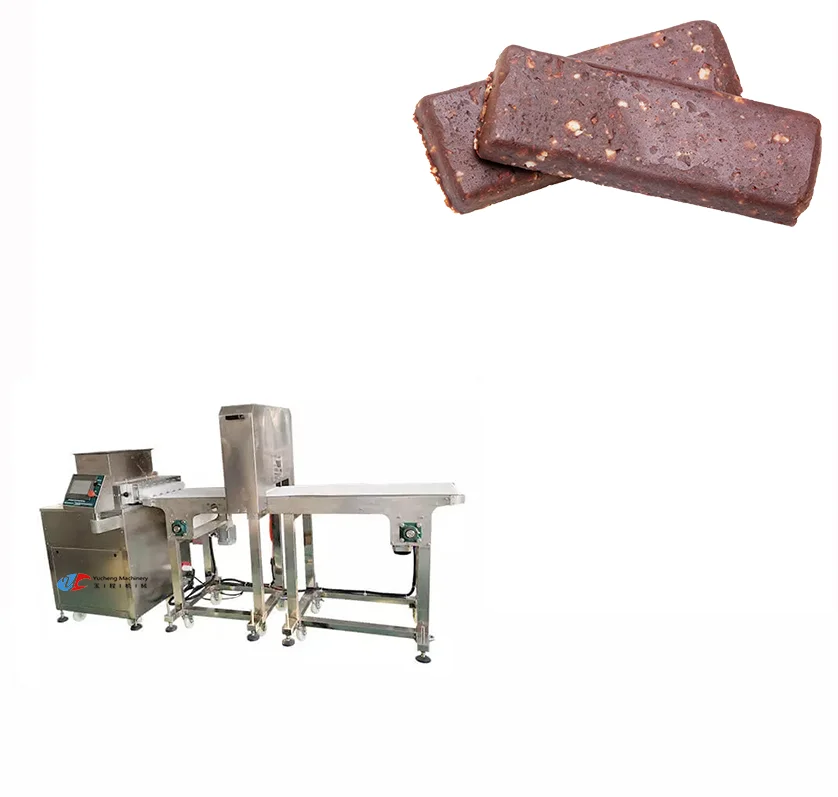
The efficiency of modern date bar machine systems stems from their ability to streamline multiple production processes into a single, cohesive workflow. Unlike traditional manual methods, these machines combine mixing, forming, cutting, and packaging operations with minimal human intervention. This technological advancement has transformed how food manufacturers approach large-scale production, enabling them to produce thousands of units per hour while maintaining consistent product quality and reducing labor costs significantly.
Industrial food processing facilities have increasingly adopted automated date bar machine solutions to address the challenges of scaling production while meeting stringent food safety requirements. These systems incorporate advanced temperature control, precise ingredient dosing, and real-time monitoring capabilities that ensure every product meets exact specifications. The result is a manufacturing process that combines efficiency with reliability, making it possible to serve both domestic and international markets with consistent, high-quality products.
Advanced Automation Systems
Precision Control Technologies
The heart of any efficient date bar machine lies in its sophisticated control systems that manage every aspect of the production process. These systems utilize programmable logic controllers and human-machine interfaces to monitor temperature, pressure, speed, and ingredient ratios with exceptional accuracy. Operators can adjust parameters in real-time, ensuring optimal conditions for different product formulations while maintaining consistency across production runs. This level of precision control eliminates the variability associated with manual processes and significantly reduces product waste.
Modern date bar machine technology incorporates servo-driven motors and variable frequency drives that provide smooth, precise movements throughout the production line. These components work together to ensure uniform mixing of ingredients, consistent forming pressures, and accurate cutting dimensions. The integration of sensor technology allows the system to automatically adjust for variations in ingredient properties, such as moisture content or temperature, maintaining product quality regardless of external factors.
Automated Ingredient Handling
Efficient ingredient handling represents a crucial component of advanced date bar machine systems, featuring automated dosing and mixing capabilities that eliminate manual measurement errors. These systems can precisely control the addition of dates, nuts, binding agents, and other ingredients according to predetermined recipes stored in the machine's memory. The automated approach not only improves accuracy but also reduces contamination risks and ensures consistent flavor profiles across all products.
The sophisticated weighing and dispensing systems integrated into modern date bar machine designs utilize load cells and precision scales to measure ingredients to within grams of the target weight. This accuracy is essential for maintaining product consistency, controlling costs, and meeting nutritional labeling requirements. Additionally, the automated system can track ingredient usage in real-time, providing valuable data for inventory management and quality control purposes.
Production Line Integration
Seamless Workflow Design
The efficiency of a date bar machine is significantly enhanced through careful integration with upstream and downstream processes in the production line. This holistic approach ensures smooth material flow from ingredient preparation through final packaging, minimizing bottlenecks and maximizing throughput. The integration includes synchronized conveyor systems, buffer zones, and automated transfer mechanisms that maintain consistent production speeds while accommodating minor variations in processing times.
Production line integration also encompasses quality control checkpoints strategically positioned throughout the manufacturing process. These systems can automatically detect and reject products that do not meet specifications, preventing defective items from proceeding to packaging stages. The integration of vision systems and weight checkers ensures that every date bar meets dimensional, weight, and visual quality standards before leaving the production area.
Flexible Manufacturing Capabilities
Modern date bar machine systems are designed with flexibility in mind, allowing manufacturers to quickly switch between different product formulations and sizes without extensive downtime. Quick-change tooling systems and modular components enable rapid reconfiguration for different bar dimensions, while recipe management software allows operators to store and recall multiple product formulations with the touch of a button. This flexibility is crucial for manufacturers serving diverse markets or seasonal product demands.
The adaptability of contemporary date bar machine technology extends to accommodating various ingredient types and processing requirements. Whether producing simple date and nut bars or complex multi-layered products with chocolate coatings or dried fruit inclusions, these systems can be configured to handle diverse formulations. This versatility allows manufacturers to expand their product portfolios without investing in multiple specialized machines, maximizing return on investment while maintaining production efficiency.
Quality Control Mechanisms
Real-Time Monitoring Systems
Advanced date bar machine technology incorporates comprehensive monitoring systems that continuously track critical parameters throughout the production process. These systems monitor temperature profiles, mixing times, forming pressures, and cutting accuracy, providing operators with real-time feedback on machine performance and product quality. Data logging capabilities allow for detailed analysis of production trends and facilitate preventive maintenance scheduling to minimize unexpected downtime.
The integration of statistical process control within date bar machine operations enables manufacturers to identify trends and variations before they impact product quality. Automated alert systems notify operators when parameters drift outside acceptable ranges, allowing for immediate corrective action. This proactive approach to quality management reduces waste, improves overall equipment effectiveness, and ensures consistent product quality that meets or exceeds customer expectations.
Sanitation and Food Safety Features
Modern date bar machine designs prioritize food safety through the incorporation of sanitary design principles and easy-to-clean surfaces. Stainless steel construction, smooth finishes, and accessible components facilitate thorough cleaning and sanitization between production runs. CIP (Clean-in-Place) systems can be integrated to automate cleaning procedures, reducing manual labor requirements while ensuring consistent sanitation standards are maintained across all product contact surfaces.
The emphasis on food safety extends to the prevention of cross-contamination through careful attention to air flow patterns, sealed processing chambers, and controlled access points. Advanced date bar machine systems incorporate HEPA filtration and positive pressure environments in critical areas to prevent contamination from external sources. These features are essential for manufacturers producing products for sensitive markets or those requiring allergen-free certification.
Energy Efficiency and Sustainability
Optimized Power Consumption
Contemporary date bar machine technology emphasizes energy efficiency through the implementation of variable speed drives, efficient motor designs, and intelligent power management systems. These features allow machines to operate at optimal energy consumption levels while maintaining production targets. Heat recovery systems can capture and reuse thermal energy from processing operations, further reducing overall energy requirements and operating costs.
The integration of energy monitoring systems within date bar machine operations provides manufacturers with detailed insights into power consumption patterns and opportunities for optimization. Smart scheduling algorithms can coordinate machine operations to take advantage of off-peak electricity rates, while predictive maintenance systems ensure that equipment operates at peak efficiency throughout its service life. These features contribute significantly to sustainable manufacturing practices and long-term cost reduction.
Waste Reduction Technologies
Efficient date bar machine systems incorporate advanced technologies designed to minimize product waste and maximize material utilization. Precise portion control, optimized cutting patterns, and automated trim recovery systems ensure that valuable ingredients are not wasted during production. Closed-loop feedback systems continuously monitor and adjust processes to maintain optimal yield rates while meeting quality specifications.
The implementation of lean manufacturing principles within date bar machine operations includes just-in-time ingredient delivery, reduced work-in-progress inventory, and streamlined changeover procedures. These practices minimize material handling requirements, reduce storage needs, and decrease the risk of ingredient spoilage. The result is a more sustainable and cost-effective production process that aligns with modern environmental responsibility standards.
Maintenance and Reliability
Predictive Maintenance Systems
Advanced date bar machine technology incorporates sophisticated condition monitoring systems that continuously assess the health of critical components such as motors, bearings, and drive systems. Vibration analysis, thermal monitoring, and oil analysis capabilities enable maintenance teams to identify potential issues before they result in equipment failure. This predictive approach to maintenance reduces unplanned downtime, extends equipment life, and maintains consistent production capacity.
The integration of IoT connectivity and cloud-based analytics platforms allows date bar machine operators to access performance data and maintenance recommendations remotely. Machine learning algorithms analyze historical performance data to identify patterns and predict optimal maintenance intervals for different components. This data-driven approach to maintenance scheduling maximizes equipment availability while minimizing maintenance costs and resource requirements.
Modular Design Benefits
Modern date bar machine systems utilize modular design principles that facilitate quick component replacement and system upgrades. Standardized interfaces and plug-and-play components enable maintenance teams to perform repairs efficiently, reducing downtime and maintaining production schedules. The modular approach also allows manufacturers to upgrade individual system components as technology advances, protecting their investment while maintaining competitive manufacturing capabilities.
The benefits of modular design extend to spare parts management and maintenance training requirements. Standardized components across multiple machine models reduce inventory complexity and enable maintenance personnel to develop expertise applicable to various equipment configurations. This standardization simplifies maintenance procedures and reduces the time required to train new technicians, contributing to overall operational efficiency.
FAQ
How does automated temperature control improve date bar machine efficiency
Automated temperature control systems in date bar machine operations maintain optimal processing conditions throughout production, ensuring consistent product texture and quality while preventing ingredient degradation. These systems continuously monitor and adjust heating and cooling zones based on real-time feedback, eliminating the variability associated with manual temperature management. The precision control reduces energy waste, prevents product defects, and enables faster production speeds by maintaining ideal processing conditions consistently.
What role does ingredient dosing accuracy play in production efficiency
Precise ingredient dosing in date bar machine systems eliminates waste associated with over-portioning while ensuring consistent product formulations that meet nutritional and taste specifications. Accurate dosing systems reduce raw material costs, minimize rework requirements, and maintain uniform product weights that comply with packaging and labeling requirements. The automation of dosing processes also reduces labor requirements and eliminates human error, contributing to overall production efficiency and cost control.
How do quick-changeover features enhance manufacturing flexibility
Quick-changeover capabilities in modern date bar machine technology enable manufacturers to switch between different product formulations or sizes in minutes rather than hours, maximizing production time and responsiveness to market demands. These features include tool-free adjustments, pre-set recipe storage, and automated calibration procedures that minimize setup time and reduce the skill level required for changeovers. The ability to efficiently produce small batches of multiple products allows manufacturers to serve niche markets and respond quickly to customer requirements.
What maintenance advantages do predictive systems provide for date bar machines
Predictive maintenance systems in date bar machine operations continuously monitor equipment condition and performance parameters, enabling maintenance teams to schedule repairs during planned downtime rather than responding to unexpected failures. These systems reduce maintenance costs by optimizing component replacement intervals and preventing secondary damage caused by failed components. The predictive approach also improves production planning reliability by providing advance notice of maintenance requirements, allowing for better resource allocation and inventory management.


