 EN
EN

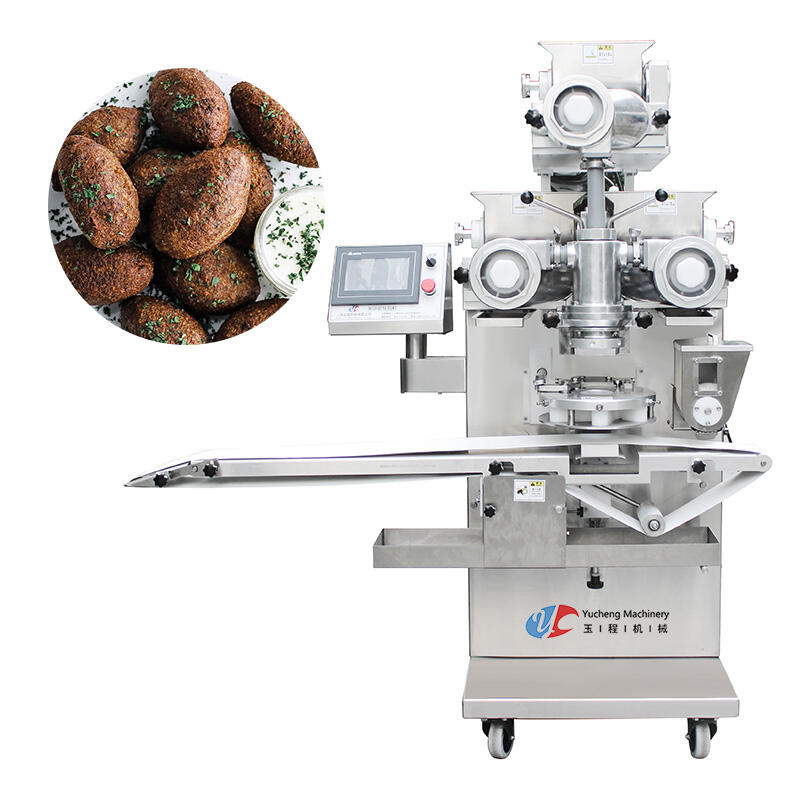
In the competitive landscape of food production and restaurant operations, efficiency and consistency have become critical success factors. A kubba machine represents a transformative investment for businesses seeking to scale their Middle Eastern food offerings while maintaining authentic quality. These specialized pieces of equipment automate the traditionally labor-intensive process of forming kubba, allowing restaurants and food producers to meet growing demand without compromising on taste or presentation. Understanding what drives the value of this equipment helps decision-makers determine whether this investment aligns with their operational goals and market positioning.
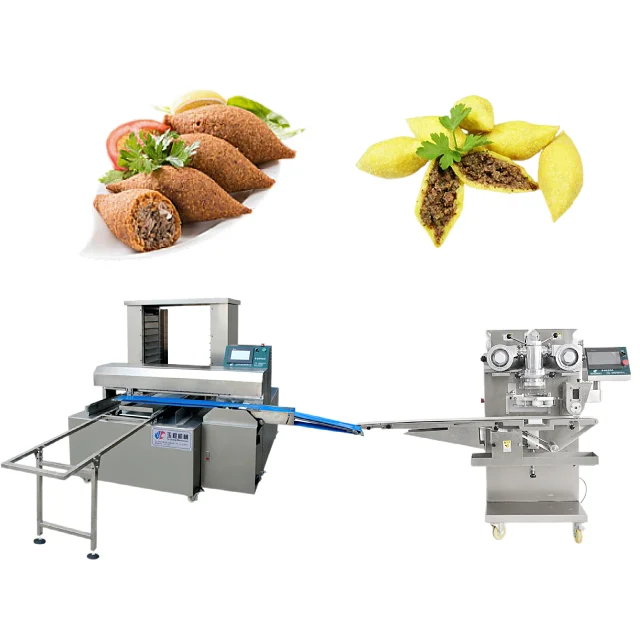
The value proposition of a kubba machine extends far beyond simple automation. For restaurants serving authentic Middle Eastern cuisine and food manufacturers supplying retail or food service channels, this equipment addresses multiple pain points simultaneously. It reduces dependency on skilled manual labor, standardizes portion sizes, accelerates production speeds, and creates pathways for menu expansion. As consumer interest in ethnic cuisine continues to grow globally, businesses equipped with the right production tools gain significant competitive advantages. This article examines the specific factors that make a kubba machine a valuable asset for different types of food businesses, exploring both tangible and strategic benefits.
Production Efficiency and Labor Cost Reduction
Automation Impact on Output Volume
A kubba machine fundamentally transforms production capacity by automating the shaping and filling process that would otherwise require skilled workers performing repetitive manual tasks. Commercial-grade equipment can produce between 1,200 and 3,600 pieces per hour depending on the model and settings, compared to approximately 150 to 250 pieces per hour that an experienced worker might achieve. This dramatic increase in output enables restaurants to serve kubba during peak service hours without advance preparation bottlenecks, while food producers can fulfill larger orders and expand distribution networks. The consistent production speed also allows for more accurate demand forecasting and inventory planning.
The efficiency gains become particularly valuable during high-demand periods such as Ramadan, cultural festivals, or catering events when production volumes need to surge temporarily. Rather than hiring and training additional temporary staff, businesses with a kubba machine can simply extend operating hours or add shifts. This operational flexibility translates directly into revenue opportunities that would be difficult or impossible to capture with manual production methods. The equipment pays for itself more quickly in operations with volatile demand patterns or seasonal spikes.
Labor Dependency and Skill Requirements
Traditional kubba preparation requires workers with specific culinary skills developed through extensive practice. Finding, training, and retaining employees capable of producing consistent, high-quality kubba poses ongoing challenges for many food businesses. Employee turnover disrupts production schedules and quality standards, while training costs accumulate with each replacement hire. A kubba machine reduces this vulnerability by shifting skilled labor requirements to basic machine operation and ingredient preparation, tasks that require minimal training time.
This shift in skill requirements expands the available labor pool and reduces wage pressures associated with specialized culinary positions. Operators need only learn basic machine settings, ingredient loading procedures, and quality monitoring protocols rather than mastering the hand-shaping techniques that take months or years to perfect. The standardization also means that multiple employees can operate the equipment with equivalent results, eliminating the quality variations that occur when different workers prepare kubba manually. For multi-location restaurant chains or growing food production companies, this consistency becomes essential for brand reputation management.
Reduction in Physical Strain and Workplace Safety
Manual kubba production involves repetitive hand motions, sustained standing, and physical strain that can lead to repetitive stress injuries and worker fatigue. These ergonomic challenges result in reduced productivity during shifts, increased sick days, and potential workers' compensation claims. A kubba machine eliminates the most physically demanding aspects of production, creating a safer and more sustainable work environment. Employees can maintain higher productivity levels throughout their shifts without the cumulative physical toll associated with manual forming techniques.
The improved workplace conditions also contribute to employee satisfaction and retention rates. Workers appreciate positions that don't require constant repetitive motion or result in hand fatigue and joint pain. This factor becomes increasingly important in labor markets where food service workers have multiple employment options. Businesses that invest in equipment reducing physical strain often experience lower turnover rates and stronger employee loyalty, factors that indirectly enhance the value proposition of the kubba machine investment beyond the direct production metrics.
Product Consistency and Quality Control
Standardization of Size and Weight
One of the most significant value drivers of a kubba machine lies in its ability to produce perfectly uniform products with consistent dimensions and weights. This standardization matters enormously for food costing accuracy, portion control, and customer satisfaction. When each piece contains precisely the same amount of filling and outer shell, businesses can calculate exact food costs per serving and price menu items with confidence. Manual production inevitably results in size variations that either waste ingredients through oversized portions or disappoint customers with undersized servings.
For food producers supplying retail or food service customers, consistency becomes a contractual requirement rather than simply a preference. Buyers expect each case or package to contain products meeting exact specifications for weight, dimensions, and ingredient ratios. A kubba machine ensures compliance with these specifications across thousands of units, eliminating rejection rates and strengthening customer relationships. The equipment's precision also enables accurate nutritional labeling, a regulatory requirement for packaged foods that becomes problematic when product weights vary significantly.
Filling Distribution and Structural Integrity
Beyond external dimensions, a kubba machine excels at maintaining consistent filling-to-shell ratios and even distribution of ingredients throughout each piece. Manual forming often results in filling concentrated in certain areas, shells with varying thickness, or weak points where the product might break during handling or cooking. These quality issues lead to customer complaints, visual presentation problems, and cooking inconsistencies. Automated equipment uses calibrated extrusion and forming mechanisms that create uniform shell thickness and center the filling precisely within each piece.
This structural consistency directly impacts the final product quality after cooking. Uniformly formed kubba cooks evenly, with all pieces in a batch reaching proper internal temperature simultaneously and developing consistent exterior texture. This predictability eliminates the common problem of some pieces being overcooked while others remain undercooked when batch variations exist. For restaurants, this means fewer returned plates and higher customer satisfaction. For food producers, it means lower rejection rates during quality control checks and fewer customer complaints from downstream buyers.
Ingredient Ratio Control and Recipe Compliance
A kubba machine enables precise control over the ratio between shell ingredients and filling components, ensuring that each product matches the intended recipe specifications exactly. This capability matters for both taste consistency and cost management. When filling amounts vary from piece to piece, some units taste bland while others become overly rich, creating an inconsistent customer experience. Automated equipment eliminates this variation by dispensing measured quantities of both shell and filling materials for every unit produced.
The ratio control also prevents ingredient waste and cost overruns. Premium filling ingredients often represent the highest cost components in kubba production. Manual forming typically results in some workers using excessive filling while trying to satisfy customers, inadvertently eroding profit margins. The kubba machine prevents this unintentional generosity by mechanically limiting filling quantities to the specified amount. Over thousands of units, these small savings accumulate into significant cost reductions that improve overall profitability and accelerate the equipment's return on investment timeline.
Market Expansion and Menu Flexibility
Product Line Diversification Capabilities
Modern kubba machine designs accommodate various shell recipes, filling types, and shape configurations, enabling businesses to diversify their product offerings without acquiring multiple specialized pieces of equipment. This versatility creates opportunities to test new flavor combinations, seasonal offerings, and fusion concepts that appeal to broader customer segments. Restaurants can rotate specialty kubba varieties as limited-time offerings to maintain menu excitement, while food producers can develop distinct product lines targeting different market segments or retail channels.
The ability to quickly switch between products also supports small-batch production for testing market response before committing to large-scale manufacturing. This flexibility reduces the financial risk associated with new product development and allows businesses to respond more dynamically to changing consumer preferences. A single kubba machine might produce traditional meat-filled varieties for core customers while also creating vegetarian, seafood, or dessert versions that attract new customer demographics. This product range expansion directly translates into revenue growth opportunities that would be impractical or prohibitively expensive with manual production methods.
Catering and Large-Order Fulfillment
The production capacity of a kubba machine opens revenue channels that many food businesses cannot reliably access through manual preparation. Catering contracts, corporate event services, and institutional food service accounts typically require large volumes delivered on specific dates with consistent quality. These opportunities represent high-value revenue streams but demand production capabilities that exceed what manual labor can reliably provide. Equipment-based production makes these markets accessible by guaranteeing the capacity to fulfill orders ranging from hundreds to thousands of pieces with predictable lead times.
The confidence to accept large orders without production anxiety enables more aggressive business development and marketing efforts. Sales teams can pursue contracts knowing that production capacity exists to support commitments, rather than limiting prospecting efforts based on manual labor constraints. This psychological shift from scarcity thinking to abundance mentality often leads to business growth that extends beyond the specific product category. Customers who initially purchase kubba for events often discover other menu items or services, creating cross-selling opportunities that multiply the initial transaction value.
Geographic and Distribution Expansion
For food producers, a kubba machine provides the production consistency and volume necessary to expand distribution beyond local markets. Regional grocery chains, specialty food distributors, and online food retailers require suppliers who can maintain steady production schedules and consistent product quality across large order quantities. Manual production methods create supply chain unreliability that prevents many artisan food businesses from accessing these larger distribution channels. Automated equipment transforms small-scale producers into viable suppliers for mid-tier and enterprise retail customers.
The equipment also enables businesses to consider contract manufacturing arrangements, private label production, or co-packing opportunities that leverage production capacity during off-peak periods. These arrangements generate additional revenue from existing assets while building relationships that might lead to future business opportunities. The kubba machine becomes not just a tool for producing a specific product but a platform for multiple business models and revenue streams that enhance overall enterprise value and competitive positioning in regional or national markets.
Financial Performance and Return on Investment
Direct Cost Reduction Analysis
The financial value of a kubba machine becomes evident through systematic comparison of production costs before and after implementation. Labor expenses typically represent the largest variable cost in food production, and equipment automation directly reduces these expenses while simultaneously increasing output. A detailed cost analysis should calculate hourly labor costs including wages, payroll taxes, benefits, and training expenses, then compare these against the equipment's hourly operating costs including electricity, maintenance, and depreciation. Most commercial operations discover that the kubba machine reduces per-unit labor costs by sixty to seventy-five percent.
Beyond direct labor savings, the equipment reduces ingredient waste through precise portion control and eliminates the rejects and defective products that occur more frequently with manual production. These secondary cost reductions often add another fifteen to twenty percent to the total financial benefit. When calculating payback periods, businesses should include both primary labor savings and these secondary cost reductions to develop accurate ROI projections. For operations producing more than five hundred pieces daily, payback periods typically range from twelve to twenty-four months depending on local labor costs and production volumes.
Revenue Enhancement Through Increased Capacity
While cost reduction provides immediate financial benefits, revenue enhancement often delivers even greater long-term value from kubba machine investments. The ability to accept larger orders, serve more customers during peak periods, and pursue wholesale or catering opportunities creates revenue that would not exist without the production capacity the equipment provides. This incremental revenue should be valued separately from cost savings when calculating the equipment's total financial contribution to the business.
Many businesses discover that revenue growth from equipment-enabled capacity expansion exceeds the cost savings from labor reduction. A restaurant that previously limited kubba availability to weekend service might expand to daily offerings, potentially tripling weekly sales volume. A food producer might secure grocery store placements that generate monthly revenue multiples of the equipment cost. These growth scenarios transform the kubba machine from a cost-reduction tool into a revenue-generation asset, fundamentally changing how ownership value should be calculated and compared against alternative investment opportunities.
Asset Value and Business Valuation Impact
From an enterprise value perspective, a kubba machine represents a tangible asset that enhances business valuation in several ways. The equipment itself holds resale value that can be recovered if business conditions change. More significantly, the operational capabilities and competitive advantages the equipment provides make the overall business more attractive to potential buyers or investors. A food production company with automated equipment commands higher valuation multiples than comparable businesses relying entirely on manual labor because the automation reduces operational risk and provides clearer paths to scaling production.
For businesses considering future sale, franchising, or investment capital raises, the presence of modern production equipment demonstrates management sophistication and operational maturity that positively influence buyer perceptions. The documented cost savings, quality improvements, and capacity increases attributable to the kubba machine become concrete evidence of professional management and continuous improvement culture. These intangible benefits may not appear in simple payback calculations but significantly impact the business's strategic value and attractiveness to sophisticated buyers or investors evaluating acquisition or investment opportunities.
FAQ
How much space does a typical kubba machine require in a commercial kitchen?
Most commercial kubba machine models require approximately six to ten square feet of floor space for the machine itself, plus additional space for ingredient preparation stations and finished product staging. The compact footprint makes the equipment suitable for standard restaurant kitchens and small food production facilities. Adequate clearance around the machine for operation, cleaning, and maintenance typically brings the total space requirement to twelve to fifteen square feet. Businesses should also consider ceiling height requirements, as some models stand between four and five feet tall. Proper ventilation and electrical access should be confirmed during site planning to ensure optimal installation and operation.
What is the typical maintenance schedule and cost for a kubba machine?
Regular maintenance for a kubba machine includes daily cleaning of food contact surfaces, weekly lubrication of moving parts, and monthly inspection of belts, gears, and electrical connections. Most manufacturers recommend professional servicing every six months, which typically costs between two hundred and four hundred dollars depending on the service provider and machine model. Annual maintenance costs including routine servicing, replacement parts, and minor repairs generally range from one thousand to two thousand dollars for equipment operating in normal production environments. Businesses running multiple shifts or producing at maximum capacity should budget toward the higher end of this range and consider extended warranty or preventive maintenance contracts that provide priority service and discounted parts.
Can a kubba machine handle different recipe formulations and dietary variations?
Modern kubba machine designs accommodate various dough consistencies, filling textures, and ingredient combinations, making them suitable for traditional recipes as well as contemporary variations including gluten-free shells, plant-based fillings, and allergen-free formulations. The equipment typically requires minor adjustments to pressure settings, extrusion speeds, or forming parameters when switching between significantly different recipes. Most operators can complete recipe changeovers in fifteen to thirty minutes after becoming familiar with their specific machine. Businesses should test new recipes during low-production periods to determine optimal machine settings before introducing products to regular production schedules. Manufacturers often provide technical support to help customers develop machine settings for non-traditional recipe variations.
How does production speed affect final product quality with automated equipment?
Production speed settings on a kubba machine directly influence product quality, with slower speeds generally producing slightly superior results in terms of shell integrity and filling distribution. However, quality differences between maximum and moderate speed settings are typically minimal with properly formulated recipes and correctly adjusted equipment. Most commercial operations find optimal quality-efficiency balance at seventy to eighty-five percent of maximum rated speed. Running equipment consistently at maximum speed may accelerate wear on components and slightly increase maintenance requirements. Operators should prioritize consistency over maximum speed, as steady production at moderate speeds typically yields better overall results than aggressive speed settings that might cause occasional quality issues requiring production stops or product waste.
Table of Contents
- Production Efficiency and Labor Cost Reduction
- Product Consistency and Quality Control
- Market Expansion and Menu Flexibility
- Financial Performance and Return on Investment
-
FAQ
- How much space does a typical kubba machine require in a commercial kitchen?
- What is the typical maintenance schedule and cost for a kubba machine?
- Can a kubba machine handle different recipe formulations and dietary variations?
- How does production speed affect final product quality with automated equipment?


