 EN
EN


Selecting the right date bar machine for your production facility requires a strategic assessment of your operational scale, throughput requirements, and product specifications. Whether you're launching a startup operation producing hundreds of bars daily or managing an established facility with multi-shift production demands, the date bar machine you choose will directly impact your efficiency, product consistency, and profitability. This decision involves evaluating capacity matching, automation level, ingredient handling capabilities, and long-term scalability to ensure your equipment investment aligns precisely with your current production volume while accommodating future growth trajectories.
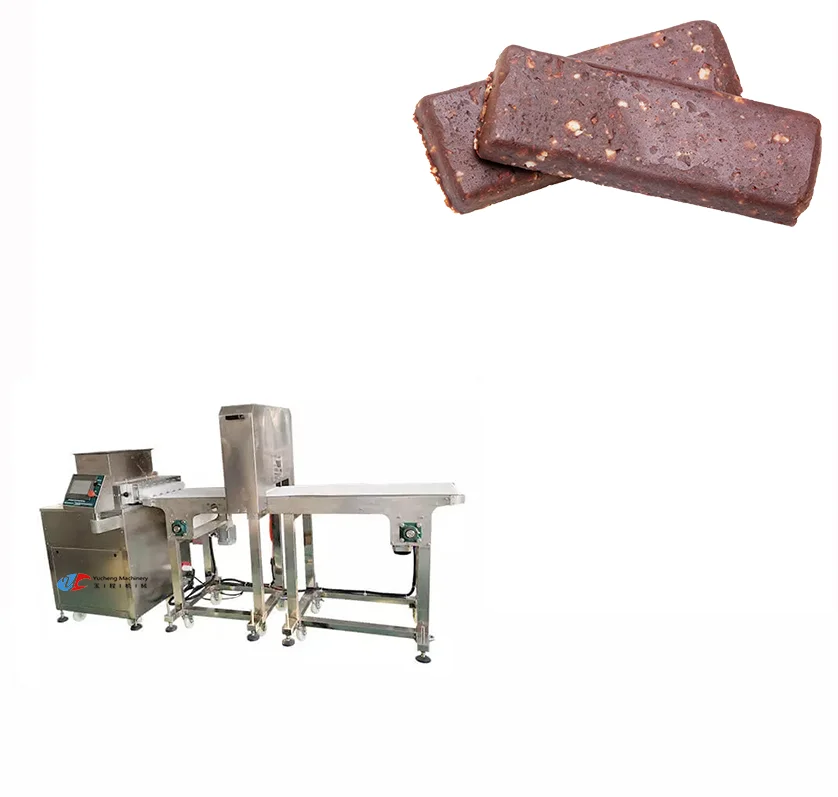
Understanding how production scale influences equipment selection is fundamental to making an informed purchasing decision. Small-scale operations have vastly different requirements than industrial manufacturers, and choosing machinery designed for the wrong capacity tier can lead to bottlenecks, excessive waste, underutilized capital, or quality inconsistencies. This comprehensive guide examines the critical factors for matching a date bar machine to your specific production scale, from evaluating throughput benchmarks and automation needs to analyzing ingredient flexibility and maintenance considerations that affect your total cost of ownership.
Understanding Production Scale Categories and Equipment Implications
Defining Production Scale Parameters for Date Bar Manufacturing
Production scale in date bar manufacturing is typically categorized into three distinct tiers: small-scale operations producing 50-500 bars per hour, medium-scale facilities handling 500-2000 bars hourly, and large-scale industrial operations exceeding 2000 bars per hour. Each tier demands different machinery specifications, with small-scale producers often requiring semi-automated or batch-style date bar machine systems that offer flexibility for recipe experimentation and smaller production runs. Medium-scale operations benefit from continuous feed systems with moderate automation, while large-scale manufacturers need fully automated production lines with integrated quality control systems and minimal manual intervention.
When assessing your production scale, consider not just your current output requirements but also your projected growth over the next three to five years. A date bar machine designed for 300 bars per hour may seem adequate for initial production targets, but if market analysis suggests doubling capacity within two years, investing in equipment with 600-bar hourly capacity or modular expansion capabilities becomes more economically sensible. Production scale also encompasses shift patterns—single-shift operations have different equipment durability requirements compared to facilities running multiple shifts or continuous production cycles.
Capacity Matching and Throughput Efficiency
Proper capacity matching ensures your date bar machine operates within its optimal efficiency range, typically between 70-85% of maximum rated capacity. Operating consistently at maximum capacity accelerates wear, increases maintenance frequency, and reduces equipment lifespan, while underutilization represents inefficient capital deployment. For example, if your target production is 800 bars per hour, selecting a machine rated for 1000-1200 bars hourly provides the ideal buffer for efficiency optimization, accommodating production variations, scheduled maintenance windows, and occasional peak demand periods without stressing the equipment.
Throughput efficiency also depends on changeover frequency and product variety. Facilities producing multiple date bar formulations with frequent recipe changes require machinery with quick-change tooling and simplified adjustment protocols. A date bar machine designed for high-mix production typically sacrifices some maximum throughput capacity for enhanced flexibility, whereas dedicated single-product lines maximize output speed but require more extensive reconfiguration for formula changes. Calculating your effective throughput must account for these changeover periods, startup waste, and quality verification processes that reduce actual productive time.
Automation Level Selection Based on Labor and Volume
Manual, Semi-Automated, and Fully Automated Systems
The automation level of your date bar machine should correlate directly with your production volume and labor cost structure. Manual and semi-automated systems suit small-scale operations where labor costs are relatively low, production runs are short, and recipe flexibility is paramount. These systems typically require operators to manually feed ingredients, monitor forming processes, and handle packaging, but offer lower capital investment and simplified maintenance. Semi-automated date bar machine configurations might automate the mixing and forming stages while requiring manual cutting and packaging, providing a middle ground between investment cost and labor efficiency.
Fully automated systems become economically justifiable when production volumes exceed approximately 1000 bars per hour or when labor costs represent a significant operational expense. These systems integrate automated ingredient feeding, precise mixing controls, continuous forming and cutting, and often include inline quality inspection systems. The higher capital cost of automated date bar machine equipment is offset by reduced labor requirements, improved consistency, minimized waste, and increased throughput reliability. For operations planning multi-shift production, automation also eliminates variability introduced by different operator skill levels and reduces dependency on specialized labor availability.
Integration with Upstream and Downstream Processes
Your date bar machine selection must consider integration requirements with adjacent production processes. Small-scale operations may use standalone equipment with manual material transfer, while larger facilities require seamless integration with ingredient preparation systems, cooling tunnels, enrobing stations, and automated packaging lines. The level of integration directly impacts your effective production capacity—a high-capacity date bar machine bottlenecked by manual packaging or inadequate cooling infrastructure cannot achieve its rated throughput.
Evaluating integration needs involves mapping your entire production workflow and identifying potential bottlenecks. If your facility already operates automated packaging equipment capable of handling 1500 units per hour, selecting a date bar machine with significantly higher capacity creates an imbalance that won't improve overall output. Conversely, if you plan to upgrade downstream processes, choosing equipment with expansion interfaces and standard communication protocols ensures compatibility with future automation investments. Integration considerations also extend to quality control systems, with larger operations benefiting from date bar machine models that incorporate weight verification, metal detection, and automated reject mechanisms.
Ingredient Handling and Recipe Flexibility Requirements
Viscosity Range and Ingredient Compatibility
Different production scales often correlate with varying ingredient complexity and formulation diversity. Small-scale artisanal producers frequently work with whole dates, nuts, seeds, and other inclusions that require gentle handling and accommodation of ingredient size variations. The date bar machine you select must handle your specific ingredient viscosity range—from sticky date pastes with high moisture content to drier formulations with significant particulate inclusions. Equipment designed for uniform, processed ingredients may struggle with whole-food formulations, leading to inconsistent bar density, inclusion distribution problems, and increased waste.
Recipe flexibility becomes particularly important for operations producing multiple product lines or frequently introducing new formulations. A date bar machine with adjustable compression settings, variable forming speeds, and interchangeable dies accommodates different bar dimensions, densities, and textures without extensive reconfiguration. Medium-scale producers often benefit from equipment that can handle both date-based and other fruit or nut bar formulations, maximizing equipment utilization across product categories. Understanding your ingredient specifications—moisture content ranges, particle size distributions, and temperature sensitivities—ensures the machinery you select can consistently process your specific formulations.
Hygiene Standards and Ingredient Contact Materials
Production scale influences hygiene requirements and cleaning protocol complexity. Small-scale operations may adequately manage with equipment featuring tool-free disassembly for manual cleaning, while larger facilities require clean-in-place systems or rapid washdown capabilities that minimize production downtime. The date bar machine construction materials must meet food safety standards appropriate to your market—stainless steel contact surfaces, FDA-approved polymers, and designs that eliminate ingredient entrapment points are essential regardless of scale, but verification and documentation requirements intensify for larger commercial operations.
Allergen management considerations also scale with production volume and product diversity. Facilities producing date bars alongside other allergen-containing products need equipment that facilitates thorough cleaning between production runs, preventing cross-contamination. This might influence your date bar machine selection toward models with fewer crevices, removable forming sections, and open-frame designs that enable comprehensive cleaning verification. Larger operations subject to regular third-party audits should prioritize equipment from manufacturers providing detailed sanitation protocols, material certifications, and validation documentation that streamline compliance processes.
Financial Considerations and Total Cost of Ownership
Capital Investment Versus Operational Costs
The initial purchase price of a date bar machine represents only one component of total ownership costs. Small-scale equipment typically ranges from modest investments suitable for startup budgets, while industrial-scale systems require substantial capital commitments. However, focusing exclusively on upfront cost without evaluating operational efficiency can lead to poor long-term economics. Lower-priced equipment may consume more labor hours, generate higher waste rates, or require more frequent maintenance, ultimately costing more over a five-year operational period than higher-quality alternatives with superior efficiency.
Calculating total cost of ownership requires projecting maintenance expenses, energy consumption, labor requirements, and expected waste rates for each date bar machine option. Industrial equipment often features more efficient motors, better insulation, and optimized process controls that reduce energy costs per unit produced. Maintenance costs scale with complexity—simpler mechanical systems may have lower service costs but require more frequent interventions, while sophisticated automated systems need specialized technical support but operate longer between service events. For accurate comparison, calculate cost per bar produced rather than simply comparing purchase prices, incorporating realistic assumptions about production volumes, shift patterns, and equipment utilization rates.
Scalability and Future Expansion Pathways
Selecting a date bar machine with scalability features can significantly reduce future capital requirements as your business grows. Modular equipment designs allow capacity increases through additional forming heads, extended conveyor sections, or upgraded control systems without replacing the entire production line. Some manufacturers offer tiered equipment families where core components remain compatible as you transition from small-scale to medium-scale production, protecting your initial investment while accommodating growth.
Evaluating scalability involves understanding both the technical upgrade pathways available for specific date bar machine models and the realistic growth trajectory of your business. If market analysis suggests rapid expansion, investing in equipment that can be incrementally upgraded may prove more economical than purchasing undersized machinery that requires complete replacement within two years. Conversely, if growth projections are uncertain, starting with appropriately sized equipment and planning for potential replacement may offer better risk management than overinvesting in capacity you might not utilize. Manufacturer support for field upgrades, availability of expansion modules, and backwards compatibility of spare parts all factor into long-term scalability assessment.
Technical Support and Operational Training Needs
Manufacturer Support Infrastructure
Production scale influences your dependency on manufacturer technical support and the importance of responsive service infrastructure. Small-scale operations with simpler date bar machine systems may manage with email support and periodic scheduled maintenance visits, while larger facilities require guaranteed response times, readily available spare parts inventories, and potentially on-site service technicians. When evaluating equipment options, assess the manufacturer's support network relative to your location, availability of local service partners, and typical response times for both routine maintenance and emergency breakdowns.
For larger production operations where equipment downtime directly impacts revenue, service level agreements and parts availability become critical selection criteria. A date bar machine from a manufacturer with comprehensive spare parts stocking, predictive maintenance programs, and remote diagnostics capabilities minimizes unplanned downtime risks. Understanding the manufacturer's support model—whether they provide direct service or rely on distributor networks—helps you evaluate realistic support expectations. Additionally, consider the equipment's service life and the manufacturer's commitment to long-term parts availability, as some suppliers discontinue support for older models, creating obsolescence risks for major capital investments.
Operator Training and Skill Requirements
The complexity of your date bar machine directly correlates with operator training requirements and ongoing skill development needs. Simple semi-automated systems can typically be operated effectively after brief hands-on training, making them suitable for operations with high labor turnover or limited access to specialized technical personnel. Sophisticated automated systems require more extensive training covering process controls, troubleshooting procedures, preventive maintenance tasks, and safety protocols, necessitating either hiring experienced operators or investing in comprehensive training programs.
Manufacturer-provided training quality varies significantly across equipment suppliers. When selecting a date bar machine for medium to large-scale production, prioritize manufacturers offering structured training programs including operational procedures, maintenance protocols, and basic troubleshooting skills. Some suppliers provide on-site commissioning training, follow-up refresher sessions, and online resources for ongoing reference, while others offer minimal instruction beyond basic operation manuals. For facilities planning multiple shifts or expecting operator turnover, equipment with intuitive interfaces, clear diagnostic displays, and comprehensive documentation reduces training burdens and maintains consistent operation regardless of which personnel are running production.
FAQ
What production volume justifies investing in a fully automated date bar machine?
Fully automated date bar machine systems typically become economically justifiable when your production consistently exceeds 1000-1500 bars per hour or when you operate multiple shifts daily. The calculation depends on your labor costs, product margins, and growth projections. In regions with high labor costs, automation may justify itself at lower volumes, while facilities with access to affordable skilled labor might delay automation until higher production tiers. Consider that automation delivers benefits beyond direct labor savings, including improved consistency, reduced waste, and enhanced scalability that support business growth.
Can a single date bar machine handle different bar sizes and formulations?
Most quality date bar machine systems offer adjustability for different bar dimensions and formulations, though the ease and speed of changeovers vary significantly across equipment types. Look for machines with tool-free adjustment mechanisms, interchangeable forming dies, and variable compression settings that accommodate different bar sizes without extensive reconfiguration. The ability to handle diverse formulations depends on ingredient compatibility—equipment designed for sticky date pastes may struggle with drier nut-based formulations, so verify that your specific recipe range falls within the machine's processing capabilities before purchase.
How do I determine if my facility has adequate space for the date bar machine I need?
Space planning for a date bar machine requires evaluating not just the equipment footprint but also clearances for operation, maintenance access, ingredient supply positioning, and product removal. Request detailed dimensional drawings including required service clearances from manufacturers under consideration. Factor in space for upstream ingredient preparation and downstream cooling or packaging equipment if these processes connect directly to your forming line. Many manufacturers offer facility layout consultation services that help optimize equipment placement within your available space, identifying potential bottlenecks or workflow inefficiencies before installation.
What maintenance frequency should I expect for different scale date bar machines?
Maintenance frequency depends on equipment complexity, production intensity, and ingredient characteristics. Simple mechanical date bar machine systems typically require daily cleaning, weekly lubrication, and monthly inspection of wear components, with major service intervals every 6-12 months. Fully automated systems may need daily preventive checks, weekly deep cleaning, and quarterly comprehensive maintenance including control system verification and sensor calibration. Sticky date formulations generally increase cleaning and maintenance demands compared to drier compositions. Establish maintenance schedules based on manufacturer recommendations but adjust based on your actual operating conditions, ingredient types, and production intensity to optimize equipment reliability and longevity.
Table of Contents
- Understanding Production Scale Categories and Equipment Implications
- Automation Level Selection Based on Labor and Volume
- Ingredient Handling and Recipe Flexibility Requirements
- Financial Considerations and Total Cost of Ownership
- Technical Support and Operational Training Needs
-
FAQ
- What production volume justifies investing in a fully automated date bar machine?
- Can a single date bar machine handle different bar sizes and formulations?
- How do I determine if my facility has adequate space for the date bar machine I need?
- What maintenance frequency should I expect for different scale date bar machines?


