 EN
EN


A high efficiency food production line is one of the most transformative investments a food manufacturer can make in today's competitive market. As consumer demand grows and operational costs rise, manufacturers are under increasing pressure to produce more, waste less, and maintain consistent quality — all at the same time. Understanding what defines a high efficiency food production line helps decision-makers invest wisely and build scalable operations that stand the test of time.
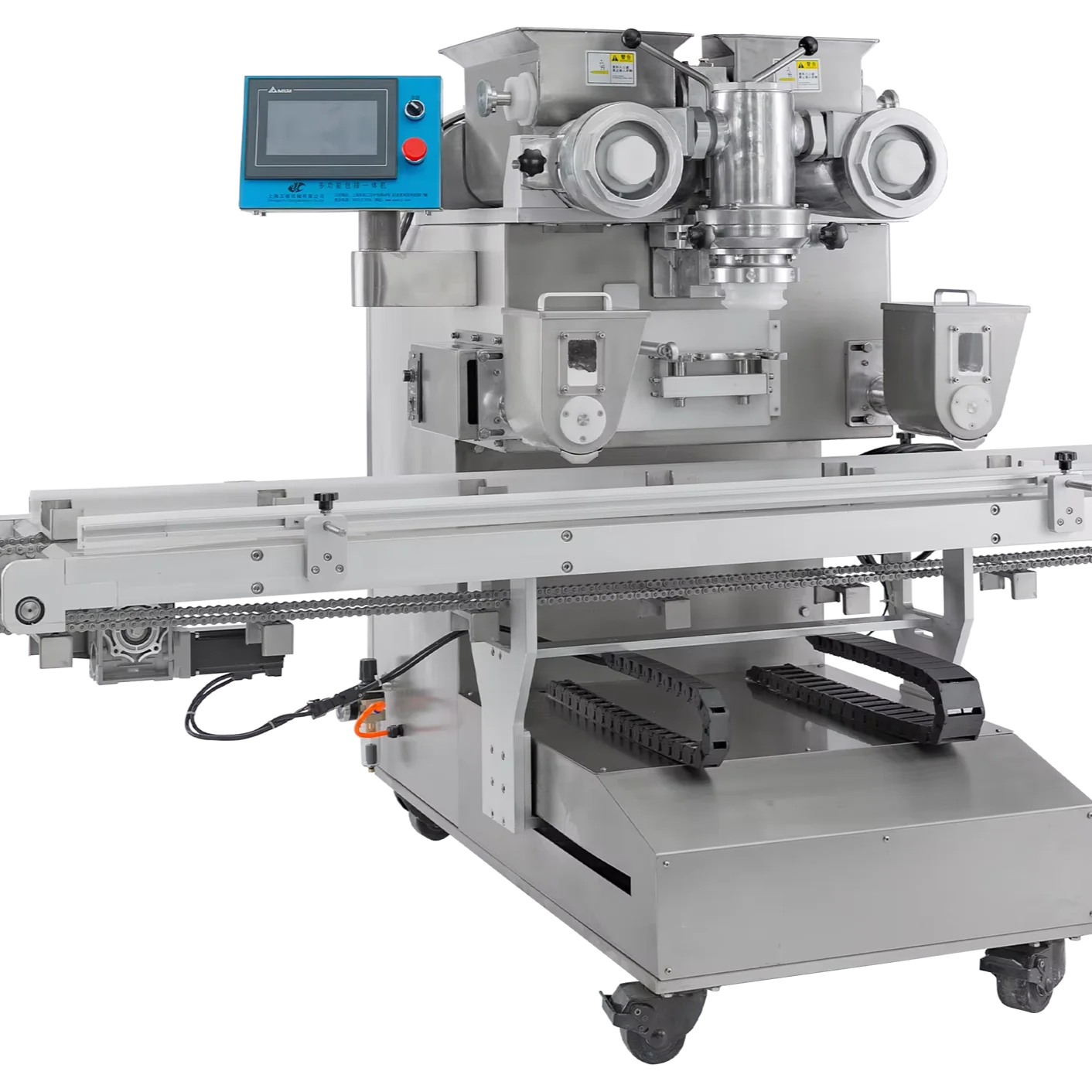
At its core, a high efficiency food production line refers to an integrated system of processing, handling, packaging, and quality-control equipment that works in a synchronized, continuous, and optimized manner. Unlike conventional setups that rely on fragmented machinery and heavy manual intervention, a truly high efficiency system reduces bottlenecks, minimizes downtime, and maximizes throughput without compromising food safety or product integrity. This article explores the defining characteristics, key components, selection criteria, and real-world applications of a high efficiency food production line.
Defining the High Efficiency Food Production Line
Core Concept and Industry Context
The term high efficiency food production line describes a manufacturing setup engineered to deliver the highest possible output-to-input ratio in a food processing environment. Efficiency in this context is not simply about speed — it encompasses energy consumption, raw material utilization, labor requirements, downtime frequency, and waste generation. All these factors contribute to the overall performance index of the line.
In the modern food industry, manufacturers operate under tight margins and strict regulatory frameworks. A high efficiency food production line helps bridge the gap between meeting demand and controlling costs. It enables factories to produce larger volumes within shorter time windows, which is critical for perishable goods and time-sensitive orders. The shift toward automation and smart integration has further elevated what efficiency means in this domain.
Industries such as bakery, snack food, dairy processing, meat packaging, and ready-to-eat meal production have all adopted the concept of the high efficiency food production line as a central pillar of their operational strategy. The benefits extend beyond individual factories to entire supply chains, improving traceability, consistency, and regulatory compliance.
How It Differs From Conventional Production Lines
A conventional food production line is often characterized by manual handoffs, separate standalone machines, and reactive maintenance schedules. These setups result in frequent interruptions, inconsistent output quality, and higher labor costs per unit produced. A high efficiency food production line, by contrast, is designed with continuity and synchronization as foundational principles.
The difference becomes most visible during peak production cycles. While a conventional line may struggle to scale up without proportionally increasing labor or floor space, a high efficiency system can often absorb increased demand through speed adjustments, automated buffering, and smart scheduling. This adaptability is a critical differentiator in competitive food manufacturing environments.
Furthermore, conventional lines tend to accumulate inefficiencies silently — through micro-stoppages, rework cycles, and inconsistent packaging. A high efficiency food production line integrates monitoring systems that detect these inefficiencies in real time, allowing operators to intervene before small problems become costly disruptions.
Key Components That Define a High Efficiency System
Automated Processing and Handling Equipment
The backbone of any high efficiency food production line is its automated processing equipment. This includes conveyors, sorting systems, filling machines, cutting equipment, and blending units that operate in a seamless sequence. Automation reduces human error, increases consistency, and allows continuous operation across shifts without performance degradation.
Handling equipment plays an equally important role. Automated transfer systems ensure that food products move from one stage to the next without manual touching, which also supports hygiene and food safety compliance. In a well-designed high efficiency food production line, the distance between processing stations is minimized, and transition times are engineered out of the workflow wherever possible.
Robotic pick-and-place systems, servo-driven conveyors, and programmable logic controllers (PLCs) are now standard components in high efficiency setups. These technologies allow for precise control over speed, pressure, temperature, and timing — parameters that directly affect product quality and line throughput. The integration of these components defines the operational backbone of a high efficiency food production line.
Packaging and End-of-Line Integration
Packaging is often where inefficiency hides in food manufacturing. Slow packaging machines, frequent changeovers, and poor alignment between upstream production and downstream packaging create costly bottlenecks. A high efficiency food production line addresses this by incorporating all-in-one packaging solutions that combine forming, filling, sealing, and labeling in a single automated process.
Modern packaging equipment integrated into a high efficiency food production line is designed for rapid changeover, meaning the same machine can handle multiple product formats with minimal downtime between runs. This flexibility is especially valuable for manufacturers serving diverse retail or foodservice clients who require varying pack sizes and presentation formats.
End-of-line automation — including case packing, palletizing, and stretch wrapping — completes the picture. When these systems are fully integrated with upstream processing and packaging, the result is a truly continuous workflow with no manual gaps. This end-to-end continuity is what separates a genuinely high efficiency food production line from a partially automated one.
Operational Principles Behind High Efficiency
Synchronization and Line Balancing
One of the most important operational principles in a high efficiency food production line is line balancing. This refers to the process of aligning the output capacity of each stage in the production flow so that no single machine becomes a bottleneck or operates well below capacity. Poorly balanced lines waste both time and energy, even if individual machines are technically advanced.
Line balancing in a high efficiency food production line requires careful analysis of cycle times, buffer capacities, and machine reliability at each station. Engineers use this data to either upgrade underperforming stages, add parallel processing units, or introduce buffer conveyors that absorb temporary imbalances. The result is a smoother, more predictable production flow.
Digital simulation tools are increasingly used before line installation to model different configurations and identify balance issues before they occur in real life. This proactive approach is a hallmark of modern high efficiency food production line design, reducing the risk of post-installation adjustments that can be expensive and time-consuming.
Predictive Maintenance and Uptime Optimization
Downtime is the enemy of efficiency. Even a few unplanned stoppages per shift can significantly erode the output of what is otherwise a high efficiency food production line. This is why predictive maintenance has become a core operational principle rather than an optional upgrade in high-performing food factories.
Predictive maintenance relies on sensors, vibration monitors, temperature probes, and data analytics to identify when a component is likely to fail before it actually does. In a high efficiency food production line, this means maintenance teams can schedule interventions during planned downtime windows rather than responding reactively to unexpected breakdowns. The result is dramatically higher overall equipment effectiveness (OEE).
When OEE is maximized — meaning equipment is available, performing at its designed rate, and producing quality output — a high efficiency food production line delivers its full financial and operational value. Manufacturers who invest in predictive maintenance infrastructure consistently report lower maintenance costs and higher production output compared to those relying on reactive repair strategies.
Selecting the Right High Efficiency Food Production Line for Your Operation
Matching Line Design to Product Type and Volume
Not every high efficiency food production line is suitable for every product or every factory. The design of the line must align closely with the physical and chemical properties of the food being produced. For example, a line designed for dry snack food will differ significantly from one built for liquid dairy products or fresh meat portions. Mismatched line design leads to inefficiency, product damage, and compliance issues.
Production volume is another critical matching criterion. A high efficiency food production line designed for medium-volume specialty production will have a different equipment selection and layout than one targeting high-volume commodity production. Oversizing a line for current volume adds capital cost and maintenance burden, while undersizing limits scalability and can quickly become a constraint on business growth.
Manufacturers should conduct a thorough needs analysis before specifying their high efficiency food production line. This analysis should include current and projected output volumes, product range diversity, floor space constraints, utility availability, and workforce skill levels. The resulting specification will guide equipment selection and line architecture toward the most effective outcome.
Evaluating Automation Level and Integration Capability
When evaluating a high efficiency food production line, one of the most important considerations is the degree of automation and how well individual systems can be integrated. A line that consists of highly capable machines that cannot communicate with each other will underperform compared to a moderately capable line that operates as a unified, connected system.
Integration capability includes machine-to-machine communication, connection to factory MES (Manufacturing Execution Systems), and the ability to generate real-time production data for analysis and reporting. A modern high efficiency food production line should be Industry 4.0 ready, meaning it can participate in digital factory ecosystems without requiring extensive custom engineering.
Hygiene design is also a non-negotiable evaluation criterion in food manufacturing. All components of a high efficiency food production line must meet food-grade material standards, support clean-in-place (CIP) or wash-down procedures, and minimize horizontal surfaces where contamination could accumulate. Efficiency and hygiene must be designed together, not traded off against each other.
Real-World Applications of High Efficiency Food Production Lines
Bakery and Confectionery Manufacturing
The bakery and confectionery sector is one of the most prolific adopters of the high efficiency food production line. In these product categories, consistent portioning, precise baking times, and high-speed packaging are all critical to profitability. A single production line must often handle dozens of SKUs with minimal changeover time, making integration and flexibility central design priorities.
Bakery lines that qualify as high efficiency typically integrate dough mixing, shaping, proofing, baking, cooling, and wrapping in a single continuous flow. This eliminates manual product transfers, reduces temperature exposure risks, and allows very high throughput rates. For confectionery, a high efficiency food production line ensures uniform coating, accurate depositing, and tamper-evident packaging at volumes that meet modern retail demand.
Snack Food and Packaged Goods Processing
Snack food manufacturers face unique challenges: high product variety, short shelf-life windows, and intense retail competition. A high efficiency food production line in this segment must handle seasoning, portioning, and packaging at high speed while maintaining weight accuracy and seal integrity. All-in-one packaging row machines that consolidate these functions are particularly valuable in this context.
For packaged goods factories producing items like instant noodles, crackers, or dried fruits, a high efficiency food production line integrates multi-lane filling, automated checkweighing, rejection systems, and case sealing in a compact and hygienic layout. The ability to run multiple packaging formats simultaneously — or switch between them quickly — is a core performance indicator in this application area.
Factories operating a high efficiency food production line in the snack and packaged goods sector consistently report reductions in material waste, labor costs, and product rejects. These gains compound over time and represent significant competitive advantages in markets where margins are thin and volume is the primary revenue driver.
FAQ
What makes a food production line truly high efficiency?
A truly high efficiency food production line is defined by its ability to deliver maximum output with minimum input — including raw materials, energy, labor, and time. It achieves this through synchronized automation, predictive maintenance, line balancing, and integration of processing and packaging into a continuous, uninterrupted flow. Efficiency is measured not just by speed, but by overall equipment effectiveness and waste reduction across the entire line.
How does automation contribute to food production line efficiency?
Automation is the primary driver of efficiency gains in a high efficiency food production line. By replacing manual tasks with servo-controlled machines, robotic handling, and automated quality inspection, factories can operate continuously, reduce human error, and maintain consistent output quality across long production runs. Automation also enables faster changeovers and better data collection for performance monitoring.
Is a high efficiency food production line suitable for small or mid-sized manufacturers?
Yes, a high efficiency food production line can be configured for small and mid-sized manufacturers, not just large industrial facilities. Modular line designs allow businesses to start with core automation components and expand as volumes grow. The key is matching the line's capacity and automation level to the actual production requirements rather than overinvesting in capability that will not be utilized in the near term.
What are the most common inefficiencies that a high efficiency food production line resolves?
The most common inefficiencies addressed by a high efficiency food production line include unplanned machine downtime, manual product transfers between stations, inconsistent portion weights, slow packaging changeovers, and poor synchronization between processing and packaging stages. By engineering these pain points out of the workflow through automation, sensor integration, and smart line design, manufacturers achieve significantly higher and more consistent output per shift.
Table of Contents
- Defining the High Efficiency Food Production Line
- Key Components That Define a High Efficiency System
- Operational Principles Behind High Efficiency
- Selecting the Right High Efficiency Food Production Line for Your Operation
- Real-World Applications of High Efficiency Food Production Lines
-
FAQ
- What makes a food production line truly high efficiency?
- How does automation contribute to food production line efficiency?
- Is a high efficiency food production line suitable for small or mid-sized manufacturers?
- What are the most common inefficiencies that a high efficiency food production line resolves?


