 EN
EN

Selecting the right coxinha machine is one of the most consequential decisions a food business owner, catering professional, or industrial kitchen operator can make. Whether you are launching a street food venture, scaling up a snack production line, or simply looking to automate a labor-intensive process, the equipment you choose will directly shape your output quality, operational efficiency, and long-term profitability. A poorly matched machine can result in inconsistent shapes, wasted dough, frequent downtime, and frustrating maintenance cycles that eat into your margins before you even realize it.
The global demand for coxinha — the iconic Brazilian teardrop-shaped snack filled with seasoned chicken or other ingredients — has grown well beyond its home market. Restaurants, bakeries, food trucks, and automated snack production facilities around the world are now seeking reliable equipment that can replicate this product at scale. Understanding the key selection criteria for a coxinha machine will help you invest wisely, avoid costly mismatches, and build a production setup that genuinely supports your business goals. This guide walks you through every critical decision point so you can choose with confidence.
Understanding Your Production Volume Requirements
Matching Machine Capacity to Your Daily Output Goals
Before evaluating any coxinha machine, the very first question you must answer honestly is: how many units do I need to produce per hour or per day? Production volume requirements vary dramatically across business types. A small café or deli counter may only need a few hundred pieces per day, while a wholesale snack manufacturer could be targeting outputs of tens of thousands of units every shift. Each production scale calls for a fundamentally different class of equipment, and attempting to bridge that gap with the wrong machine leads to either waste or bottlenecks.
Entry-level semi-automatic machines are generally designed for lower-volume operations and require a greater degree of manual involvement. They tend to be more affordable but deliver output rates that simply cannot support high-demand production environments. On the other end of the spectrum, fully automatic coxinha machine models are engineered for high-throughput lines, offering consistent speed, minimal labor dependency, and integration capability with other processing equipment. Knowing exactly where your operation falls on this spectrum allows you to filter out unsuitable options immediately and focus on machines that are genuinely sized for your needs.
It is also important to plan for growth. If your business is scaling rapidly, purchasing a machine at the very edge of its capacity limit today means you could outgrow it within months. Many experienced operators recommend selecting a coxinha machine with a capacity buffer of at least 20 to 30 percent above your current peak demand, giving you room to expand without requiring an immediate equipment replacement investment.
Evaluating Automation Level Against Labor Availability
Automation level is closely tied to production volume, but it is also shaped by your labor situation. In markets where skilled kitchen labor is expensive or difficult to retain, a higher degree of automation in your coxinha machine pays for itself relatively quickly. Fully automated encrusting and forming machines reduce the need for trained hand-shaping staff and deliver a more consistent product regardless of shift changes, fatigue, or staff turnover. This consistency is particularly valuable for franchise models and large-scale retail supply chains where product uniformity is a contractual expectation.
Semi-automatic options, however, still offer meaningful labor savings compared to fully manual production while requiring less capital investment upfront. For smaller operations where the owner or a small team is directly involved in production, a mid-range coxinha machine with partial automation can strike the right balance between cost, control, and throughput. The decision is ultimately about understanding your cost structure and what level of human involvement makes economic and operational sense for your specific setup.
Assessing Machine Versatility and Product Compatibility
Multi-Product Capability and Mold Flexibility
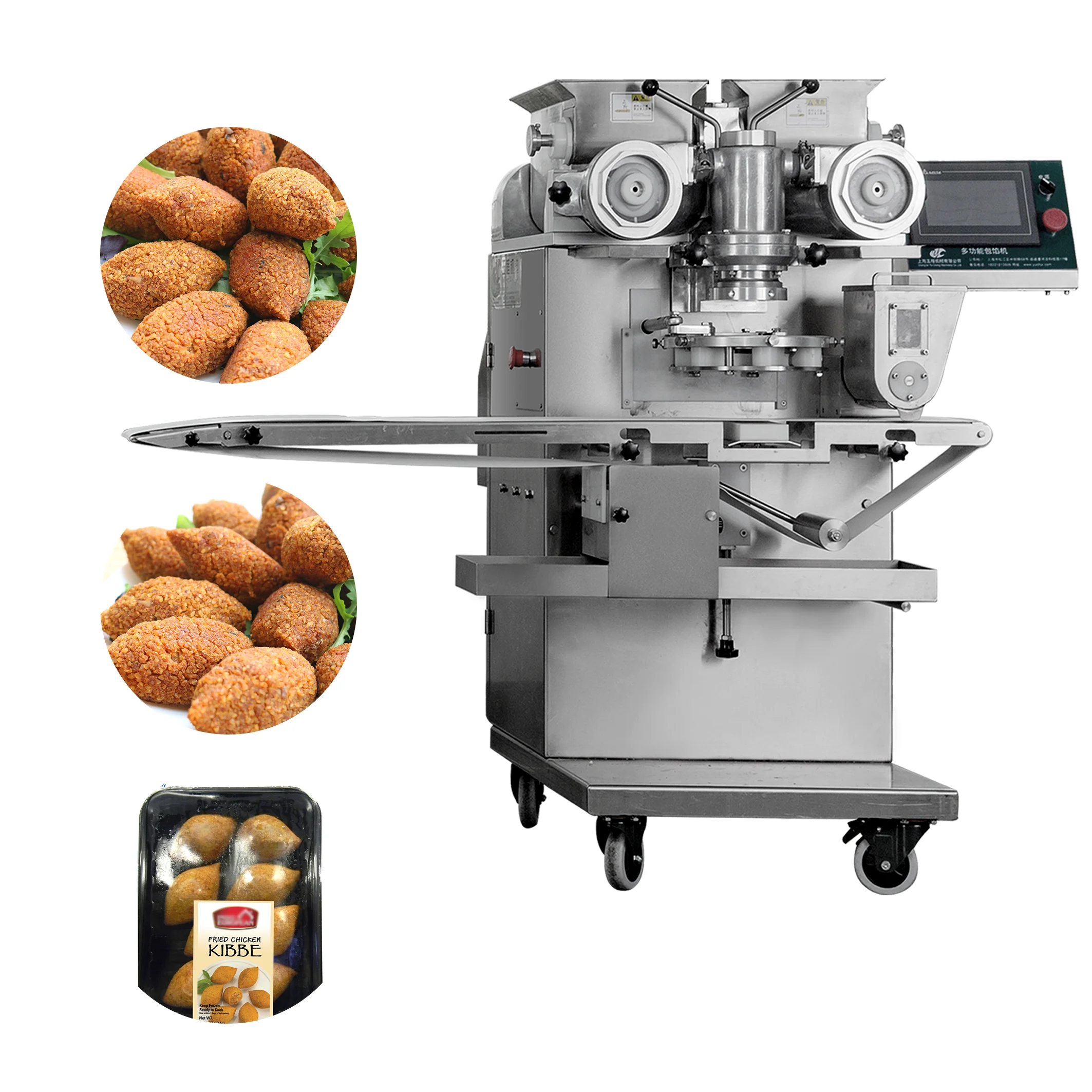
One of the most strategically valuable features to look for in a coxinha machine is whether it can handle multiple product types beyond coxinha alone. Many modern encrusting and forming machines are designed as multi-functional platforms that can produce arancini, mooncakes, kubba, kibbeh, mochi, and other filled or shaped snacks using interchangeable molds. This versatility dramatically increases the return on your equipment investment, because a single machine becomes capable of supporting a diversified product menu rather than serving a single SKU.
If your production facility handles seasonal menus, regional specialties, or a rotating snack lineup, multi-mold compatibility becomes an essential feature rather than a luxury. Operators who invest in a truly versatile coxinha machine find that they can respond to market demand changes without retooling their entire production line. The ability to simply swap mold sets and adjust settings to produce a completely different product category is a powerful operational advantage in dynamic food markets.
When evaluating mold flexibility, ask the supplier specifically about mold change time, whether molds are sold separately, and how many shape and size options are available for the model you are considering. Some machines offer rapid-change mold systems that minimize downtime between product runs, which is especially important for operations that need to switch product types within the same shift. This technical detail is easy to overlook during initial evaluation but becomes very relevant during daily production operations.
Dough and Filling Compatibility Across Recipe Types
Different recipes call for different dough textures, filling consistencies, and encrusting ratios. A coxinha machine that performs beautifully with a standard chicken-filled cassava dough may struggle with wetter fillings, chunkier ingredients, or recipes that use alternative base doughs such as tapioca or potato-based formulations. Before committing to a purchase, it is worth requesting documentation or, ideally, a live demonstration using your actual recipe to verify that the machine handles your specific ingredients reliably.
Pay close attention to the machine's filling-to-dough ratio control. High-quality coxinha machine models offer adjustable ratio settings that allow operators to fine-tune the proportion of outer dough to inner filling, ensuring every piece meets the desired product specification. This adjustment capability is not just a quality control feature — it also directly affects your food cost calculations, because precise filling ratios prevent over-stuffing or under-stuffing that can quietly inflate your ingredient costs per unit produced.
Evaluating Build Quality, Hygiene Standards, and Maintenance Demands
Material Construction and Food Safety Compliance
The construction quality of a coxinha machine is a direct indicator of how it will perform under sustained daily use and how easily it can be kept within food safety standards. Equipment used in commercial or industrial food production must meet hygiene requirements, and the materials used in the machine's construction play a central role. Stainless steel contact surfaces, food-grade seals, and smooth internal geometries that do not trap residue are all features that experienced food equipment buyers look for as baseline requirements.
Machines built with inferior materials may appear cost-effective at the point of purchase but quickly reveal weaknesses through corrosion, deformation, or seal failures that create contamination risks and increase maintenance frequency. When reviewing a coxinha machine, look for clear specifications regarding which components are stainless steel, whether the machine holds any relevant food safety certifications, and whether the design supports easy disassembly for cleaning. These details matter enormously for operators who are subject to health inspections or who supply products to retailers with strict food safety audit requirements.
Ease of Cleaning, Maintenance Schedules, and Spare Parts Availability
A coxinha machine that is difficult to clean or disassemble becomes a practical problem in daily kitchen operations. Dough and filling residues left in hard-to-reach areas can harden, cause mechanical interference, and create hygiene hazards that compromise both product quality and regulatory compliance. Machines designed with tool-free disassembly, accessible internal channels, and smooth surfaces that wipe down cleanly save significant labor time every single production day, and that operational efficiency adds up considerably over a machine's working life.
Beyond cleaning, consider the maintenance schedule the manufacturer recommends and whether you have the internal capability to handle routine servicing or whether you will need to rely on external technicians. Equally important is spare parts availability — if a wear component fails and the replacement part is difficult to source or requires weeks for international shipping, your production line faces costly unplanned downtime. Partnering with a supplier who maintains an accessible spare parts inventory and offers responsive technical support is as important as the machine's specifications themselves when evaluating a long-term equipment investment.
Understanding Size, Power Requirements, and Installation Fit
Physical Footprint and Kitchen or Production Line Integration
The physical dimensions of a coxinha machine are a practical constraint that many buyers underestimate during the evaluation phase. A machine that delivers excellent performance but does not physically fit within your available production space creates an immediate problem that cannot be resolved without facility changes. Before finalizing any equipment purchase, measure your available floor space carefully, account for operator clearance zones, and verify that the machine can be positioned in a way that supports an efficient workflow from ingredient preparation through to finished product handling.
Countertop models of the coxinha machine are suitable for small kitchens and operations with limited floor space, while larger floor-standing models are designed for high-capacity production environments where space can be dedicated to the equipment. Some compact models also offer surprisingly high output rates relative to their footprint, making them highly attractive for urban food businesses where kitchen real estate is at a premium. Always request dimensional specifications including clearance requirements before finalizing your selection.
Power Supply Specifications and Operational Running Costs
Electrical specifications are a detail that can easily trip up buyers who are purchasing equipment from international suppliers. A coxinha machine designed for a 220V/50Hz power environment will not operate correctly on a 110V/60Hz supply without a transformer, and attempting to run mismatched power specifications can damage the machine, void the warranty, and create safety risks. Always verify that the machine's power requirements are compatible with your facility's electrical infrastructure before purchasing, and clarify with the supplier whether voltage conversion options are available if there is a mismatch.
Running costs, including electricity consumption and consumable component replacement rates, should also factor into your total cost of ownership calculation. A high-throughput coxinha machine that operates efficiently at lower wattage delivers meaningful energy savings over years of operation compared to a less efficient model. While energy consumption may seem like a minor detail at the point of sale, it becomes a recurring line item in your operational expenses that compounds over the lifetime of the equipment.
Evaluating Supplier Support, Warranty Terms, and Total Cost of Ownership
Supplier Credibility and After-Sales Technical Support
The relationship with your equipment supplier does not end at the point of purchase — in many ways, it is just beginning. When you invest in a coxinha machine, you are also entering into an ongoing support relationship that will determine how quickly you can resolve technical issues, access replacement parts, and get guidance when production parameters need adjustment. A supplier with strong technical support capacity, multilingual service teams, and responsive communication channels dramatically reduces the operational risk associated with equipment downtime.
Before purchasing, evaluate the supplier's reputation specifically for after-sales service rather than just product quality. Ask for references from existing customers who are using the same coxinha machine model in similar production contexts. Understanding how quickly the supplier responds to service requests, what their warranty claim process looks like, and whether they provide remote troubleshooting support will give you a much clearer picture of the true ownership experience beyond the initial transaction.
Warranty Coverage, ROI Timeline, and Long-Term Value Assessment
Warranty terms are a direct indicator of a manufacturer's confidence in their own product. A coxinha machine backed by a comprehensive warranty covering both parts and labor for a meaningful duration signals that the manufacturer stands behind the build quality and reliability of their equipment. Conversely, very short or narrow warranty coverage should prompt additional scrutiny about component durability and expected service life.
The return on investment timeline for a coxinha machine depends on how quickly the labor savings, throughput gains, and product consistency improvements translate into measurable business value. For high-volume operations, full payback periods of six to eighteen months are achievable with the right equipment match. For smaller operations, the ROI may take longer but the qualitative benefits — reduced labor stress, consistent product appearance, and scalable capacity — contribute to business sustainability in ways that are difficult to quantify but genuinely significant. Always evaluate total cost of ownership over a three-to-five-year horizon rather than focusing exclusively on the purchase price when making your final selection.
FAQ
What types of fillings can a coxinha machine typically handle?
Most commercial coxinha machine models are designed to work with a range of filling consistencies, including finely minced meats, creamy cheese mixtures, and vegetable-based fillings. However, fillings with very large chunks, high moisture content, or fibrous textures may require the recipe to be adjusted or a specialized nozzle configuration. It is always advisable to test your specific filling recipe during a machine demonstration before committing to a purchase to confirm compatibility.
Can a coxinha machine be used to produce other snack types?
Yes, many modern coxinha machine platforms are multi-functional encrusting and forming systems that support interchangeable molds. With the appropriate mold sets, the same machine can be used to produce arancini, mooncakes, kibbeh, kubba, mochi balls, and other filled or shaped food products. This versatility makes the equipment suitable for operations that produce a diverse snack menu or need the flexibility to shift production focus seasonally.
How do I maintain a coxinha machine to extend its service life?
Routine maintenance for a coxinha machine typically includes daily cleaning of all dough and filling contact surfaces, regular lubrication of moving parts as specified by the manufacturer, and periodic inspection of seals and wear components. Following the manufacturer's recommended maintenance schedule and using only approved cleaning agents prevents premature component wear, maintains hygiene standards, and significantly extends the operational lifespan of the equipment. Keeping a supply of critical spare parts on hand also minimizes the risk of extended downtime if a wear component fails unexpectedly.
What is the typical production speed of a commercial coxinha machine?
Production speeds vary considerably depending on the model and automation level. Entry-level or semi-automatic coxinha machine units may produce between 600 and 1,500 pieces per hour, while fully automatic high-capacity models can reach output rates of 3,000 to 6,000 pieces per hour or more. The actual throughput you achieve will also depend on your dough preparation workflow, operator experience, and the complexity of the mold configuration being used. Always verify rated production speeds under realistic operating conditions rather than relying solely on maximum theoretical output figures.
Table of Contents
- Understanding Your Production Volume Requirements
- Assessing Machine Versatility and Product Compatibility
- Evaluating Build Quality, Hygiene Standards, and Maintenance Demands
- Understanding Size, Power Requirements, and Installation Fit
- Evaluating Supplier Support, Warranty Terms, and Total Cost of Ownership
- FAQ


