 EN
EN

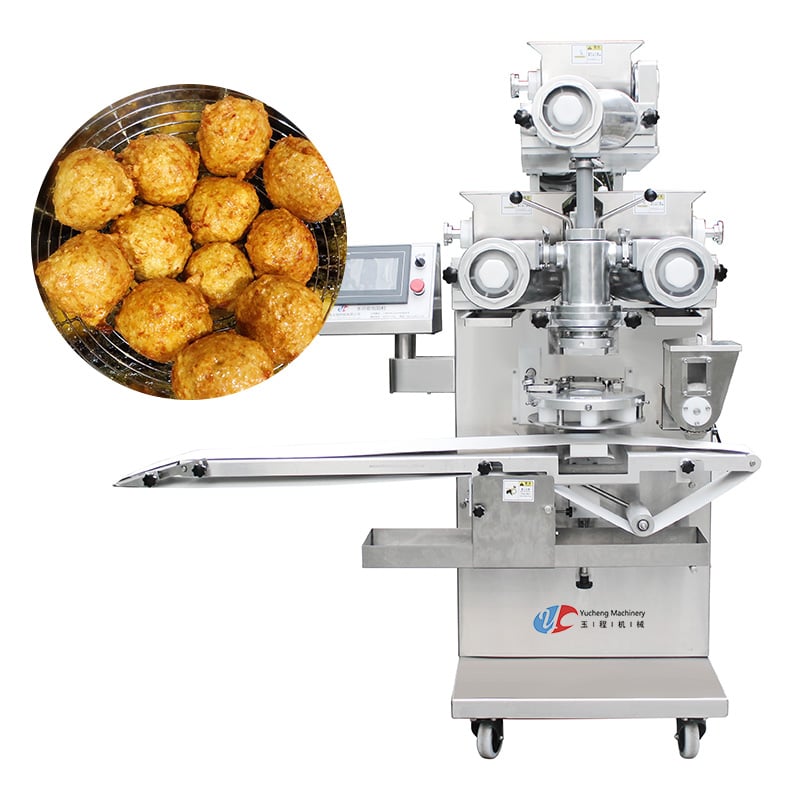
A commercial meatball machine represents a significant investment for food manufacturers, restaurants, and catering operations looking to streamline production. The commercial meatball machine has transformed how facilities handle bulk meat processing, offering unprecedented efficiency gains and operational consistency. Understanding the key advantages of a commercial meatball machine helps decision-makers evaluate whether this technology aligns with their production goals and budget constraints.
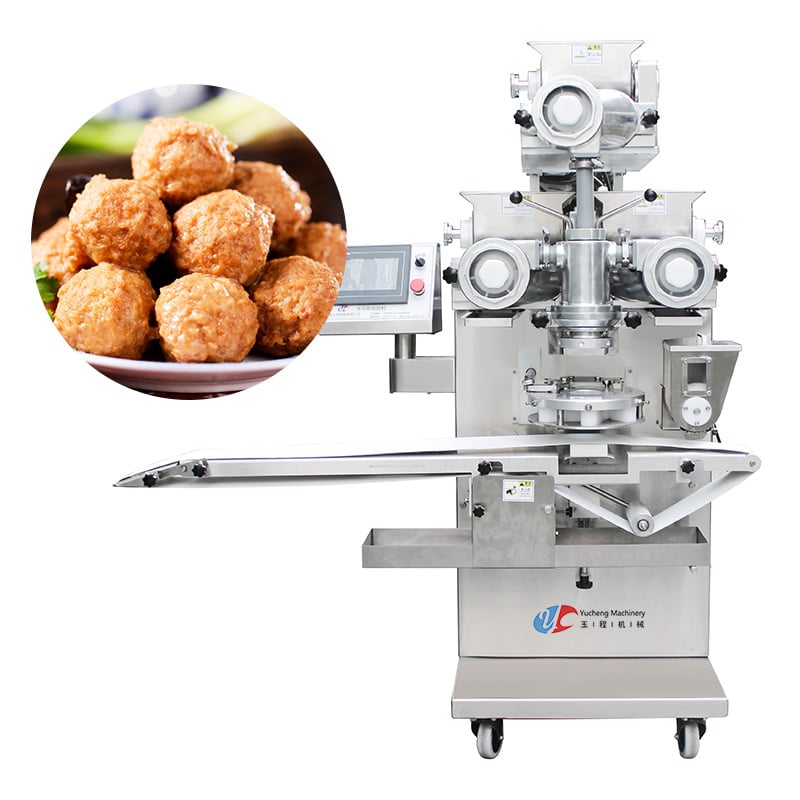
Modern food production demands both speed and precision, two areas where a commercial meatball machine excels. Whether you operate a large-scale manufacturing facility, a frozen food distributor, or a high-volume restaurant chain, investing in a commercial meatball machine delivers measurable returns through labor reduction, product uniformity, and accelerated output. This guide explores the tangible business benefits that make a commercial meatball machine an essential asset in contemporary food service environments.
Productivity and Output Enhancement
Accelerating Production Capacity with Automated Equipment
The primary advantage of a commercial meatball machine lies in its ability to dramatically increase daily production capacity. Manual meatball formation is labor-intensive and time-consuming, with skilled staff typically producing between 100 and 200 pieces per hour under optimal conditions. A commercial meatball machine can produce thousands of uniform meatballs per hour, dramatically scaling operations without proportional increases in staffing. This capability enables facilities to fulfill larger orders, enter new market segments, and respond quickly to seasonal demand spikes without operational strain.
Reducing Bottlenecks in Production Workflow
Commercial food operations often experience bottlenecks during the shaping and forming phase of meatball production. A commercial meatball machine eliminates this constraint by handling the most time-intensive step automatically. Staff can focus on material preparation, seasoning adjustment, quality inspection, and packaging rather than repetitive hand-forming. This workflow optimization creates a smoother production pipeline, reduces idle time between processing stages, and improves overall facility throughput. Facilities report production increases of 300 to 500 percent after implementing a commercial meatball machine, translating directly to revenue growth and market competitiveness.
Product Consistency and Quality Control
Achieving Uniform Size and Weight Standards
Consistency is a critical requirement in food manufacturing, affecting both consumer satisfaction and regulatory compliance. A commercial meatball machine produces meatballs of identical size and weight with remarkable precision, eliminating the variation inherent in manual production. Each unit manufactured by a commercial meatball machine meets exact specifications, whether producing 28-gram appetizer portions or 45-gram main-course servings. This uniformity ensures predictable cooking times, consistent final product appearance, and compliance with nutritional labeling requirements. Retailers and food service customers specifically demand uniform products, making a commercial meatball machine essential for securing contracts and maintaining customer loyalty.
Maintaining Quality Standards at Scale
As production volume increases, maintaining quality becomes exponentially more difficult with manual processes. A commercial meatball machine standardizes the forming process, reducing human error and fatigue-related quality degradation. The equipment maintains consistent density, texture, and ingredient distribution throughout extended production runs. This reliability enables facilities to confidently serve premium market segments, establish quality reputations, and command higher price points. Food safety audits become more straightforward when a commercial meatball machine documents every batch with controlled parameters, improving traceability and accountability throughout the supply chain.
Cost Management and Labor Efficiency
Reducing Labor Expenses and Workforce Demands
Labor represents the largest operational cost in food manufacturing, often consuming 30 to 45 percent of total production expenses. A commercial meatball machine significantly reduces manual labor requirements, allowing facilities to maintain or increase production with smaller teams. Instead of employing five to eight staff members for hand-forming operations, a commercial meatball machine can be operated by one or two technicians monitoring the equipment and handling supporting tasks. This reduction translates to substantial savings in wages, benefits, payroll taxes, and training expenses. Over multi-year periods, a commercial meatball machine investment typically pays for itself through labor savings alone, with subsequent years representing pure operational profit.
Optimizing Raw Material Usage and Reducing Waste
A commercial meatball machine operates with precise portioning controls, ensuring that every unit contains the exact target weight and ingredient ratio. This accuracy minimizes ingredient waste compared to manual forming, where over-filling and under-filling create irregular portions that require rework or disposal. The commercial meatball machine maximizes the yield from purchased raw materials, directly improving gross margins. Additionally, the equipment operates with minimal spillage and cleanup requirements, further reducing material loss. Facilities also benefit from simplified inventory management, as a commercial meatball machine provides predictable consumption rates for meat, binders, and seasonings, enabling more accurate purchasing and storage optimization.
Operational Flexibility and Technology Integration
Adapting to Product Variations and Market Demands
Modern commercial operations serve diverse customer bases with varying product specifications. A commercial meatball machine provides flexibility to accommodate different meatball sizes, densities, and ingredient combinations through simple settings adjustments. Whether producing traditional beef varieties, poultry options, or specialty formulations, the commercial meatball machine adapts quickly without lengthy reconfiguration or retraining. This versatility enables facilities to serve multiple market segments simultaneously, respond to custom orders, and experiment with new product innovations without major capital expenditure. The ability to switch between production types rapidly gives facilities competitive advantages in dynamic food markets.
Leveraging Data and Automation for Operational Insight
Contemporary commercial meatball machine models integrate digital controls and data collection capabilities that provide unprecedented operational transparency. Facility managers can monitor production metrics, identify efficiency trends, and detect maintenance issues before failures occur. A commercial meatball machine with integrated analytics enables predictive maintenance scheduling, reducing unexpected downtime and extending equipment lifespan. Real-time production data supports continuous improvement initiatives, helping operators optimize settings for maximum yield and quality. This technological integration positions facilities for future scalability, as data-driven operations facilitate automation expansion and integration with broader facility management systems.
FAQ
What production volume justifies investment in a commercial meatball machine?
A commercial meatball machine investment typically becomes economically justified when production volume exceeds 5,000 to 10,000 meatballs weekly. Facilities with smaller volumes may benefit more from outsourcing or semi-automated equipment, while high-volume operations derive maximum return on investment. The payback period usually ranges from 12 to 24 months, depending on labor rates, production scale, and current operational costs. Evaluate your specific volume projections and labor expenses to determine whether a commercial meatball machine aligns with your financial goals and growth trajectory.
How does a commercial meatball machine ensure food safety and hygiene?
A commercial meatball machine is engineered with stainless steel construction, removable components for thorough cleaning, and design principles that minimize contamination risks. The equipment integrates into established HACCP protocols and food safety management systems. All contact surfaces can be sanitized between production runs, and the automated process reduces human contact with finished products. Modern commercial meatball machine models comply with FDA, USDA, and international food safety standards, providing certifications and documentation that satisfy regulatory requirements and customer audits.
Can a commercial meatball machine accommodate different meat types and ingredient ratios?
Yes, a commercial meatball machine handles various meat compositions, including beef, pork, poultry, plant-based alternatives, and custom blends. Settings can be adjusted to modify density, moisture content, and forming pressure to accommodate different ingredient properties. A commercial meatball machine accepts pre-mixed batches, allowing operators to control seasoning and binding agent ratios while the equipment handles uniform portioning and shaping. This flexibility enables production of diverse product lines within a single facility using the same commercial meatball machine, maximizing equipment utilization and operational efficiency.


