 EN
EN

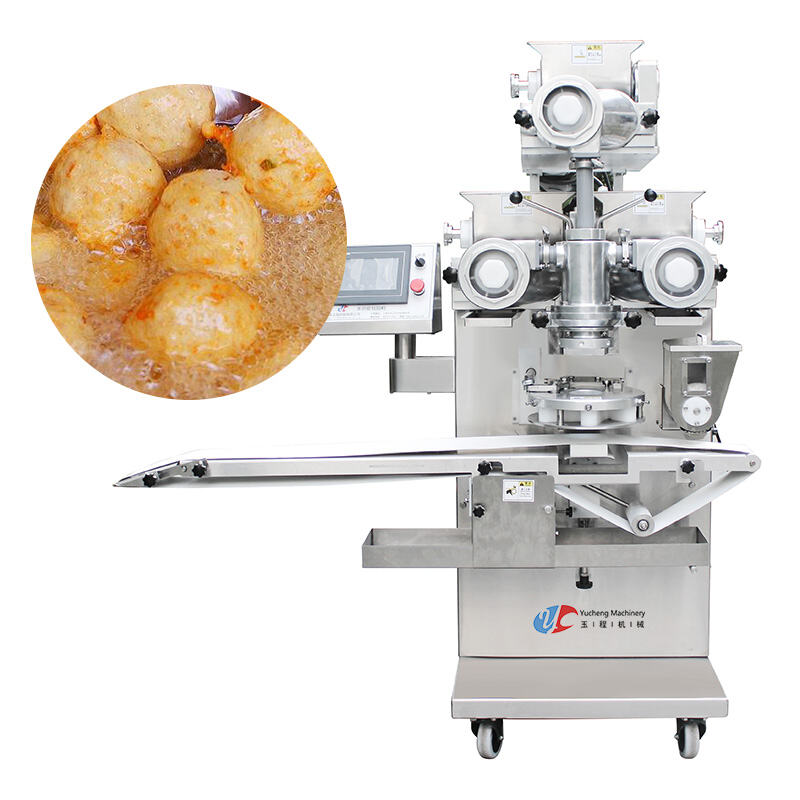
Selecting the right automatic machinery for your production facility has become increasingly complex as technology advances and market demands evolve. The modern industrial landscape requires businesses to make informed decisions about automation investments that will drive efficiency, quality, and profitability. Understanding the key factors that influence automatic machinery selection can mean the difference between a successful implementation and costly operational challenges.
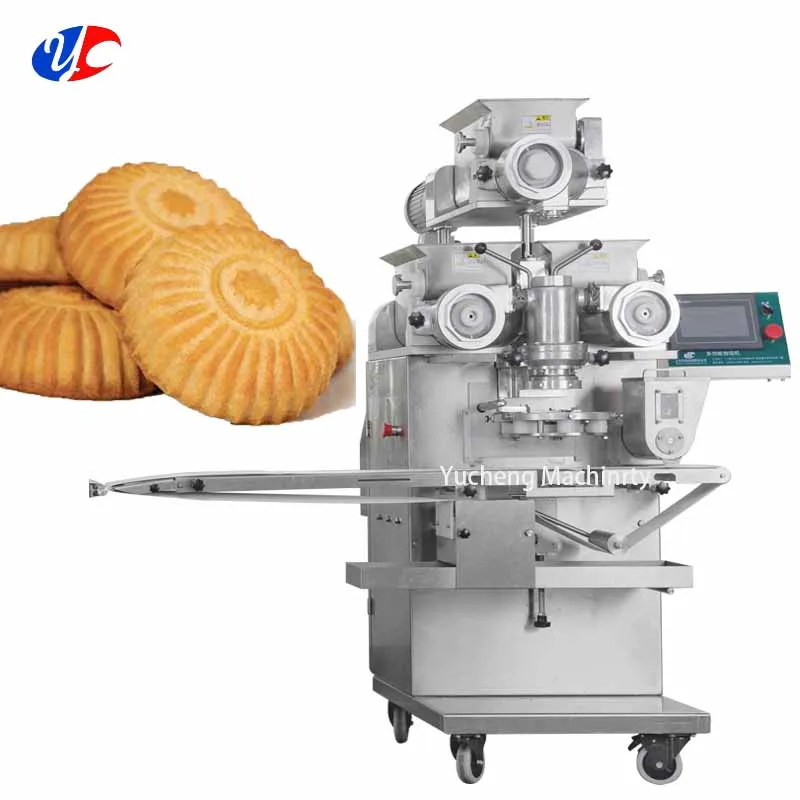
The decision-making process for automatic machinery procurement involves multiple stakeholders and requires careful evaluation of technical specifications, operational requirements, and long-term strategic goals. Manufacturing companies must consider factors ranging from production capacity and quality standards to maintenance requirements and scalability potential. This comprehensive approach ensures that investments in automation technology deliver sustainable value and competitive advantages.
Understanding Your Production Requirements
Capacity Planning and Volume Analysis
Accurate assessment of production capacity requirements forms the foundation of successful automatic machinery selection. Companies must analyze current production volumes, projected growth patterns, and peak demand scenarios to determine appropriate equipment specifications. This analysis should include evaluation of product mix variations, seasonal fluctuations, and potential market expansion opportunities that could impact future capacity needs.
Production planners should document existing throughput rates, identify bottlenecks in current processes, and establish realistic targets for improvement. Automatic machinery investments should align with strategic business objectives while providing sufficient flexibility to accommodate changing market conditions. Understanding the relationship between equipment capacity and operational efficiency helps organizations make informed decisions about technology investments.
Quality Standards and Precision Requirements
Modern automatic machinery must meet increasingly stringent quality standards while maintaining consistent output precision. Organizations should define acceptable tolerance levels, quality metrics, and performance benchmarks that align with customer expectations and regulatory requirements. These specifications directly influence equipment selection criteria and determine the level of sophistication required in automation systems.
Quality control considerations extend beyond basic dimensional accuracy to include surface finish requirements, material consistency, and process repeatability. Automatic machinery equipped with advanced sensing and feedback systems can provide real-time quality monitoring and adjustment capabilities. This level of precision control is essential for maintaining competitive advantage in demanding market segments where quality differentiation drives customer loyalty.
Technology Assessment and Integration Capabilities
Compatibility with Existing Systems
Successful integration of new automatic machinery requires careful evaluation of compatibility with existing production systems, control platforms, and data management infrastructure. Organizations must assess communication protocols, software interfaces, and mechanical integration requirements to ensure seamless operation within established manufacturing environments. This compatibility analysis helps prevent costly modifications and operational disruptions during implementation phases.
Legacy system integration challenges often require creative solutions and may influence equipment selection decisions. Automatic machinery suppliers should demonstrate proven track records in system integration and provide comprehensive support for compatibility testing. Understanding integration complexity early in the selection process allows for proper budgeting of implementation resources and realistic project timelines.
Automation Level and Control Sophistication
The appropriate level of automation depends on production complexity, operator skill levels, and operational objectives. Simple automatic machinery may suffice for basic repetitive tasks, while complex manufacturing processes might require sophisticated programmable systems with advanced diagnostic capabilities. Evaluating the optimal balance between automation sophistication and operational simplicity helps organizations avoid over-engineering or under-specification issues.
Control system architecture should support both current operational requirements and future enhancement possibilities. Modern automatic machinery often incorporates modular control platforms that allow for incremental capability expansion without major system overhauls. This flexibility enables organizations to adapt their automation investments as production requirements evolve and new technologies become available.
Economic Evaluation and Return on Investment
Total Cost of Ownership Analysis
Comprehensive economic evaluation of automatic machinery investments requires analysis of total cost of ownership rather than simple purchase price comparisons. This analysis should include acquisition costs, installation expenses, training requirements, ongoing maintenance, energy consumption, and expected service life. Understanding these comprehensive cost factors enables more accurate financial projections and investment justification.
Operating cost considerations include spare parts availability, service support accessibility, and potential productivity losses during maintenance periods. Automatic machinery suppliers should provide detailed cost breakdowns and performance guarantees to support accurate financial modeling. Long-term cost projections help organizations make informed decisions about equipment specifications and supplier selection.
Productivity Improvement Metrics
Quantifying productivity improvements from automatic machinery implementation requires establishment of baseline performance metrics and realistic improvement targets. Key performance indicators should include throughput rates, quality yields, labor efficiency, and operational flexibility measures. These metrics provide objective criteria for evaluating different equipment options and justifying automation investments to stakeholders.
Productivity analysis should consider both direct and indirect benefits from automation implementation. Direct benefits include increased production rates and reduced labor costs, while indirect benefits might include improved quality consistency, reduced waste, and enhanced safety performance. Automatic machinery that delivers measurable improvements across multiple performance dimensions typically provides superior return on investment compared to single-benefit solutions.
Supplier Evaluation and Selection Criteria
Technical Expertise and Industry Experience
Supplier technical expertise and industry experience significantly impact the success of automatic machinery implementations. Organizations should evaluate potential suppliers based on their track record in similar applications, technical support capabilities, and understanding of specific industry requirements. Experienced suppliers can provide valuable insights into best practices, potential challenges, and optimization opportunities that enhance project outcomes.
Reference checks with existing customers provide important insights into supplier performance, service quality, and long-term support reliability. Automatic machinery suppliers should demonstrate their ability to deliver complete solutions including equipment design, installation, commissioning, and ongoing technical support. This comprehensive capability ensures smooth project execution and minimizes implementation risks.
Service and Support Infrastructure
Robust service and support infrastructure is essential for maintaining optimal automatic machinery performance throughout equipment lifecycle. Suppliers should provide local service representation, rapid response capabilities, and comprehensive spare parts inventory to minimize downtime risks. Understanding service level agreements and support costs helps organizations budget appropriately for ongoing maintenance requirements.
Training and knowledge transfer programs ensure that operational staff can effectively utilize automatic machinery capabilities and perform routine maintenance tasks. Comprehensive training reduces dependency on external service providers and enables organizations to maximize equipment utilization. Supplier commitment to ongoing support and technology updates demonstrates long-term partnership approach to customer success.
Implementation Planning and Risk Management
Project Timeline and Resource Allocation
Successful automatic machinery implementation requires detailed project planning that addresses timeline requirements, resource allocation, and coordination with ongoing production activities. Organizations must balance the urgency of productivity improvements with the need for thorough planning and preparation. Realistic project timelines account for equipment delivery, installation complexity, testing requirements, and operator training needs.
Resource allocation planning should include internal project management, technical personnel, and facility preparation requirements. Automatic machinery installations often require specialized utilities, foundation work, and safety system modifications that must be coordinated with equipment delivery schedules. Proper resource planning prevents project delays and ensures smooth transition to automated operations.
Risk Mitigation and Contingency Planning
Comprehensive risk assessment identifies potential challenges that could impact automatic machinery implementation success and develops appropriate mitigation strategies. Common risks include technical compatibility issues, delivery delays, performance shortfalls, and integration difficulties. Understanding these risks enables organizations to develop contingency plans and allocate appropriate resources for risk management.
Performance guarantees and acceptance testing protocols provide important safeguards against equipment underperformance and implementation issues. Automatic machinery suppliers should provide clear specifications, testing procedures, and remedy provisions for addressing performance deficiencies. Well-defined acceptance criteria and testing protocols ensure that equipment meets operational requirements before final acceptance and payment.
Future Considerations and Technology Trends
Scalability and Upgrade Potential
Forward-thinking organizations evaluate automatic machinery investments based on long-term scalability potential and upgrade pathways rather than immediate requirements alone. Equipment platforms that support modular expansion and capability enhancement provide greater flexibility for accommodating business growth and changing market demands. This scalability consideration helps maximize the useful life of automation investments and provides better long-term value.
Technology roadmap alignment ensures that automatic machinery investments remain relevant as industry standards and customer requirements evolve. Suppliers should demonstrate their commitment to ongoing technology development and provide clear upgrade pathways for existing equipment. Understanding technology evolution trends helps organizations make informed decisions about timing and specification of automation investments.
Digital Integration and Industry 4.0 Readiness
Modern automatic machinery increasingly incorporates digital connectivity and data analytics capabilities that support Industry 4.0 initiatives. Organizations should evaluate equipment options based on their ability to integrate with digital manufacturing platforms, provide real-time performance data, and support predictive maintenance programs. These digital capabilities enhance operational efficiency and enable data-driven decision making.
Cybersecurity considerations become increasingly important as automatic machinery incorporates network connectivity and digital interfaces. Equipment suppliers should demonstrate their commitment to cybersecurity best practices and provide appropriate security features to protect against potential threats. Understanding cybersecurity requirements helps organizations select equipment that maintains operational security while providing desired connectivity benefits.
FAQ
What factors should be prioritized when evaluating automatic machinery suppliers
When evaluating automatic machinery suppliers, prioritize technical expertise in your specific industry, proven track record with similar applications, comprehensive service and support infrastructure, and financial stability. Additionally, assess their ability to provide complete solutions including installation, training, and ongoing technical support. Reference checks with existing customers provide valuable insights into supplier performance and reliability.
How can organizations ensure successful integration of new automatic machinery with existing systems
Successful integration requires thorough compatibility assessment of communication protocols, control systems, and mechanical interfaces before equipment selection. Develop detailed integration plans that address data exchange requirements, operator interface consistency, and maintenance coordination. Work closely with suppliers to conduct compatibility testing and provide comprehensive integration support throughout the implementation process.
What are the key performance metrics for measuring automatic machinery effectiveness
Key performance metrics include overall equipment effectiveness (OEE), throughput rates, quality yield percentages, energy efficiency, and maintenance costs. Additionally, monitor operator productivity, safety performance, and flexibility measures such as changeover times and product mix capability. Establish baseline measurements before implementation to accurately quantify improvement results and return on investment.
How should organizations plan for future technology upgrades and scalability requirements
Plan for future requirements by selecting automatic machinery platforms that support modular expansion and capability enhancement. Evaluate suppliers based on their technology roadmaps and commitment to ongoing development. Consider digital integration capabilities, upgrade pathways, and compatibility with emerging technologies. Allocate budget for future enhancements and establish relationships with suppliers who can support long-term technology evolution needs.
Table of Contents
- Understanding Your Production Requirements
- Technology Assessment and Integration Capabilities
- Economic Evaluation and Return on Investment
- Supplier Evaluation and Selection Criteria
- Implementation Planning and Risk Management
- Future Considerations and Technology Trends
-
FAQ
- What factors should be prioritized when evaluating automatic machinery suppliers
- How can organizations ensure successful integration of new automatic machinery with existing systems
- What are the key performance metrics for measuring automatic machinery effectiveness
- How should organizations plan for future technology upgrades and scalability requirements


