 EN
EN

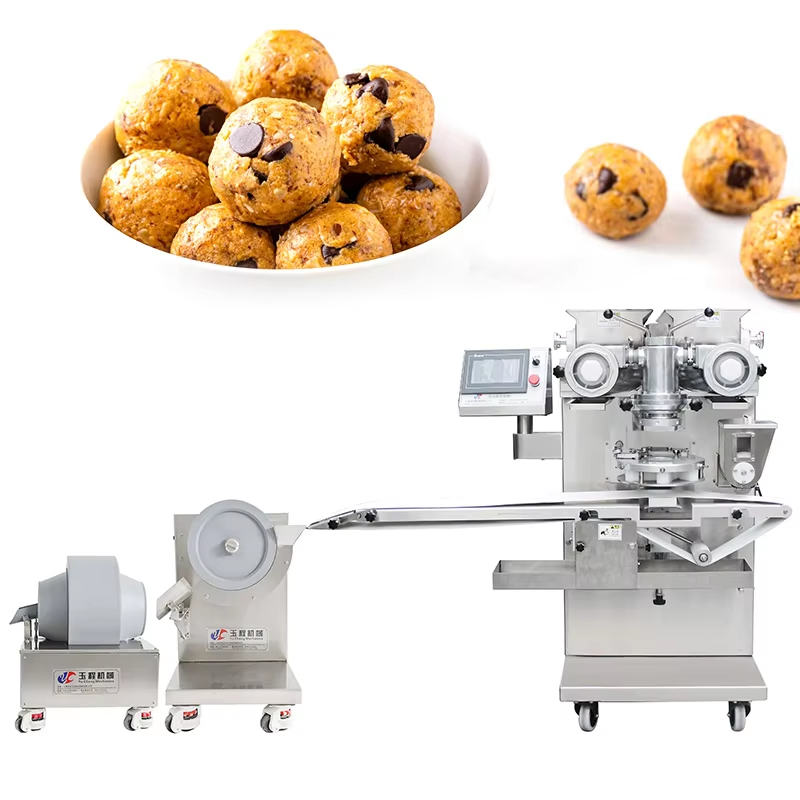
Modern food manufacturing facilities are continuously seeking innovative solutions to enhance their production capabilities while maintaining consistent quality standards. The implementation of automated equipment has revolutionized how specialty food products are manufactured, particularly in the growing market of healthy snacks and energy foods. Among these technological advancements, the date ball machine stands out as a game-changing piece of equipment that addresses multiple production challenges simultaneously. This sophisticated machinery transforms traditional manual processes into streamlined, efficient operations that can significantly boost overall manufacturing productivity.
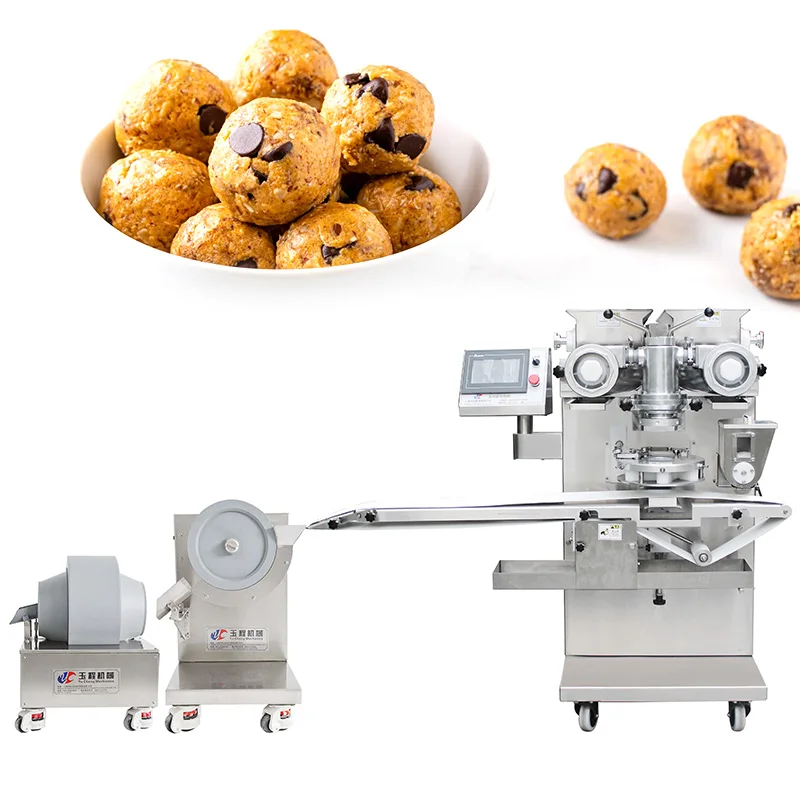
Automated Production Capabilities and Speed Enhancement
High-Volume Processing Power
The primary advantage of implementing a date ball machine in food production lies in its remarkable processing capacity. Unlike manual production methods that rely heavily on human labor and are limited by individual worker speed, these automated systems can process thousands of units per hour with unwavering consistency. The machine's internal mechanisms are engineered to handle continuous operation cycles, allowing manufacturers to meet demanding production schedules without compromising product quality. This enhanced throughput capability directly translates to increased revenue potential and improved market responsiveness.
Advanced date ball machine models incorporate precision timing systems that optimize each production cycle for maximum efficiency. The automated feeding mechanisms ensure consistent ingredient ratios while maintaining optimal processing speeds. This systematic approach eliminates the bottlenecks commonly associated with manual production, where human fatigue and skill variations can significantly impact overall output rates. Manufacturers often report productivity increases of 300-500% when transitioning from manual to automated date ball production systems.
Continuous Operation Benefits
Another significant efficiency improvement comes from the machine's ability to operate continuously with minimal supervision. Traditional manual production requires frequent breaks, shift changes, and quality control interventions that interrupt the manufacturing flow. A properly maintained date ball machine can run for extended periods with only periodic maintenance checks and ingredient replenishment. This continuous operation capability allows manufacturers to maximize their production windows and reduce per-unit manufacturing costs through improved equipment utilization rates.
The integration of smart monitoring systems in modern date ball machine designs further enhances operational continuity. These systems provide real-time feedback on production metrics, ingredient levels, and equipment performance, enabling proactive maintenance scheduling and preventing unexpected downtime. Such technological integration ensures that production efficiency gains are sustained over long operational periods.
Quality Consistency and Standardization
Uniform Product Specifications
Consistency represents one of the most critical factors in commercial food production, and the date ball machine excels in delivering uniform products that meet exact specifications. The precision-engineered forming mechanisms ensure that each produced unit maintains identical dimensions, weight, and texture characteristics. This level of standardization is virtually impossible to achieve through manual production methods, where human variables inevitably introduce inconsistencies that can affect product quality and customer satisfaction.
The machine's automated portioning systems utilize advanced weighing technologies that guarantee precise ingredient distribution in every unit. This consistency extends beyond just physical dimensions to include nutritional content uniformity, ensuring that each date ball meets the exact specifications outlined in product labeling and nutritional information. Such precision is particularly important for manufacturers serving health-conscious consumers who rely on accurate nutritional data for their dietary planning.
Reduced Human Error Impact
Human error represents a significant source of production inefficiency and quality variability in manual manufacturing processes. The implementation of a date ball machine virtually eliminates these error sources by automating critical production steps that are prone to human mistakes. From ingredient measuring to shaping and packaging preparation, the automated system follows predetermined parameters that ensure consistent execution of every production cycle.
The reduction in human error also translates to decreased waste generation and improved raw material utilization. Manual production often results in product rejections due to size variations, improper mixing, or contamination issues. Automated systems maintain sterile processing environments and precise control over all production variables, significantly reducing waste rates and improving overall production efficiency through better yield ratios.
Cost Reduction and Resource Optimization
Labor Cost Minimization
One of the most immediate efficiency improvements achieved through date ball machine implementation involves substantial labor cost reductions. Traditional manual production requires multiple skilled workers to handle various aspects of the manufacturing process, from ingredient preparation to product shaping and quality control. The automated system can perform the work of several employees with just one or two operators overseeing the entire operation, resulting in significant payroll savings and reduced training requirements.
The specialized nature of date ball machine operation means that manufacturers can reduce their dependency on highly skilled artisanal workers, who are often expensive and difficult to retain. Instead, operators need only basic technical training to manage the automated systems effectively. This shift in labor requirements provides greater flexibility in workforce management and reduces the impact of employee turnover on production continuity.
Material Waste Reduction
Efficient material utilization represents another crucial area where the date ball machine delivers substantial improvements. The precision control systems ensure optimal use of expensive ingredients like dates, nuts, and specialty proteins, minimizing waste that commonly occurs in manual production processes. Automated portioning eliminates overuse of ingredients while ensuring that each product meets minimum content requirements, optimizing the balance between quality and cost efficiency.
Advanced date ball machine models incorporate recycling capabilities that allow the reprocessing of slightly imperfect products back into the production stream. This closed-loop approach further reduces material waste and improves overall resource efficiency. The cumulative effect of these waste reduction measures can result in material cost savings of 15-25% compared to manual production methods.
Enhanced Food Safety and Hygiene Standards
Contamination Prevention Systems
Modern food safety regulations demand increasingly stringent hygiene standards that are difficult to maintain consistently through manual production processes. The date ball machine incorporates advanced contamination prevention features, including enclosed processing chambers, automated cleaning cycles, and minimal human contact requirements. These design elements significantly reduce the risk of bacterial contamination and foreign object inclusion that can occur in traditional manual production environments.
The stainless steel construction and smooth surface finishes of quality date ball machine models facilitate thorough cleaning and sanitization procedures. Many units feature CIP (Clean-in-Place) systems that automate the cleaning process, ensuring consistent sanitation standards while reducing downtime associated with manual cleaning procedures. This systematic approach to hygiene management helps manufacturers maintain compliance with regulatory requirements while protecting their brand reputation.
Traceability and Documentation
Advanced date ball machine systems incorporate sophisticated monitoring and documentation capabilities that enhance production traceability. These systems automatically record batch information, processing parameters, and quality metrics, creating comprehensive production records that support regulatory compliance and quality assurance programs. Such detailed documentation capabilities are essential for manufacturers serving markets with strict food safety requirements.
The automated data collection features eliminate the manual record-keeping requirements that are prone to errors and omissions. Digital production logs provide accurate timestamps, ingredient lot tracking, and processing condition records that support rapid response to quality issues or regulatory inquiries. This enhanced traceability capability protects manufacturers from liability issues while demonstrating their commitment to food safety excellence.
Scalability and Future Growth Accommodation
Flexible Production Capacity
The modular design characteristics of modern date ball machine systems provide manufacturers with exceptional scalability options to accommodate business growth. Unlike fixed manual production setups that require proportional increases in workforce and facility space, automated systems can often be expanded through additional modules or upgraded components. This scalability feature allows manufacturers to respond efficiently to market demand fluctuations without major capital investments in entirely new production lines.
Many date ball machine manufacturers offer upgrade paths that enable existing equipment to incorporate new features or increased capacity as business requirements evolve. This evolutionary approach to production scaling helps manufacturers manage their capital expenditure while maintaining competitive production capabilities. The ability to incrementally expand production capacity provides significant strategic advantages in dynamic market conditions.
Technology Integration Capabilities
Contemporary date ball machine designs incorporate advanced connectivity features that support integration with broader manufacturing execution systems and Industry 4.0 initiatives. These integration capabilities enable real-time production monitoring, predictive maintenance scheduling, and automated quality control processes that further enhance overall production efficiency. The data generated by connected systems provides valuable insights for continuous improvement initiatives and optimization strategies.
The compatibility with modern manufacturing technologies positions date ball machine investments as future-ready assets that can evolve with advancing automation trends. This technological adaptability ensures that efficiency improvements achieved through initial implementation can be continuously enhanced through software updates and system integrations, maximizing the long-term return on equipment investments.
Return on Investment Analysis
Payback Period Calculations
The comprehensive efficiency improvements delivered by date ball machine implementation typically result in attractive return on investment metrics that justify the initial capital expenditure. Most manufacturers report payback periods ranging from 18 to 36 months, depending on their production volumes and labor cost structures. The combination of increased output capacity, reduced labor requirements, and improved material utilization creates multiple revenue enhancement and cost reduction streams that accelerate investment recovery.
Detailed financial analysis often reveals that the date ball machine generates positive cash flow impacts within the first year of operation through immediate labor cost savings and productivity improvements. The cumulative effect of ongoing efficiency gains, including reduced waste, improved quality consistency, and enhanced market responsiveness, continues to deliver financial benefits throughout the equipment's operational lifespan, often exceeding initial ROI projections.
Competitive Market Advantages
Beyond direct financial returns, the efficiency improvements achieved through date ball machine implementation provide significant competitive advantages in increasingly crowded specialty food markets. The ability to offer consistent product quality at competitive pricing while maintaining healthy profit margins enables manufacturers to capture larger market shares and defend against price competition from manual production operations.
The enhanced production flexibility and rapid response capabilities provided by automated systems allow manufacturers to capitalize on emerging market opportunities and seasonal demand fluctuations more effectively than competitors relying on manual production methods. This strategic agility often translates to revenue growth opportunities that extend far beyond the direct cost savings achieved through operational efficiency improvements.
FAQ
What maintenance requirements does a date ball machine have
Regular maintenance for a date ball machine typically includes daily cleaning cycles, weekly lubrication of moving components, and monthly inspection of wear parts such as forming dies and cutting mechanisms. Most manufacturers recommend quarterly professional servicing to ensure optimal performance and prevent unexpected downtime. Proper maintenance schedules help maximize equipment lifespan and maintain production efficiency levels throughout the operational period.
How quickly can operators learn to use date ball machine systems
Basic operation training for a date ball machine usually requires 2-3 days of hands-on instruction, while comprehensive system management skills can be developed within 1-2 weeks of regular use. The intuitive control interfaces and automated safety systems minimize the learning curve compared to complex manual production techniques. Most manufacturers provide comprehensive training programs and ongoing technical support to ensure successful system implementation.
Can date ball machine handle different recipe formulations
Modern date ball machine designs incorporate adjustable parameters that accommodate various recipe formulations, including different date varieties, nut inclusions, protein additions, and binding agents. The programmable control systems allow operators to store multiple recipe profiles and switch between different product types with minimal changeover time. This flexibility enables manufacturers to diversify their product offerings while maintaining efficient production operations.
What space requirements are needed for date ball machine installation
A typical date ball machine installation requires approximately 200-400 square feet of floor space, depending on the specific model and auxiliary equipment needs. This includes space for ingredient preparation areas, the main processing unit, and finished product collection systems. The compact design of modern units makes them suitable for existing production facilities without requiring major facility modifications or expansions.


