 EN
EN


Modern food manufacturing demands operational excellence, consistent quality, and rapid throughput to meet growing consumer needs while maintaining profitability. A high efficiency food production line represents the integration of advanced automation, synchronized machinery, and intelligent control systems designed to transform raw ingredients into finished packaged products with minimal human intervention and maximum output. Understanding the operational mechanics of these sophisticated systems is essential for food manufacturers seeking to optimize their production capabilities, reduce waste, and maintain competitive advantage in an increasingly demanding marketplace.
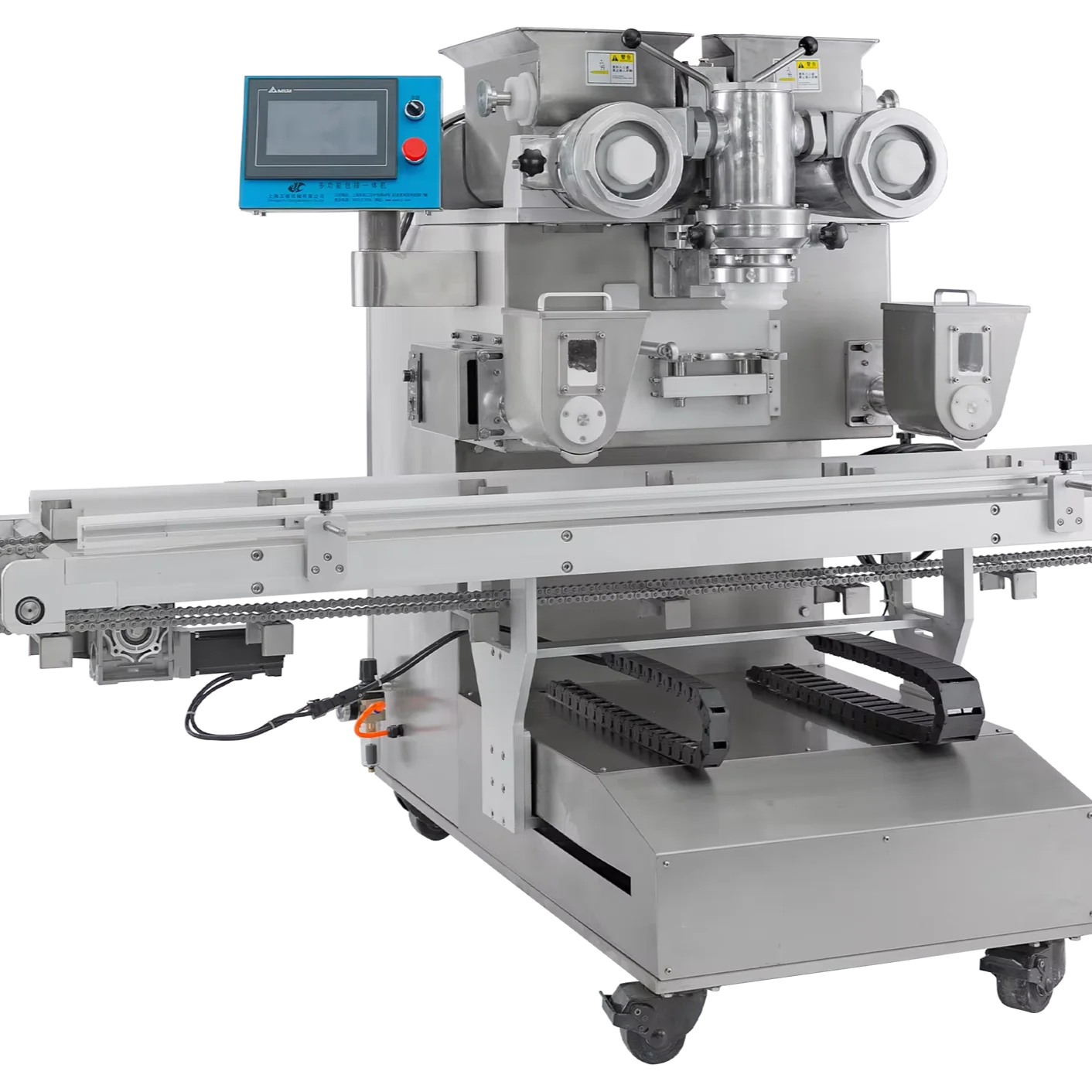
The fundamental operation of a high efficiency food production line involves a carefully orchestrated sequence of processing stages, each performing specific functions while maintaining seamless material flow from start to finish. These integrated systems combine ingredient handling, mixing, forming, cooking, cooling, quality inspection, and packaging into a continuous workflow that maximizes speed while ensuring product consistency and food safety compliance. The sophisticated interplay between mechanical components, automated controls, and monitoring systems creates production environments capable of achieving output rates that would be impossible through manual or semi-automated methods.
Core Operational Framework of High Efficiency Food Production Systems
Continuous Flow Architecture and Material Movement Principles
The operational foundation of a high efficiency food production line rests on continuous flow architecture that eliminates bottlenecks and minimizes transition delays between processing stages. Material movement follows precisely timed sequences controlled by programmable logic controllers that synchronize conveyor speeds, processing intervals, and transfer mechanisms to maintain optimal throughput. Raw materials enter the system through automated feeding mechanisms that meter ingredients according to recipe specifications, ensuring consistent formulation throughout production runs. Conveyor systems transport products between stations using variable speed drives that adjust to downstream processing requirements, preventing accumulation or gaps in the production flow.
Sophisticated buffer zones within the high efficiency food production line accommodate temporary speed variations between different processing stations without disrupting overall system operation. These accumulation areas use sensor-controlled gates and pressure-sensitive conveyors to manage product flow dynamically, maintaining steady output even when individual stations require brief maintenance interventions or cleaning cycles. The material handling system incorporates multiple transport technologies including belt conveyors, chain drives, pneumatic transfer systems, and robotic pick-and-place units, each selected for optimal performance with specific product characteristics and processing requirements.
Integrated Process Control and Automation Intelligence
Central to the operation of any high efficiency food production line is the integrated control system that manages all mechanical, thermal, and quality parameters in real-time. Advanced programmable automation controllers receive continuous input from hundreds of sensors monitoring temperature, pressure, weight, speed, position, and quality indicators throughout the production environment. These control systems execute complex algorithms that adjust processing parameters automatically to maintain target specifications, compensating for ingredient variations, environmental changes, and equipment performance fluctuations without requiring operator intervention.
The automation intelligence embedded within modern food production systems extends beyond simple parameter control to include predictive maintenance algorithms, quality trend analysis, and production optimization routines. Machine learning algorithms analyze historical performance data to identify patterns that precede equipment failures, triggering preventive maintenance before breakdowns occur. The control system also tracks quality metrics across production batches, automatically adjusting process parameters when statistical analysis indicates drift from target specifications, ensuring consistent product quality throughout extended production runs.
Multi-Stage Processing Coordination and Timing Synchronization
Operational efficiency in food production lines depends critically on precise synchronization between sequential processing stages, each with different cycle times and capacity requirements. The system architecture incorporates timing coordination protocols that align faster upstream processes with slower downstream operations, using buffer accumulation and variable-speed transfer mechanisms to maintain continuous flow without creating bottlenecks. For example, a high-speed filling station might complete cycles in two seconds while packaging requires five seconds per unit, necessitating accumulation zones and multi-lane distribution to balance throughput rates.
This synchronization extends to batch processing operations integrated within continuous flow systems, such as cooking, cooling, or fermentation stages that require fixed duration cycles. The production line architecture incorporates multiple parallel processing lanes or carousel-style batch stations that feed into and receive from continuous conveyor systems, allowing batch operations to occur without interrupting overall material flow. Sophisticated scheduling algorithms calculate optimal batch sizes and processing sequences to maximize equipment utilization while maintaining steady output rates that match packaging line capacity.
Key Processing Stations and Their Operational Functions
Ingredient Preparation and Automated Feeding Systems
The operational sequence of a high efficiency food production line begins with automated ingredient handling systems that receive, store, meter, and deliver raw materials according to precise recipe requirements. Bulk ingredient storage systems use level sensors and automated dispensing controls to maintain consistent supply without manual intervention, while recipe management software calculates required quantities for each production batch and triggers ingredient release at appropriate intervals. Weighing systems with load cell technology ensure accurate proportioning, automatically adjusting feed rates to compensate for ingredient density variations or flow inconsistencies.
Ingredient mixing stations employ high-shear blenders, planetary mixers, or continuous ribbon blenders depending on product viscosity and homogeneity requirements. These mixing systems operate under precisely controlled parameters including mixing speed, duration, temperature, and atmospheric conditions, all monitored and adjusted by the central control system. Automated cleaning-in-place systems allow rapid changeover between different formulations without contamination risks, maintaining production flexibility while ensuring food safety compliance throughout operations.
Forming and Shaping Mechanism Operations
Product forming stations within the high efficiency food production line transform prepared ingredients into specific shapes, sizes, and configurations using various mechanical and pneumatic technologies. Depositing systems use servo-controlled piston fillers or rotary valve dispensers to deliver precise product quantities into molds, containers, or directly onto conveyor surfaces with repetition accuracy measured in fractions of grams. Extrusion systems force product through specially designed dies to create continuous shapes that are subsequently cut to length by synchronized blade assemblies or wire cutters operating at speeds matching upstream flow rates.
For solid food products, forming mechanisms employ compression molding, stamping, or cutting operations that shape materials while maintaining structural integrity and appearance standards. These systems incorporate quick-change tooling that allows rapid product changeovers, with automated die positioning and pressure adjustment controlled through the central system interface. Vision inspection systems immediately downstream from forming stations verify dimensional accuracy, rejecting non-conforming products before they proceed to subsequent processing stages, thereby preventing waste of additional processing resources on defective items.
Thermal Processing and Environmental Control Integration
Cooking, pasteurization, sterilization, or baking operations within the production line occur in precisely controlled thermal environments that achieve required food safety standards while maintaining product quality characteristics. Continuous tunnel ovens, spiral cooling towers, or multi-zone processing chambers use sophisticated temperature profiling to deliver exact thermal histories tailored to specific product requirements. Multiple heating and cooling zones with independent temperature control allow gradual thermal transitions that prevent product damage while achieving necessary microbial reduction or chemical transformations.
Environmental control systems maintain optimal humidity, air velocity, and atmospheric composition throughout thermal processing zones, using cascading airflow patterns and exhaust management to prevent cross-contamination between zones. Temperature and humidity sensors positioned throughout processing chambers provide continuous feedback to control systems that adjust heating elements, cooling systems, and air circulation to maintain target conditions despite varying product loads and external environmental changes. This level of environmental control ensures consistent processing outcomes across different production shifts, seasons, and facility conditions.
Quality Assurance Integration and Inline Inspection Technologies
Automated Detection and Rejection Systems
Quality control within a high efficiency food production line transitions from traditional end-of-line inspection to continuous inline monitoring that identifies and removes defective products at multiple points throughout the production sequence. Vision inspection systems using high-resolution cameras and advanced image processing algorithms examine products for dimensional accuracy, color uniformity, surface defects, and proper positioning at speeds matching production rates. These systems capture and analyze multiple images of each product unit, comparing measurements against programmed specifications and triggering pneumatic ejection mechanisms to remove non-conforming items from the production stream.
Metal detection and X-ray inspection systems integrated within the production flow provide critical food safety screening, identifying foreign material contamination that could pose consumer hazards. These detection technologies operate at full production speed, automatically rejecting contaminated products while recording detailed event logs for quality management and regulatory compliance documentation. Checkweighing systems verify that each package contains the correct product quantity, with statistical process control algorithms monitoring weight distribution patterns to identify process drift before it results in significant specification violations.
Real-Time Data Collection and Process Monitoring
Modern high efficiency food production line systems incorporate comprehensive data acquisition infrastructure that captures thousands of process parameters and quality measurements throughout each production shift. This operational data flows to centralized manufacturing execution systems that provide real-time visibility into production performance, quality trends, equipment status, and efficiency metrics. Operators and managers access customized dashboards displaying critical performance indicators, allowing rapid response to emerging issues before they impact product quality or production throughput.
The data collection infrastructure also supports regulatory compliance by automatically generating production records, quality documentation, and traceability information required by food safety regulations. Every product batch receives unique identification codes linking it to specific ingredient lots, processing parameters, quality inspection results, and distribution information, enabling rapid trace-back in the event of quality issues or recall situations. This comprehensive data management capability transforms quality assurance from a reactive inspection function into a proactive process control discipline that prevents defects rather than simply detecting them.
Packaging Integration and End-of-Line Automation
Primary Packaging and Sealing Operations
The packaging phase of a high efficiency food production line represents the final product transformation stage where processed food products receive protective packaging that preserves quality, extends shelf life, and provides consumer information. Form-fill-seal machines create packages from roll stock film, simultaneously forming the container, filling it with product, and creating hermetic seals in a single continuous operation. These integrated packaging systems achieve remarkable speeds, with some configurations producing hundreds of packages per minute while maintaining seal integrity and package appearance standards.
Packaging operations employ various sealing technologies including heat sealing, ultrasonic welding, and induction sealing depending on packaging material and product characteristics. Seal quality monitoring systems use pressure sensors, temperature measurements, and visual inspection to verify seal integrity on every package, automatically rejecting packages with incomplete or defective seals. Modified atmosphere packaging systems integrate gas flushing capabilities that replace package air with protective gas mixtures, extending product shelf life by inhibiting oxidation and microbial growth.
Secondary Packaging and Case Packing Automation
Beyond primary package creation, the high efficiency food production line extends through secondary packaging operations that group individual packages into retail-ready configurations and protective shipping containers. Robotic case packers receive precisely oriented packages from upstream conveyors, arranging them into predetermined patterns before loading them into corrugated cases. These robotic systems adapt to different package sizes and case configurations through software programming changes rather than mechanical adjustments, providing production flexibility that accommodates diverse product portfolios without extensive changeover time.
Case sealing, labeling, and palletizing operations complete the packaging sequence, preparing finished goods for warehouse storage and distribution. Automated palletizing systems build stable pallet loads according to programmed patterns optimized for shipping efficiency and warehouse handling, with stretch wrapping or strapping equipment securing loads for transportation. The integration of these end-of-line operations with upstream processing maintains the continuous flow characteristic that defines high efficiency food production line performance, eliminating manual handling bottlenecks that would otherwise limit overall system throughput.
Operational Efficiency Factors and Performance Optimization
Changeover Procedures and Production Flexibility
Operational efficiency in modern food production extends beyond maximum speed to include rapid changeover capability that allows facilities to produce diverse product varieties without extended downtime. The high efficiency food production line incorporates quick-change tooling, automated cleaning systems, and stored recipe parameters that minimize transition time between different products. Mechanical adjustments that once required hours of manual effort now occur through servo-driven positioning systems that automatically configure equipment dimensions, speeds, and processing parameters according to selected product recipes.
Cleaning-in-place systems integrated throughout processing equipment enable sanitation without disassembly, using automated sequences of rinses, chemical applications, and sanitizing treatments controlled by the central automation system. These cleaning cycles follow validated protocols that ensure food safety compliance while minimizing water consumption and chemical usage. The combination of rapid mechanical changeover and automated cleaning allows production facilities to operate in smaller batch sizes while maintaining high overall equipment effectiveness, responding to market demand variation without sacrificing efficiency.
Predictive Maintenance and Reliability Management
Sustained operation of a high efficiency food production line depends on proactive maintenance strategies that prevent equipment failures before they interrupt production. Modern systems incorporate sensor networks that monitor vibration patterns, temperature profiles, electrical current consumption, and other operational indicators that reveal developing mechanical problems. Advanced analytics algorithms analyze these sensor streams, identifying subtle changes that precede component failures, allowing maintenance interventions during planned downtime rather than emergency breakdowns.
The maintenance management approach extends to consumable components such as cutting blades, sealing elements, and drive belts that require periodic replacement. The control system tracks component usage hours and production cycles, scheduling replacement operations based on actual wear rather than arbitrary time intervals. This condition-based maintenance strategy optimizes component life while preventing premature failures, reducing both maintenance costs and production disruptions. Comprehensive maintenance documentation integrated with the manufacturing execution system ensures regulatory compliance and provides historical performance data that informs continuous improvement initiatives.
Energy Efficiency and Resource Optimization
Operating economics of food production lines increasingly emphasize energy consumption, water usage, and waste generation as critical performance metrics alongside production speed and quality. The high efficiency food production line incorporates variable frequency drives on motors, heat recovery systems on thermal processing equipment, and optimized compressed air management to minimize energy consumption per unit produced. Control systems monitor energy usage in real-time, identifying opportunities to reduce consumption during low-demand periods or adjust operating parameters to improve energy efficiency without compromising product quality.
Water conservation strategies include closed-loop cooling systems, countercurrent rinsing sequences, and water recycling infrastructure that dramatically reduce fresh water consumption compared to conventional production methods. Waste reduction initiatives focus on minimizing product giveaway through precise filling controls, reducing packaging material usage through optimized package designs, and recovering usable product from cleaning operations. These resource optimization efforts contribute directly to production cost reduction while supporting corporate sustainability objectives and regulatory compliance with environmental regulations.
FAQ
What is the typical production capacity of a high efficiency food production line?
Production capacity varies significantly based on product type, package size, and system configuration, but modern high efficiency lines commonly achieve outputs ranging from 200 to 800 packages per minute for small consumer portions, while larger institutional packages may run at 60 to 150 units per minute. The determining factors include forming complexity, thermal processing requirements, packaging material handling, and quality inspection thoroughness. System designers optimize capacity by balancing equipment capabilities across all processing stages to eliminate bottlenecks, ensuring that no single operation limits overall throughput.
How does automation in food production lines ensure consistent product quality?
Automation ensures quality consistency through precise control of processing parameters, continuous monitoring with immediate corrective action, and elimination of human variability in repetitive operations. Servo-controlled dispensing systems deliver ingredient quantities with accuracy exceeding manual measurement by orders of magnitude, while thermal processing equipment maintains temperature profiles within fractions of a degree across thousands of production cycles. Inline inspection systems examine every product unit rather than statistical samples, removing defects before they reach consumers and providing real-time feedback that allows process adjustments before quality drift becomes significant.
What maintenance requirements do high efficiency food production lines have?
Maintenance requirements include daily cleaning and sanitation following food safety protocols, routine inspection and adjustment of mechanical components, periodic replacement of wear items such as seals and blades, and scheduled preventive maintenance on motors, drives, and control systems. Modern lines incorporate automated cleaning systems that reduce manual labor while ensuring sanitation effectiveness, and predictive maintenance technologies that schedule component replacement based on actual condition rather than fixed intervals. Comprehensive maintenance programs typically allocate 5 to 10 percent of production time for planned maintenance activities, preventing unplanned downtime that would otherwise reduce overall equipment effectiveness significantly.
Can existing food production lines be upgraded to high efficiency configurations?
Many existing production lines can be substantially upgraded through retrofitting advanced control systems, adding automated inspection technologies, improving material handling efficiency, and integrating predictive maintenance capabilities. The feasibility and cost-effectiveness of upgrades depend on existing equipment condition, available facility space, utility infrastructure capacity, and production volume requirements. Incremental upgrade approaches often provide better return on investment than complete line replacement, allowing facilities to improve efficiency systematically while maintaining production continuity. Professional assessment by automation specialists helps identify the most impactful upgrade opportunities based on specific operational constraints and improvement objectives.
Table of Contents
- Core Operational Framework of High Efficiency Food Production Systems
- Key Processing Stations and Their Operational Functions
- Quality Assurance Integration and Inline Inspection Technologies
- Packaging Integration and End-of-Line Automation
- Operational Efficiency Factors and Performance Optimization
-
FAQ
- What is the typical production capacity of a high efficiency food production line?
- How does automation in food production lines ensure consistent product quality?
- What maintenance requirements do high efficiency food production lines have?
- Can existing food production lines be upgraded to high efficiency configurations?


