 EN
EN

Selecting the right maamoul production machine is a critical decision for bakeries, confectionery manufacturers, and food processing facilities seeking to scale production while maintaining consistent quality. As demand for traditional Middle Eastern pastries continues to grow globally, production efficiency and product consistency become paramount concerns. The maamoul production machine you choose directly impacts your operational capacity, product quality, labor requirements, and ultimately your return on investment. Understanding which features truly matter separates productive investment from costly mistakes that compromise both output and product integrity.
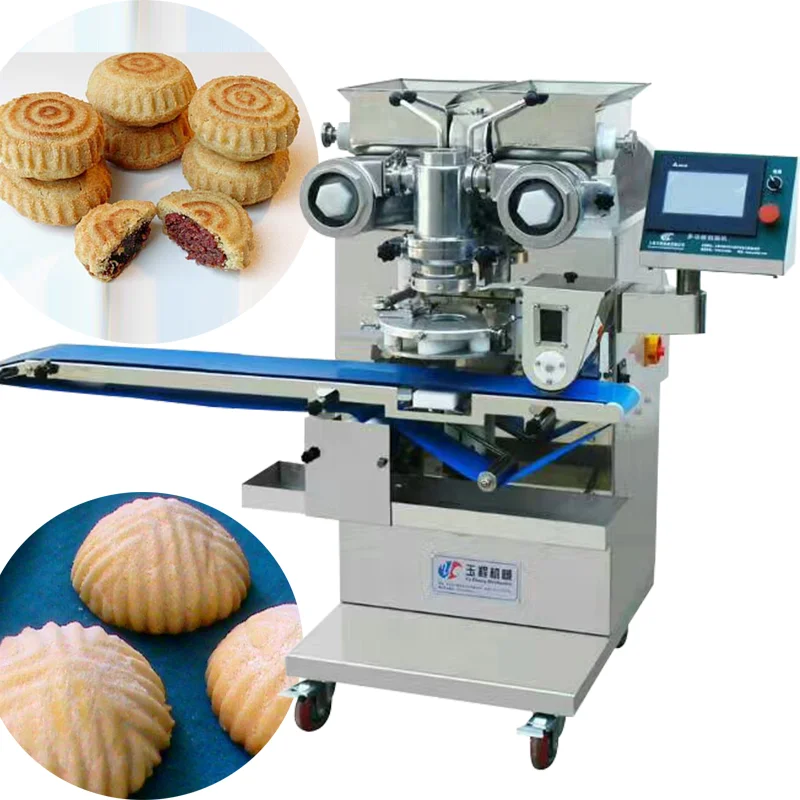
When evaluating different maamoul production machine options, manufacturers often face an overwhelming array of technical specifications, automation levels, and configuration possibilities. The challenge lies not in finding a machine that produces maamoul, but in identifying equipment with features that align specifically with your production volume, product variety, quality standards, and operational constraints. This comprehensive analysis examines the essential features that distinguish high-performance industrial maamoul production machines from basic equipment, helping you make informed decisions based on actual production requirements rather than marketing claims or superficial comparisons.
Production Capacity and Output Consistency
Throughput Requirements and Hourly Production Rates
The hourly production capacity of a maamoul production machine represents one of the most fundamental features to evaluate, yet it requires careful interpretation beyond simple numerical specifications. A machine claiming 3,000 pieces per hour may achieve this rate only under optimal conditions with specific maamoul sizes and filling types. Understanding the relationship between claimed capacity and actual sustained production rates under your specific operating conditions prevents costly miscalculations in production planning. High-quality machines maintain consistent throughput across extended production runs without requiring frequent stops for adjustments or maintenance interventions.
Effective capacity assessment considers multiple factors beyond maximum rated speed. The machine should maintain consistent output during the first hour and the eighth hour of a production shift without significant performance degradation. Temperature stability, dough consistency management, and filling system reliability all contribute to sustained production rates. Industrial bakeries processing large orders need maamoul production machines with proven capacity to handle continuous operation across multiple shifts while maintaining uniform product dimensions and weight specifications throughout each production cycle.
Weight Accuracy and Dimensional Consistency
Precision in product weight and dimensional consistency directly affects both production costs and customer satisfaction. A quality maamoul production machine incorporates advanced dough portioning systems that maintain weight accuracy within two percent variance across thousands of units. This precision eliminates the costly practice of overfilling products to guarantee minimum weight compliance while reducing material waste. Dimensional consistency ensures uniform baking times, consistent appearance, and predictable packaging requirements, all critical factors for commercial production operations.
The mechanical systems controlling dough flow and filling distribution determine consistency levels. Machines utilizing servo-driven systems with closed-loop feedback maintain superior accuracy compared to pneumatic or mechanically-timed systems. Temperature-compensating mechanisms adjust for dough viscosity changes during extended production runs, ensuring the last piece produced matches the first in weight and dimensions. For commercial operations producing premium maamoul products, this consistency feature becomes non-negotiable as it directly impacts brand reputation and customer retention rates.
Versatility and Product Flexibility
Adjustable Mold Configurations
The ability to accommodate different maamoul sizes, shapes, and decorative patterns without extensive changeover time represents a crucial feature for diverse product portfolios. A versatile maamoul production machine provides quick-change mold systems that enable production teams to switch between 25-gram and 50-gram products within minutes rather than hours. Interchangeable mold plates with various decorative designs allow manufacturers to offer seasonal varieties and regional preferences without investing in separate dedicated equipment for each product variation.
Advanced machines incorporate tool-free mold changing mechanisms with precise alignment systems that maintain production quality immediately after changeover. The mold design itself matters significantly, with properly engineered release surfaces preventing product sticking and deformation issues that plague inferior equipment. Consider how mold configurations support your current product line while providing expansion capacity for future product development. Manufacturers planning to offer both traditional date-filled and modern chocolate or nut butter varieties need machines capable of handling diverse filling viscosities and textures across different mold configurations.
Filling System Adaptability
Filling system flexibility determines how effectively a maamoul production machine handles various filling types from traditional date paste to modern alternatives like pistachio cream, chocolate ganache, or fig preserves. Industrial machines equipped with positive displacement filling systems accommodate filling viscosities ranging from thick pastes to semi-fluid preparations without requiring major mechanical adjustments. The filling injection mechanism should distribute material uniformly throughout the maamoul cavity while maintaining precise weight control regardless of filling characteristics.
Temperature control features within the filling system prevent viscosity changes that compromise accuracy and consistency. Heated filling hoppers with thermostatic controls maintain optimal processing temperatures for temperature-sensitive fillings while preventing scorching or crystallization issues. Some advanced systems incorporate multiple filling hoppers, enabling rapid transitions between different filling types or even producing multi-component filled products. Evaluate filling system features based on your current product range and anticipated product development directions rather than selecting machines limited to single filling applications.
Hygiene Design and Cleaning Efficiency
Sanitary Construction Standards
Food safety compliance and hygiene maintenance directly depend on how thoroughly equipment design facilitates cleaning and prevents contamination risks. A properly designed maamoul production machine incorporates sanitary construction principles with smooth, crevice-free surfaces, rounded corners, and minimal horizontal surfaces where product residue or moisture can accumulate. Stainless steel construction throughout product contact zones provides corrosion resistance and chemical compatibility with standard food-grade cleaning agents while maintaining structural integrity through repeated sanitation cycles.
The accessibility of internal components for cleaning inspection determines real-world sanitation effectiveness. Machines designed with removable guards, hinged access panels, and tool-free disassembly of product contact parts enable thorough cleaning between production runs or when switching between different filling types. Consider the practical time requirements for daily cleaning protocols, as machines requiring three hours of disassembly and cleaning create operational bottlenecks that reduce effective production capacity. Equipment certifications for food safety standards indicate manufacturer commitment to hygiene design principles beyond marketing claims.
Automated Cleaning Integration
Advanced maamoul production machines incorporate clean-in-place (CIP) capabilities for automated cleaning of filling systems, piping networks, and product contact surfaces. These systems circulate cleaning solutions through the equipment under controlled temperature and pressure conditions, reducing manual cleaning requirements while improving consistency and documentation of sanitation procedures. CIP integration becomes particularly valuable for operations running multiple shifts or producing allergen-sensitive product varieties requiring validated cleaning between production runs.
The sophistication of cleaning systems varies considerably across equipment manufacturers. Basic systems provide simple solution circulation, while advanced installations include automated detergent injection, rinse cycle sequencing, and verification sensors confirming cleaning effectiveness. Evaluate CIP features against your operational requirements and regulatory environment rather than dismissing these systems as unnecessary complexity. High-volume facilities producing diverse product lines often find that automated cleaning features pay for themselves through reduced labor costs and improved production scheduling flexibility within the first year of operation.
Control Systems and Operational Interface
Programmable Recipe Management
Modern maamoul production machines utilize programmable logic controllers (PLCs) with touchscreen interfaces that store multiple product recipes with all associated production parameters. This feature eliminates manual adjustment procedures when switching between products, reducing setup time and minimizing the risk of operator error affecting product consistency. Recipe management systems store dough weight, filling weight, forming pressure, mold selection, and production speed parameters, enabling one-touch changeovers between different maamoul varieties with complete parameter accuracy.
The sophistication of control interfaces affects both operational efficiency and training requirements. Intuitive graphical interfaces with visual production monitoring reduce the technical expertise required for effective machine operation while improving troubleshooting capabilities when production issues arise. Advanced systems provide real-time production statistics, trending analysis, and predictive maintenance notifications that support data-driven operational decisions. When comparing maamoul production machine options, evaluate control system features against your workforce technical capabilities and management information requirements rather than assuming all digital controls deliver equivalent functionality.
Quality Monitoring and Process Control
Integrated quality monitoring features detect and respond to production deviations before they generate significant waste or quality problems. Weight checking systems verify individual product weights, automatically adjusting portioning mechanisms when measurements drift outside specified tolerances. Vision systems inspect surface patterns, identifying incomplete mold filling or surface defects that indicate mechanical issues requiring attention. These automated monitoring capabilities reduce reliance on manual inspection while improving the consistency of quality standards across production shifts and operator teams.
Process control sophistication determines how effectively the maamoul production machine maintains optimal operating conditions despite variations in raw material characteristics or environmental factors. Temperature compensation adjusts forming parameters when dough temperature changes affect viscosity and handling properties. Humidity sensors trigger protective measures preventing moisture absorption that compromises product shelf life. The value of these automated control features becomes apparent during extended production runs where manual monitoring and adjustment create both labor demands and inconsistency risks that affect overall production economics.
Construction Quality and Maintenance Requirements
Component Durability and Wear Resistance
The mechanical construction quality of a maamoul production machine determines both operational reliability and total cost of ownership across the equipment's service life. Heavy-duty frame construction with precision-machined components maintains alignment and reduces vibration even after years of continuous operation. Bearing systems, drive mechanisms, and wear surfaces constructed from hardened alloys or ceramic materials extend service intervals while reducing the frequency of breakdowns that interrupt production schedules and create emergency repair costs.
Component accessibility for routine maintenance affects both maintenance labor costs and the ability to schedule preventive service without disrupting production. Machines designed with maintenance access panels, clearly marked lubrication points, and standardized fasteners reduce service time requirements compared to equipment requiring extensive disassembly for basic maintenance tasks. Evaluate the availability of wear parts, typical replacement intervals, and parts costs when comparing equipment options, as these factors significantly impact long-term operating expenses beyond the initial purchase price.
Diagnostic Capabilities and Downtime Reduction
Modern maamoul production machines incorporate diagnostic systems that identify developing problems before they cause production stoppages. Vibration monitoring detects bearing wear or mechanical misalignment in early stages when repairs can be scheduled during planned downtime rather than responding to unexpected failures. Temperature sensors throughout drive systems and product zones provide early warning of cooling system problems or abnormal friction conditions. These predictive maintenance capabilities transform maintenance from reactive emergency response to planned interventions that minimize production impact.
The sophistication of diagnostic features varies from basic warning lights to comprehensive condition monitoring systems with remote connectivity enabling manufacturer technical support to analyze machine performance and recommend corrective actions. For operations where production continuity directly affects customer commitments and revenue, advanced diagnostic capabilities justify their cost through reduced downtime and improved production planning reliability. Consider your maintenance staff technical capabilities and the availability of local service support when evaluating diagnostic system sophistication, as features requiring specialized interpretation provide limited value without supporting organizational capabilities.
FAQ
What production capacity should I target when selecting a maamoul production machine?
Target production capacity should be based on your peak demand requirements with approximately 20-30 percent reserve capacity to accommodate growth and equipment efficiency variations. Calculate your maximum daily production needs, factor in realistic operating efficiency around 75-85 percent of rated capacity, and select equipment that comfortably meets these requirements without operating constantly at maximum speed. Machines running continuously at peak capacity experience accelerated wear and provide no flexibility for maintenance scheduling or unexpected demand increases.
How important is the ability to handle different filling types in a maamoul production machine?
Filling versatility becomes increasingly important as market preferences diversify beyond traditional date fillings. Even if you currently produce only date-filled maamoul, equipment capable of handling various filling viscosities and characteristics provides future-proofing for product line expansion without requiring complete equipment replacement. The additional cost for versatile filling systems typically represents a small percentage of total investment while providing significant strategic flexibility for product development and market response capabilities.
What hygiene features are essential versus optional in maamoul production equipment?
Essential hygiene features include stainless steel construction in product contact zones, tool-free disassembly of major components for cleaning, and elimination of product trap areas where residue can accumulate. Optional but valuable features include automated CIP systems, which become increasingly cost-effective as production volume and product variety increase. Evaluate hygiene features against your specific regulatory requirements, production volume, and product changeover frequency rather than applying generic standards that may not align with your operational context.
How do control system sophistication levels affect operational requirements?
Advanced control systems with recipe management and automated quality monitoring reduce operator skill requirements while improving consistency, but they create dependency on technical support for troubleshooting and system modifications. Basic mechanical controls require more skilled operators for setup and adjustment but offer simpler maintenance and repair when problems occur. Match control system sophistication to your workforce capabilities, technical support availability, and the value you place on production data and automated quality assurance rather than assuming more advanced always means better for your specific operational context.
Table of Contents
- Production Capacity and Output Consistency
- Versatility and Product Flexibility
- Hygiene Design and Cleaning Efficiency
- Control Systems and Operational Interface
- Construction Quality and Maintenance Requirements
-
FAQ
- What production capacity should I target when selecting a maamoul production machine?
- How important is the ability to handle different filling types in a maamoul production machine?
- What hygiene features are essential versus optional in maamoul production equipment?
- How do control system sophistication levels affect operational requirements?


