 EN
EN

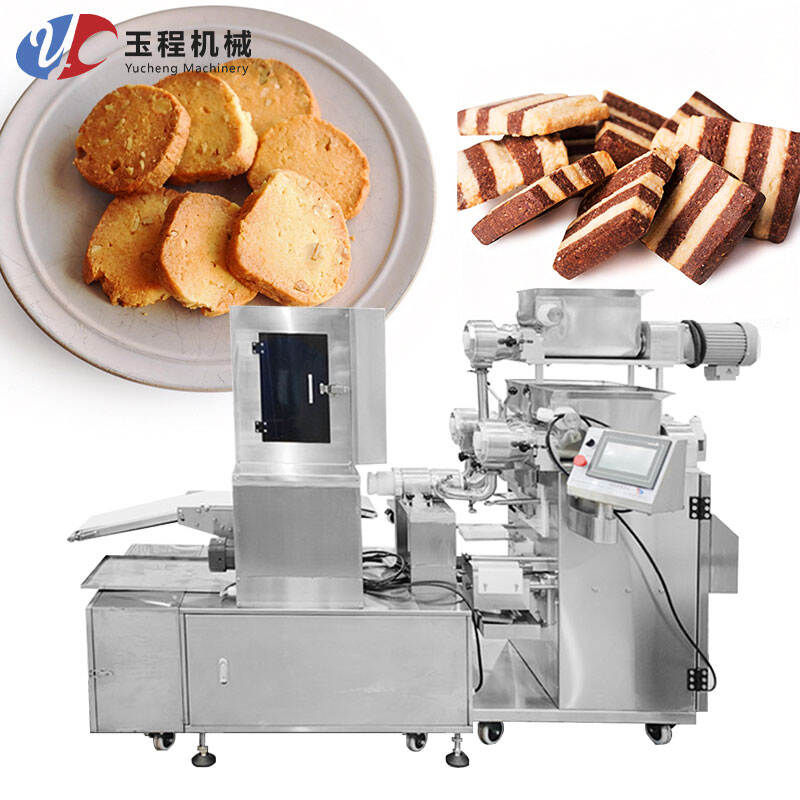
Modern food manufacturing faces unprecedented challenges in maintaining consistent quality while meeting growing production demands. Traditional manual encrusting processes often result in inconsistent product weights, irregular shapes, and significant labor costs that impact profitability. The implementation of automatic encrusting equipment has revolutionized how manufacturers approach filled product production, delivering precise control over every aspect of the encrusting process while dramatically reducing operational inefficiencies.
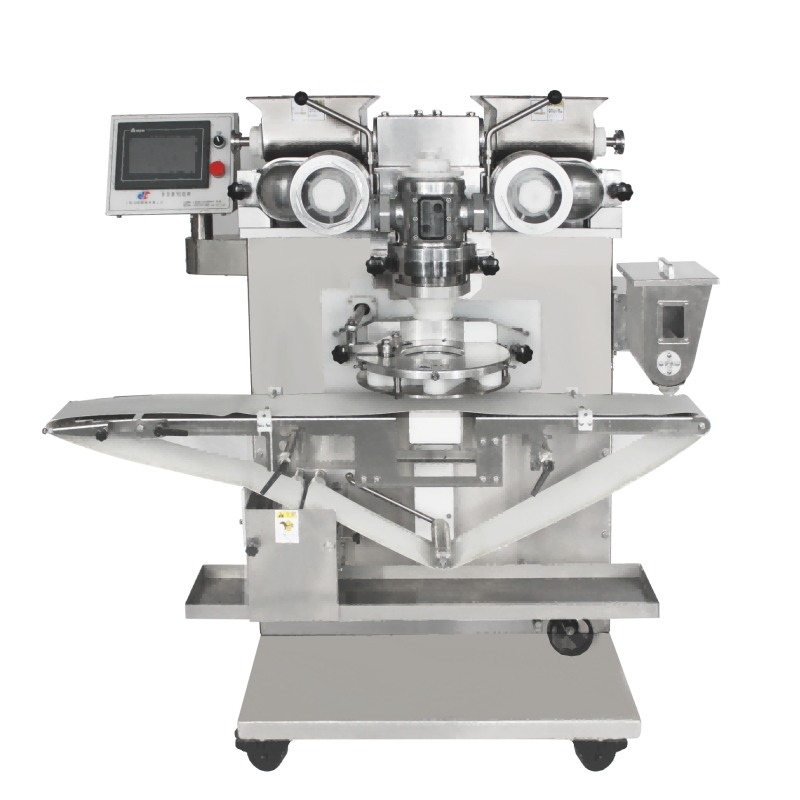
The evolution from manual to automated encrusting represents a significant technological advancement that addresses multiple production challenges simultaneously. Manufacturers across various sectors, from bakeries to confectionery operations, have discovered that automatic encrusting equipment provides solutions to problems that have plagued the industry for decades. These sophisticated machines combine precision engineering with advanced control systems to ensure consistent results regardless of production volume or operator skill level.
Production Efficiency Challenges in Traditional Encrusting
Labor-Intensive Manual Processes
Traditional encrusting methods require skilled operators to manually wrap filling materials with outer dough layers, creating significant bottlenecks in production lines. This manual approach results in variable product weights, inconsistent shapes, and substantial time investments per unit produced. The dependency on human skill levels means that product quality fluctuates based on operator experience and fatigue levels throughout production shifts.
Manual encrusting also presents challenges in maintaining hygiene standards, as increased human contact with food products elevates contamination risks. The repetitive nature of manual encrusting work leads to operator fatigue, which directly impacts both production speed and quality consistency. Additionally, training new operators requires significant time investment and ongoing supervision to achieve acceptable quality standards.
Inconsistent Product Specifications
Without automated controls, achieving uniform product weights becomes nearly impossible through manual methods alone. Variations in filling quantities and dough thickness result in products that fail to meet strict specification requirements. This inconsistency creates challenges in packaging, pricing, and customer satisfaction, as consumers expect uniform products within each batch.
The lack of standardization in manual processes also complicates inventory management and cost calculation. Manufacturers struggle to predict exact yields and material usage, leading to waste and inefficient resource allocation. Quality control becomes reactive rather than proactive, requiring extensive inspection processes that add time and cost to production cycles.
Technological Solutions Through Automation
Precision Control Systems
Advanced automatic encrusting equipment incorporates sophisticated weighing systems that ensure precise filling quantities with minimal variation. These systems utilize load cells and digital controls to monitor and adjust filling amounts in real-time, maintaining consistent product specifications throughout extended production runs. The precision achieved through automation typically reduces weight variation to less than one percent, far exceeding manual capabilities.
Temperature control integration within automatic encrusting equipment ensures optimal dough handling conditions, preventing sticking or tearing during the encrusting process. Programmable logic controllers allow operators to store multiple recipe parameters, enabling quick changeovers between different product types without manual recalibration. This technological integration creates a seamless production environment where consistency becomes the standard rather than the exception.
Speed and Throughput Optimization
Modern automatic encrusting equipment achieves production speeds that exceed manual capabilities by factors of ten or more, depending on product complexity and machine specifications. High-capacity models can produce thousands of units per hour while maintaining consistent quality standards throughout the production cycle. This dramatic increase in throughput enables manufacturers to meet larger order quantities without proportional increases in labor costs.
The continuous operation capability of automatic encrusting equipment eliminates the fatigue-related slowdowns inherent in manual processes. Consistent machine speed ensures predictable production schedules, improving overall plant efficiency and delivery reliability. Integration with downstream packaging equipment creates seamless production lines that minimize handling and transfer delays.
Quality Assurance and Standardization Benefits
Uniform Product Characteristics
Automatic encrusting equipment delivers exceptional consistency in product appearance, ensuring that every item meets identical specifications for size, shape, and filling distribution. This uniformity extends beyond visual appearance to include texture and mouthfeel characteristics that directly impact consumer satisfaction. Standardized products enhance brand reputation and reduce customer complaints related to product variability.
The elimination of human variability through automation ensures that product quality remains constant regardless of shift changes or operator differences. Consistent filling ratios prevent overfilling or underfilling issues that can affect product performance during baking or further processing. This reliability enables manufacturers to confidently guarantee product specifications to customers and distributors.
Reduced Waste and Material Optimization
Precise material dispensing through automatic encrusting equipment significantly reduces ingredient waste compared to manual methods. Accurate filling measurements prevent excess material usage while ensuring adequate filling quantities for product integrity. This optimization directly impacts raw material costs and improves overall production profitability.
Consistent dough thickness achieved through automated systems minimizes material waste from irregular wrapping or thickness variations. The ability to program exact specifications ensures optimal material utilization while maintaining product quality standards. Reduced rework requirements further minimize waste generation and improve resource efficiency throughout the production process.
Operational Cost Reduction Strategies
Labor Cost Management
Implementation of automatic encrusting equipment dramatically reduces labor requirements for encrusting operations, typically requiring only one operator to monitor multiple production lines previously requiring several workers. This reduction in direct labor costs provides immediate return on investment while freeing skilled workers for other value-added activities within the production facility.
The simplified operation of modern automatic encrusting equipment reduces training requirements and minimizes the need for highly specialized operators. Basic training programs can prepare operators to manage automated systems effectively, reducing recruitment challenges and ongoing training costs. Consistent operation reduces overtime requirements and allows for more predictable staffing schedules.
Energy Efficiency and Maintenance
Contemporary automatic encrusting equipment incorporates energy-efficient motors and drive systems that reduce operational power consumption compared to multiple manual workstations. Optimized heating and cooling systems maintain ideal processing temperatures with minimal energy waste. These efficiency improvements contribute to reduced operational costs while supporting sustainability initiatives.
Preventive maintenance programs for automatic encrusting equipment help minimize unexpected downtime and extend equipment lifespan. Modern designs incorporate easily accessible components and diagnostic systems that simplify maintenance procedures. Regular maintenance schedules ensure consistent performance while preventing costly emergency repairs that can disrupt production schedules.
Food Safety and Hygiene Improvements
Contamination Risk Reduction
Automatic encrusting equipment significantly reduces direct human contact with food products, minimizing contamination risks throughout the production process. Enclosed processing chambers and automated material handling systems create barriers between operators and food products. Stainless steel construction and smooth surfaces facilitate thorough cleaning and sanitization procedures.
Consistent processing conditions maintained by automatic encrusting equipment reduce the risk of bacterial growth or cross-contamination between batches. Temperature control systems ensure that products remain within safe processing ranges throughout the encrusting cycle. Automated cleaning cycles can be programmed to maintain hygiene standards between production runs without manual intervention.
Traceability and Documentation
Digital control systems integrated into automatic encrusting equipment provide detailed production records that support traceability requirements and quality management systems. Time-stamped production data enables rapid identification of specific batches in case of quality issues or recalls. This documentation capability supports regulatory compliance and demonstrates commitment to food safety standards.
Automated data collection eliminates manual record-keeping errors while providing real-time production monitoring capabilities. Integration with enterprise resource planning systems enables seamless data flow from production to inventory management. This connectivity supports comprehensive quality management programs and facilitates continuous improvement initiatives.
Scalability and Future-Proofing Production
Flexible Production Capabilities
Modern automatic encrusting equipment offers exceptional flexibility in handling various product types and sizes through programmable settings and interchangeable tooling. Quick changeover capabilities enable manufacturers to respond rapidly to market demands and seasonal product variations. Recipe storage systems allow for instant recall of specific production parameters for different products.
Modular designs in automatic encrusting equipment facilitate capacity expansion as production demands grow, allowing manufacturers to add capabilities without complete system replacement. Integration capabilities ensure that new equipment can work seamlessly with existing production lines. This scalability protects investment value while supporting business growth objectives.
Technology Integration and Industry 4.0
Advanced automatic encrusting equipment incorporates connectivity features that support Industry 4.0 initiatives and smart manufacturing concepts. Real-time data collection and analysis capabilities enable predictive maintenance and process optimization. Integration with manufacturing execution systems provides comprehensive production visibility and control.
Remote monitoring capabilities allow production managers to oversee multiple automatic encrusting equipment installations from centralized locations. Cloud-based data storage and analysis support continuous improvement initiatives and performance benchmarking. These technological features ensure that investments in automatic encrusting equipment remain relevant as manufacturing technology continues to evolve.
FAQ
What types of products can be processed with automatic encrusting equipment
Automatic encrusting equipment can handle a wide variety of filled products including mochi, fish balls, meat balls, filled cookies, stuffed pastries, and various confectionery items. The equipment accommodates different filling consistencies from liquid to solid, and dough types ranging from soft to firm textures. Product size ranges typically vary from small confections to larger bakery items, with adjustable settings to accommodate specific requirements.
How does automatic encrusting equipment impact production capacity
Production capacity typically increases by 300-1000% when switching from manual to automatic encrusting equipment, depending on the specific application and machine model. High-capacity systems can produce 1000-3000 pieces per hour while maintaining consistent quality standards. The continuous operation capability eliminates breaks and fatigue-related slowdowns, ensuring sustained high productivity throughout production shifts.
What maintenance requirements should manufacturers expect
Regular maintenance for automatic encrusting equipment includes daily cleaning and sanitization, weekly lubrication of moving parts, and monthly inspection of wear components. Most systems require professional servicing every 6-12 months depending on usage intensity. Modern equipment designs incorporate diagnostic systems that alert operators to maintenance needs, helping prevent unexpected downtime and ensuring optimal performance.
How quickly can operators learn to use automatic encrusting equipment
Basic operation of automatic encrusting equipment typically requires 2-3 days of training for operators with general food production experience. Advanced features and troubleshooting skills may require additional training over several weeks. Most manufacturers provide comprehensive training programs including hands-on instruction, documentation, and ongoing support to ensure successful equipment implementation.


