 EN
EN

Food production has undergone remarkable transformations in recent decades, with automation technologies revolutionizing how manufacturers create consistent, high-quality products. Among these innovations, the encrusting machine stands out as a game-changing solution for bakeries, confectioneries, and food manufacturers seeking to streamline their production processes. This sophisticated equipment has redefined traditional food preparation methods by combining precision engineering with advanced automation capabilities, enabling businesses to produce filled pastries, dumplings, and confections at unprecedented speeds while maintaining exceptional quality standards.
The impact of automated encrusting technology extends far beyond simple mechanization, fundamentally altering production workflows and enabling manufacturers to meet growing consumer demands for diverse, premium-quality filled products. Modern food processors recognize that traditional manual methods cannot compete with the consistency, efficiency, and scalability that these machines provide. As global markets continue to expand and consumer preferences evolve toward more sophisticated food offerings, manufacturers are increasingly turning to advanced encrusting solutions to maintain competitive advantages.
Revolutionary Technology Behind Automated Encrusting
Precision Engineering Principles
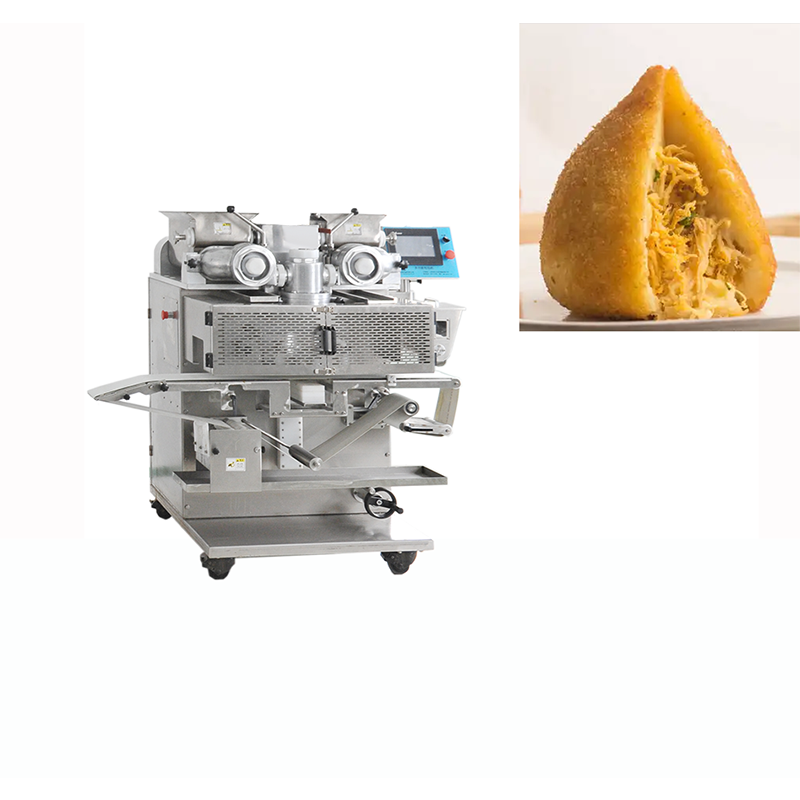
The fundamental engineering behind an encrusting machine represents decades of research and development in food processing technology. These systems utilize sophisticated mechanical components that work in perfect harmony to create uniformly filled products with precise weight control and consistent shape formation. Advanced servo motors control dough feeding mechanisms while pneumatic systems regulate filling dispensation, ensuring each product meets exact specifications without variation.
Temperature control systems integrated within the encrusting machine maintain optimal dough consistency throughout the production cycle. These mechanisms prevent ingredient degradation and ensure proper texture development, critical factors that directly impact final product quality. Stainless steel construction materials resist corrosion and facilitate thorough cleaning, meeting stringent food safety requirements while extending equipment lifespan.
Advanced Control Systems
Modern encrusting machines incorporate sophisticated digital control panels that allow operators to adjust multiple parameters simultaneously. These user-friendly interfaces enable precise control over dough thickness, filling quantity, product size, and production speed through intuitive touchscreen displays. Programmable memory functions store multiple recipe configurations, allowing rapid changeovers between different product types without extensive manual adjustments.
Real-time monitoring capabilities provide continuous feedback on production metrics, enabling operators to identify potential issues before they impact product quality. Integrated safety systems automatically shut down operations when irregularities are detected, protecting both equipment and personnel while minimizing waste. These intelligent features distinguish professional-grade encrusting equipment from basic alternatives.
Transformative Impact on Production Efficiency
Dramatic Speed Improvements
Traditional manual encrusting methods typically produce between 200-400 pieces per hour, depending on worker skill levels and product complexity. In contrast, a modern encrusting machine can consistently produce 1,800-3,600 pieces per hour with superior consistency and minimal labor requirements. This represents a productivity increase of 800-1,800 percent, fundamentally transforming production economics and enabling manufacturers to fulfill large orders efficiently.
Labor cost reductions accompany these speed improvements, as automated systems require minimal operator intervention once properly configured. Skilled workers can focus on quality control and oversight rather than repetitive manual tasks, improving job satisfaction while reducing repetitive stress injuries. The consistency of automated production eliminates variations caused by fatigue, skill differences, or human error, resulting in more predictable output quality.
Enhanced Product Consistency
Weight uniformity represents one of the most significant advantages provided by encrusting machine technology. Manual production methods typically exhibit weight variations of 10-15 percent between individual pieces, while automated systems maintain variations under 2 percent. This precision ensures consistent portioning, reducing raw material waste and improving cost control while meeting strict packaging requirements.
Shape consistency also improves dramatically with automated encrusting, as mechanical forming systems create identical products regardless of production volume or operator changes. This uniformity enhances brand presentation and consumer satisfaction while simplifying packaging and display arrangements. Consistent fill distribution ensures every product delivers the same taste experience, building customer loyalty and brand reputation.
Versatile Applications Across Food Industries
Bakery and Confectionery Applications
Bakeries utilize encrusting machine capabilities to produce diverse filled pastries including Danish pastries, croissants, and specialty breads with cream, fruit, or savory fillings. The equipment handles various dough types from delicate puff pastries to robust bread doughs, accommodating different viscosities and textures without compromising product integrity. Temperature-controlled filling systems prevent ingredient separation and maintain optimal consistency throughout production runs.
Confectionery manufacturers leverage encrusting technology to create filled chocolates, mochi, and specialty desserts with precise filling-to-wrapper ratios. The ability to work with temperature-sensitive ingredients like chocolate ganache or cream fillings expands product possibilities while maintaining quality standards. Automated portioning ensures consistent sweetness levels and texture profiles across entire production batches.
Asian Cuisine and Dumpling Production
Traditional Asian foods like dumplings, buns, and filled pastries benefit significantly from encrusting machine automation. These products require precise dough thickness and filling quantities to achieve authentic textures and flavors. Automated systems replicate traditional hand-wrapping techniques while dramatically increasing production speeds and maintaining cultural authenticity in appearance and taste.
Commercial dumpling producers can create thousands of uniform pieces per hour using encrusting technology, meeting restaurant and retail demands while preserving traditional recipes. The equipment accommodates various filling types including meat, vegetable, and sweet preparations without cross-contamination concerns. Consistent pleating and sealing ensure proper cooking characteristics and attractive presentation.
Economic Benefits and Return on Investment
Cost Reduction Analysis
Initial investment in an encrusting machine typically pays for itself within 12-18 months through reduced labor costs and increased production capacity. Labor savings alone can amount to 60-80 percent of previous manual production costs, as one operator can oversee automated systems that previously required four to six workers. Additional savings result from reduced raw material waste, as precise portioning eliminates overuse of expensive ingredients like nuts, chocolate, or premium fillings.
Energy efficiency represents another significant cost advantage, as modern encrusting systems consume less power per unit produced compared to maintaining large manual production teams and associated facility requirements. Reduced training costs and lower employee turnover rates contribute to long-term operational savings, as automated systems require less specialized skills and reduce workplace fatigue.
Revenue Enhancement Opportunities
Increased production capacity enables manufacturers to accept larger orders and expand market reach without proportional increases in operational complexity. The ability to produce premium filled products consistently opens new market segments and justifies higher pricing structures. Product diversification becomes economically viable when encrusting machine versatility allows rapid changeovers between different product lines.
Quality improvements resulting from automated encrusting reduce customer complaints and returns while enhancing brand reputation. Consistent products build customer loyalty and enable premium positioning in competitive markets. The professional appearance of machine-produced items often commands higher prices than obviously hand-made alternatives in commercial settings.
Quality Control and Food Safety Advantages
Hygiene and Sanitation Benefits
Encrusting machine design incorporates food-grade materials and easy-clean surfaces that exceed manual production hygiene standards. Stainless steel construction resists bacterial growth and facilitates thorough sanitization between production runs. Enclosed production chambers minimize contamination risks from airborne particles or human contact, critical factors in modern food safety protocols.
Automated systems reduce human contact with food products, eliminating potential contamination sources while maintaining consistent handling procedures. Temperature monitoring and control systems prevent dangerous bacterial growth by maintaining optimal conditions throughout production cycles. Documentation capabilities provide complete traceability for quality assurance and regulatory compliance requirements.
Consistent Quality Standards
Mechanical precision ensures every product meets identical specifications for size, weight, and filling distribution. This consistency eliminates quality variations common in manual production methods, where individual worker techniques and fatigue levels affect output quality. Standardized production parameters enable reliable quality predictions and simplify quality control procedures.
Built-in quality monitoring systems can detect and reject substandard products automatically, maintaining high standards without constant human oversight. These capabilities reduce the need for extensive post-production quality checks while ensuring only acceptable products reach customers. Consistent quality builds brand reputation and reduces costly recalls or customer complaints.
Future Trends and Technological Evolution
Smart Manufacturing Integration
Next-generation encrusting machine technology incorporates Internet of Things connectivity and artificial intelligence capabilities for predictive maintenance and optimization. These smart systems analyze production data to identify efficiency improvements and predict equipment maintenance needs before failures occur. Remote monitoring capabilities enable real-time troubleshooting and performance optimization through cloud-based platforms.
Integration with enterprise resource planning systems provides comprehensive production tracking and inventory management capabilities. Automated reporting functions generate detailed production metrics and quality documentation required for regulatory compliance and business analysis. These technological advances position encrusting equipment as integral components of Industry 4.0 manufacturing strategies.
Sustainability and Environmental Considerations
Modern encrusting machines incorporate energy-efficient technologies that reduce environmental impact while lowering operational costs. Variable speed drives and optimized heating systems minimize power consumption without compromising production capabilities. Waste reduction features ensure maximum utilization of raw materials while minimizing disposal requirements.
Sustainable design principles guide equipment development, emphasizing recyclable materials and extended equipment lifecycles. Reduced packaging waste results from consistent product sizing, while improved shelf life through better sealing reduces food waste throughout the supply chain. These environmental benefits align with growing corporate sustainability initiatives and consumer environmental consciousness.
FAQ
What types of products can an encrusting machine produce effectively
An encrusting machine can produce a wide variety of filled products including dumplings, pastries, mochi, filled cookies, meat buns, and specialty confections. The equipment handles both sweet and savory fillings ranging from thick pastes to chunky mixtures, accommodating different dough types from delicate pastry to robust bread dough. Most modern machines allow quick changeovers between different product configurations through programmable settings.
How much maintenance does an encrusting machine require
Regular maintenance for an encrusting machine typically involves daily cleaning and sanitization, weekly lubrication of moving parts, and monthly inspection of wear components. Most manufacturers recommend professional servicing every 6-12 months depending on usage levels. Proper maintenance extends equipment life significantly while ensuring consistent performance and food safety compliance.
What is the typical production capacity range for commercial encrusting machines
Commercial encrusting machine production capacity varies from 1,800 to 7,200 pieces per hour depending on product size and complexity. Smaller desktop models may produce 600-1,200 pieces per hour, while large industrial systems can exceed 10,000 pieces per hour for simple products. Actual capacity depends on factors including dough consistency, filling type, and desired product size.
How does product changeover work on modern encrusting machines
Modern encrusting machines feature programmable controls that store multiple recipe configurations, enabling rapid changeovers between different products. Typical changeover time ranges from 15-30 minutes including cleaning and adjustment procedures. Advanced models include quick-change tooling systems and automated cleaning cycles that further reduce downtime between different product runs, maximizing production efficiency.


