 EN
EN

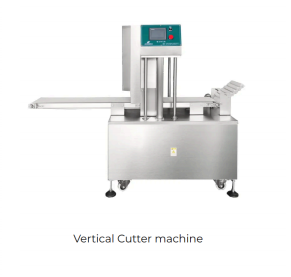
Every restaurant that serves Brazilian-style snacks understands the pressure of keeping up with demand. A coxinha machine offers a practical and scalable solution for food service businesses that want to produce this beloved fried dough snack in large volumes without sacrificing quality. Whether you run a fast-casual diner, a snack bar, or a full-service restaurant, the decision to invest in a coxinha machine can reshape how your kitchen operates from the ground up.

The demand for coxinhas in restaurant settings has grown significantly as customers seek satisfying, portable, and affordable snacks. Manual preparation of coxinhas is labor-intensive, time-consuming, and inconsistent at scale. A reliable coxinha machine eliminates these bottlenecks by automating the shaping, filling, and encrusting process, giving restaurant operators a meaningful competitive advantage. Understanding why this investment pays off requires looking closely at production efficiency, food consistency, and long-term operating cost savings.
Production Efficiency and Output Capacity
Meeting High-Volume Demand with a Coxinha Machine
One of the most compelling reasons for restaurants to invest in a coxinha machine is the dramatic improvement in production speed. A modern coxinha machine can produce hundreds of uniform coxinhas per hour, far outpacing what even a skilled kitchen team can achieve by hand. During peak service hours, when orders stack up quickly, this level of throughput means your kitchen never falls behind. The coxinha machine keeps pace with demand no matter how large the crowd grows, protecting your revenue and customer satisfaction at the same time.
Beyond raw speed, a coxinha machine also reduces preparation bottlenecks. Manual shaping requires trained staff who must divide dough evenly, add filling precisely, and form the teardrop shape consistently. A coxinha machine handles all of these steps automatically and continuously, freeing kitchen staff to focus on other tasks. This operational shift allows a restaurant to serve more customers without hiring additional preparation staff, making the coxinha machine one of the most efficient investments a food service business can make.
Scalable Output for Growing Restaurant Businesses
As a restaurant grows, its production needs grow with it. A coxinha machine scales naturally with business expansion. Whether a restaurant adds a second location, launches a catering service, or increases its daily snack menu volume, the coxinha machine can meet higher output requirements without requiring a proportional increase in labor. This scalability makes the coxinha machine a future-ready investment rather than a short-term fix, supporting business growth over the long term.
Consistency, Quality, and Food Safety
Uniform Coxinhas Every Time
In the restaurant industry, consistency is not optional — it is a brand standard. Customers who order coxinhas expect the same size, shape, filling ratio, and texture every single visit. Manual production introduces natural human variability that can lead to uneven portions, inconsistent fillings, or improperly sealed dough. A coxinha machine eliminates this variability by applying the same mechanical precision to every single piece. Each coxinha that comes off the machine meets the same specifications, building customer trust and reinforcing the quality image of the restaurant.
Consistent portioning also supports better food cost management. When each coxinha contains a controlled and predictable amount of filling and dough, restaurants can calculate their ingredient costs per unit with accuracy. A coxinha machine makes this level of cost control achievable at high volumes, which is something manual production cannot reliably deliver. For restaurant operators focused on margin management, this precision is a genuine financial benefit that compounds over time.
Improved Hygiene and Reduced Contamination Risk
Food safety is a non-negotiable priority in any commercial kitchen. A coxinha machine reduces the amount of direct hand contact involved in shaping and filling each snack, which lowers the risk of cross-contamination during the preparation stage. Many commercial coxinha machine models are constructed from food-grade stainless steel, which is easy to clean, sanitize, and maintain according to food safety regulations. Restaurants that prioritize hygiene compliance will find that a well-designed coxinha machine supports their standards rather than complicating them.
Labor Cost Reduction and Return on Investment
How a Coxinha Machine Lowers Labor Expenses
Labor is typically one of the largest costs in any restaurant operation. When coxinha production is handled manually, it requires dedicated staff hours that could be applied elsewhere. A coxinha machine replaces repetitive manual labor with automated mechanical action, allowing a single operator to oversee the production of large volumes without additional staffing. Over time, the labor savings generated by a coxinha machine can offset the initial equipment cost, moving the investment into positive return territory. Restaurants that serve coxinhas regularly will see this cost reduction materialize relatively quickly.
The return on investment from a coxinha machine also extends beyond direct labor savings. Reduced food waste from consistent portioning, lower training requirements for kitchen staff, and faster service turnaround all contribute to the financial case. A coxinha machine is not just a production tool — it is an operational asset that creates measurable value across multiple cost categories simultaneously.
Long-Term Value of Equipment Investment
High-quality commercial equipment is designed to operate reliably over many years. A well-maintained coxinha machine can serve a restaurant for an extended period, making the per-unit production cost lower with every passing month. Compared to the ongoing cost of manual labor, the coxinha machine represents a fixed investment with a declining cost curve over its service life. Restaurant operators who evaluate equipment decisions over a multi-year horizon will consistently find that a coxinha machine delivers strong long-term value for snack-focused menus.
FAQ
What types of restaurants benefit most from a coxinha machine?
Any restaurant that serves coxinhas as a regular menu item can benefit from a coxinha machine. This includes fast-casual restaurants, snack bars, Brazilian food specialists, cafeterias, and catering operations. The higher the daily coxinha volume, the greater the efficiency and cost advantages the coxinha machine delivers.
Is a coxinha machine difficult to operate and maintain?
Most commercial coxinha machine models are designed for ease of use in busy kitchen environments. Operators typically require only brief training to run the coxinha machine efficiently. Maintenance generally involves regular cleaning and periodic inspection of mechanical parts, both of which are straightforward tasks for kitchen staff already experienced with commercial equipment.
Can a coxinha machine handle different filling types and dough recipes?
Yes, many coxinha machine models are adjustable to accommodate different filling volumes and dough consistencies. This flexibility allows restaurants to offer menu variety without purchasing separate equipment for each recipe variation. Adjustable settings on a coxinha machine make it a versatile production tool that supports menu creativity alongside high-volume efficiency.


