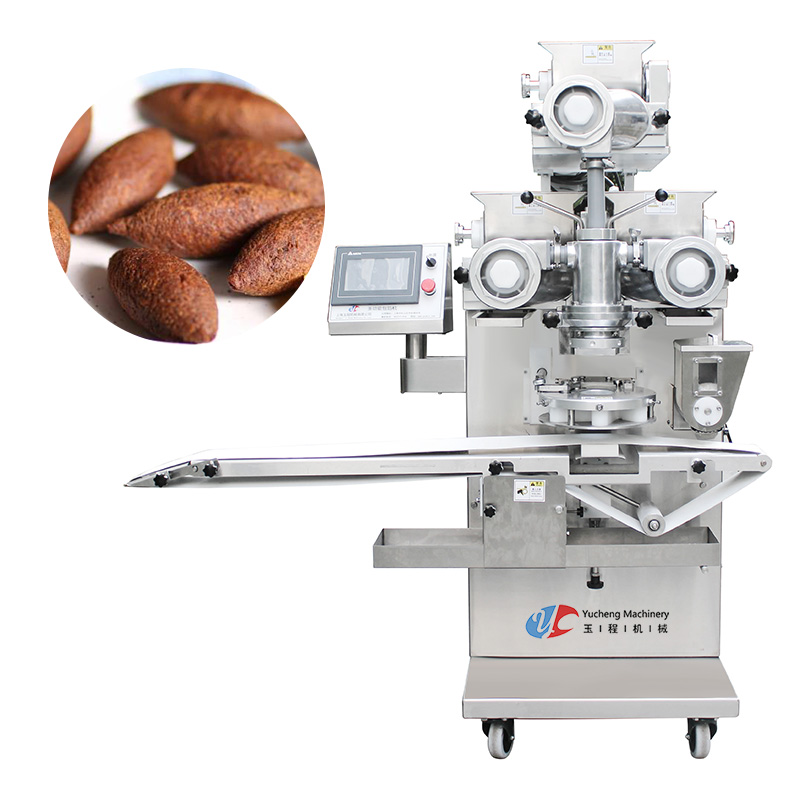
A kubba making machine offers practical advantages for food manufacturers, commercial kitchens, and businesses producing Middle Eastern filled foods. Traditional kubba preparation involves several repetitive steps, including portioning the outer dough, adding the filling, enclosing the filling, and shaping each piece. An automatic encrusting machine brings these forming operations together, helping reduce repetitive manual work and establish a more consistent production process.
One important benefit is more consistent product formation. The machine coordinates the feeding of the outer dough and inner filling to create filled portions with a defined structure. Adjustable operating parameters allow manufacturers to work toward their preferred product weight, shell thickness, filling ratio, and shape. Maintaining suitable settings helps reduce variations between pieces and supports more predictable product presentation.
Production efficiency is another major consideration. Manual kubba preparation can require considerable time and labor, particularly when businesses need to prepare large quantities for restaurants, catering orders, or retail distribution. Automatic encrusting equipment handles repetitive forming tasks mechanically, allowing operators to supervise production, replenish ingredients, and manage other preparation activities. Actual output depends on the selected model, product dimensions, dough characteristics, filling consistency, and operating settings.
A kubba making machine can also help businesses manage product specifications more systematically. Different customers may require different sizes, weights, or filling proportions. With suitable adjustments and forming molds, manufacturers can adapt production to these requirements without relying entirely on manual shaping techniques. For the Kubba-specific machine, Yucheng lists recipe parameter memory, allowing operators to save settings for recurring products and reduce repeated adjustment work.
Food-contact materials and cleaning arrangements are important factors when selecting food processing equipment. Yucheng's Kubba machine information specifies SUS304 food-grade stainless steel and describes removable components that facilitate cleaning. These features are useful considerations for businesses that need regular cleaning between production batches. Operators should still follow the manufacturer's cleaning instructions and the food hygiene procedures required by their facility.
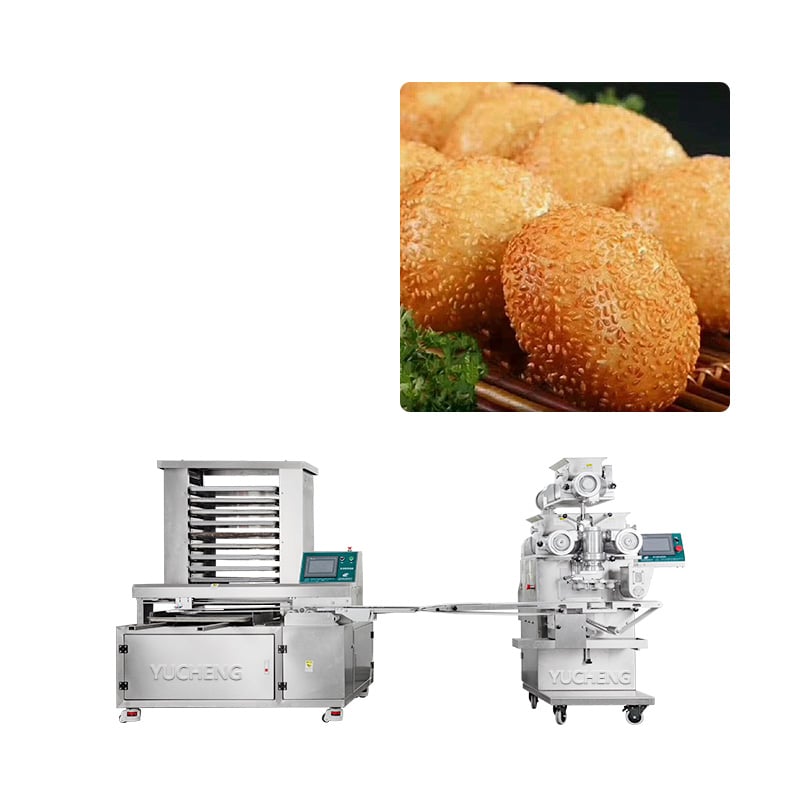
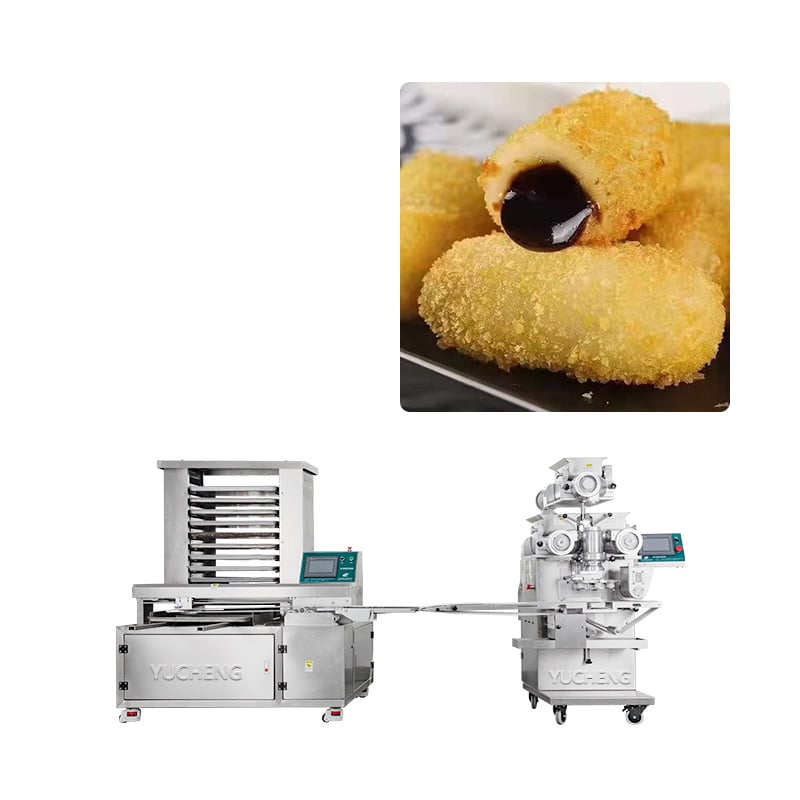
Another advantage is the ability to coordinate the encrusting machine with other food processing equipment. Depending on the product shape and production arrangement, manufacturers may use additional equipment for rounding, powder coating, cutting, or tray arrangement. For example, a compatible rounding machine can help produce rounded food portions, while other auxiliary equipment can support subsequent handling. Not every Kubba production line requires all these machines, so equipment selection should follow the actual product and workflow.
Yucheng offers different encrusting machine configurations, including single-row and multi-row models. The YC-460 is listed as a four-row encrusting machine, providing another configuration for businesses evaluating production arrangements. The appropriate choice depends on required output, available floor space, product dimensions, and whether multiple rows are suitable for the intended kubba format. Buyers should confirm production performance through product testing rather than assume that every configuration provides the same output.
Product flexibility can create additional opportunities for food manufacturers. With suitable molds and matched equipment, encrusting machines can be adapted for different filled foods beyond kubba. This can help businesses explore related products and make use of their equipment across different production needs. However, recipe compatibility, dough behavior, filling characteristics, and final product quality should be checked through sample testing before changing products.
When evaluating a kubba making machine, businesses should consider more than its purchase price. Important factors include output capacity, adjustable product weight, filling ratio, compatible dough and filling materials, forming options, cleaning requirements, electrical specifications, and available technical support. Requesting a production test with the intended ingredients can help confirm whether the proposed machine meets the required product specifications.
Overall, an automatic kubba making machine can help food manufacturers standardize filled-product forming, reduce repetitive manual work, and organize production more efficiently. Selecting a suitable model and configuring it around actual recipes and output requirements provides a practical foundation for reliable commercial kubba production.
 EN