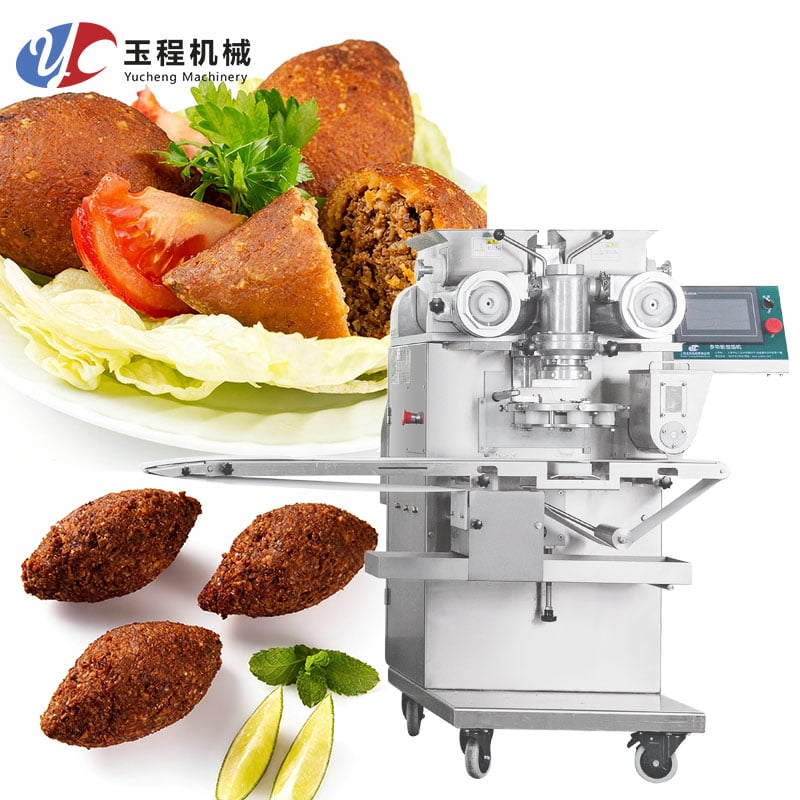
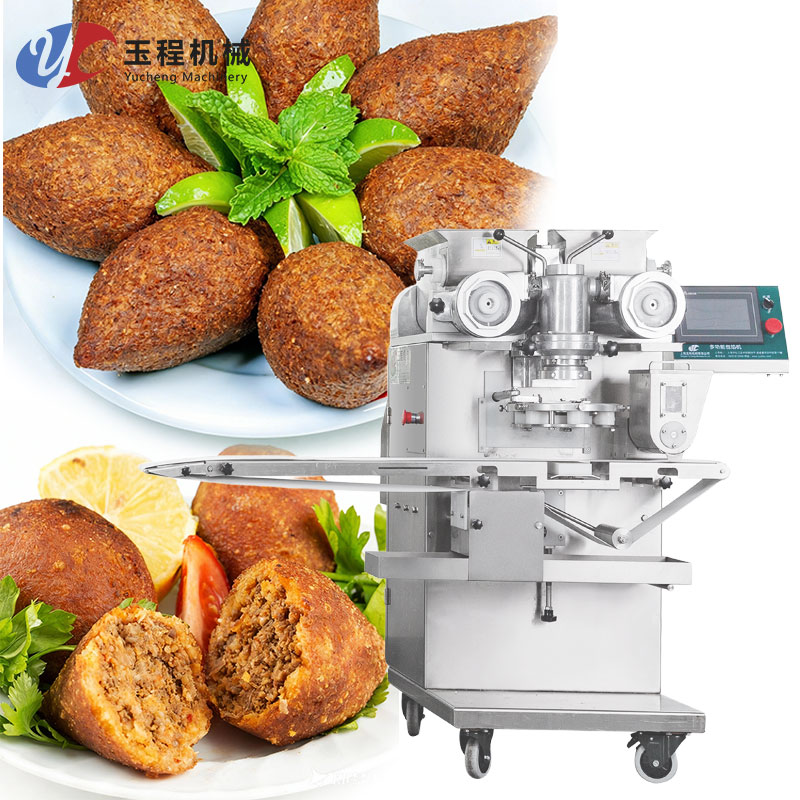
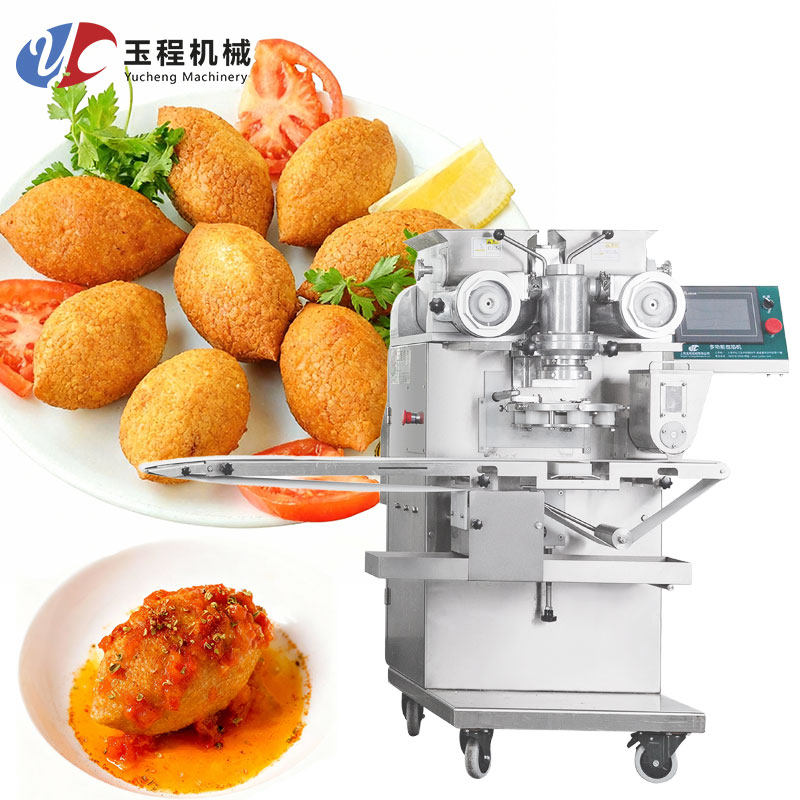
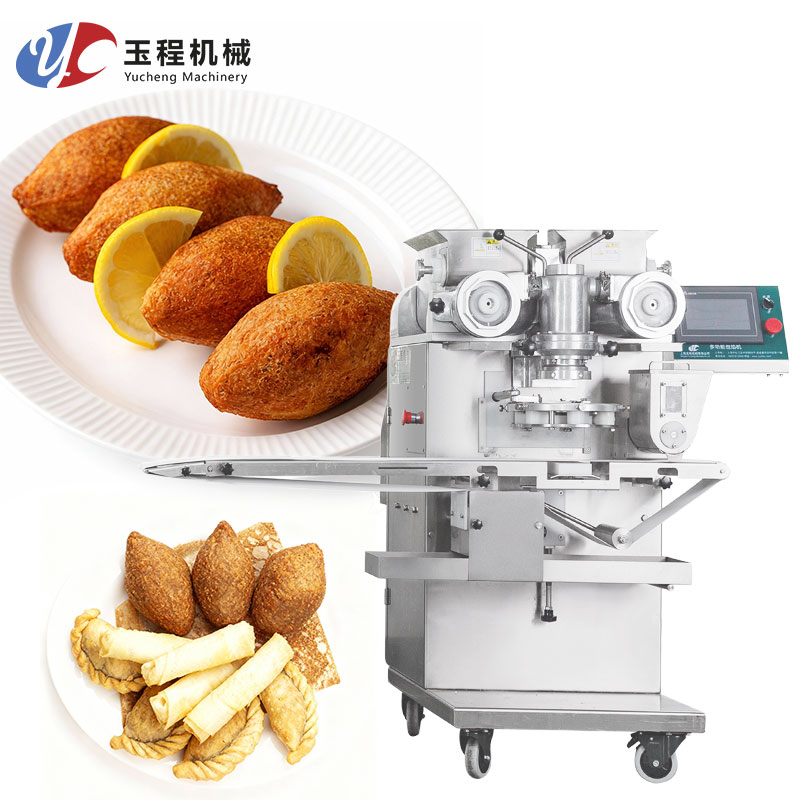
A kibbeh making machine offers practical advantages for food manufacturers, restaurants, and commercial kitchens that regularly prepare filled food products. Traditional kibbeh preparation involves several repetitive steps, including preparing the outer dough, portioning the filling, enclosing the filling, and shaping individual pieces. An automatic encrusting machine combines these forming operations into a coordinated process, helping businesses organize production and reduce repetitive manual work.
One important benefit is consistent product formation. The machine coordinates the feeding of outer dough and inner filling, helping create kibbeh portions with a more uniform structure. Operators can adjust product weight, dough thickness, filling quantity, and forming parameters according to the intended recipe and machine configuration. Consistent settings help reduce differences between individual portions and support more predictable product presentation.
Production efficiency is another major consideration. Manual kibbeh preparation can require considerable labor, particularly when businesses need to fulfill regular restaurant orders, catering requirements, or larger food distribution demands. An automatic kibbeh making machine handles repetitive forming tasks, allowing operators to focus on ingredient preparation, machine supervision, quality checks, and other production activities.
Yucheng's YC-168 model has a listed production capacity of 20–120 pieces per minute, with a product weight range of 10–200 grams. These specifications provide buyers with a reference when comparing equipment capacity with their expected order volumes. Actual output depends on product size, dough characteristics, filling consistency, and operating conditions, so manufacturers should test their own recipes before finalizing a production configuration.
Product consistency also matters for businesses selling kibbeh under a recognizable brand. Differences in portion size, outer shell thickness, or filling distribution can affect cooking performance and finished product appearance. With appropriate machine settings and suitable forming components, manufacturers can establish repeatable production parameters for different kibbeh specifications. Yucheng's YC-168 also includes a recipe memory function, which allows operators to save parameters for recurring products and simplifies repeat production.
Food hygiene is an important consideration when choosing food processing equipment. Yucheng specifies SUS304 food-grade stainless steel for its YC-168 machine. The product information also describes detachable components that facilitate cleaning. These features can support routine sanitation procedures in commercial food production environments. Operators should follow the manufacturer's cleaning instructions and establish appropriate hygiene procedures between production batches.
Another advantage is the ability to adapt production to different filled food products. Through suitable mold changes and compatible auxiliary equipment, encrusting machines can accommodate different product shapes and filling arrangements. In addition to kibbeh, Yucheng describes applications for filled bread and other encrusted food products. Businesses interested in expanding their product range should confirm ingredient compatibility and conduct product trials before changing production recipes.
A kibbeh making machine can also become part of a more integrated production line. Depending on the selected configuration, additional equipment may support forming, cutting, and tray arrangement. Yucheng's YC-170 production line information lists an automatic encrusting and forming machine, a separate forming machine, and an automatic tray arrangement machine. This arrangement offers businesses a reference when planning production beyond the initial forming stage.
Machine selection should account for more than rated output. Product weight, outer dough characteristics, filling texture, desired shape, mold requirements, available floor space, and electrical specifications all influence the suitability of a machine. Buyers should communicate their recipes and production targets to the manufacturer so the proposed equipment can be evaluated under realistic conditions.
For businesses planning to expand commercial kibbeh production, an automatic forming solution can help standardize repetitive operations and organize daily output. Comparing machine models, production capacity, forming flexibility, cleaning requirements, and available technical support provides a practical basis for selecting equipment suited to the intended food production process.
 EN